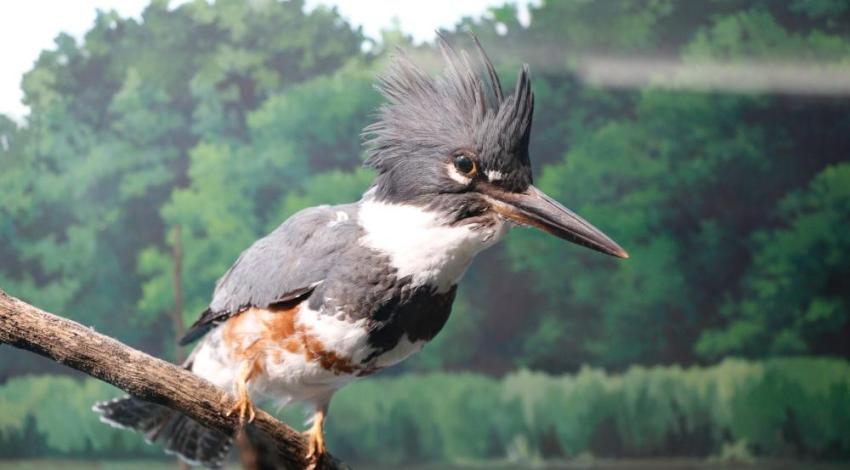
It’s entirely possible I was a belted kingfisher in a former life. The ultimate introverts of the bird world, kingfishers only spend time with others of their kind when raising their young; other than that, they’re fishing.
It’s one of the most intriguing sights in all of nature. Whether from a perch or a hover, the bird folds its wings and drops like a rock, hitting the water with a splash. Within a split second, an opaque nictitating membrane — a kingfisher’s third eyelid — closes horizontally over the eyeball to help protect it under water. The kingfisher doesn’t spear the fish, but instead grabs it between its upper and lower jawbones.
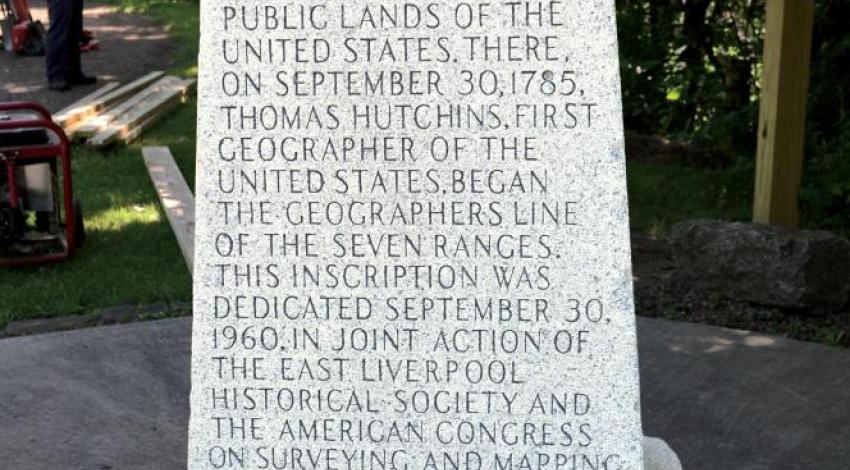
If you’ve ever flown over Ohio and points west, you cannot help but notice the checkerboard of farm fields and woodlots — the corn-and-soybean plaid that’s repeated westward until it finally exhausts itself at the edge of the Pacific Ocean.
In 1774, the Ohio Country was a vast land populated by a host of Native American tribes, and the British Crown wanted to use it as feudal property — owned by the king — where occupants would pay a tribute to live there. A young Thomas Jefferson was having none of it. He penned a pamphlet denouncing the plan — he hated the thought that only aristocrats and kings and churches could own land in America. More on that in a bit.
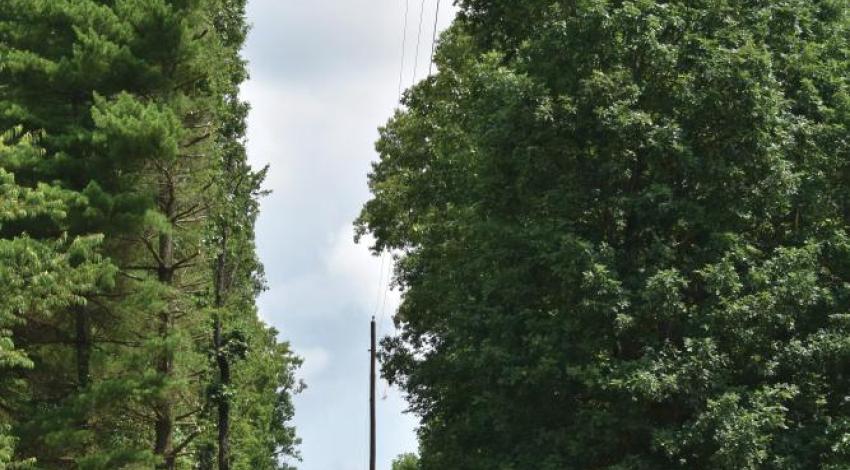
Some people might be alarmed by the sight of a low-flying helicopter dangling what looks like a prop in a horror movie passing over their property.
Nancy Thompson was excited.
“Washington Electric called me last week and told me they would be here, and here they are,” she says. “I think it’s kind of exciting. They came through and cut the trees without cutting the wire. I’ve never seen anything like it.”
About 50% of all power outages are caused by vegetation. That figure varies widely depending on the landscape through which power lines run, and it reaches two-thirds for some Ohio co-ops. Many outages occur during storms when limbs or entire trees fall across electric lines, but others arise less dramatically when branches grow into lines.

Think about a fast, maneuverable flyer in nature and likely a hummingbird may come to mind — so agile it can even fly backward!
Aggressive mini-predators, dragonflies and damselflies hunt their prey on the wing, capturing other flying insects such as small flies, mosquitoes (hooray!), and, at times, other dragonflies. Larger dragonflies can even take down swallowtail butterflies. And their appetite
is voracious.
Glotzhober cites an early 1900s researcher in Florida who had reared a cageful of houseflies to present to a large dragonfly of the darner family for feeding. “The researcher kept feeding the dragonfly until he ran out of flies, and all in one sitting,” he says.
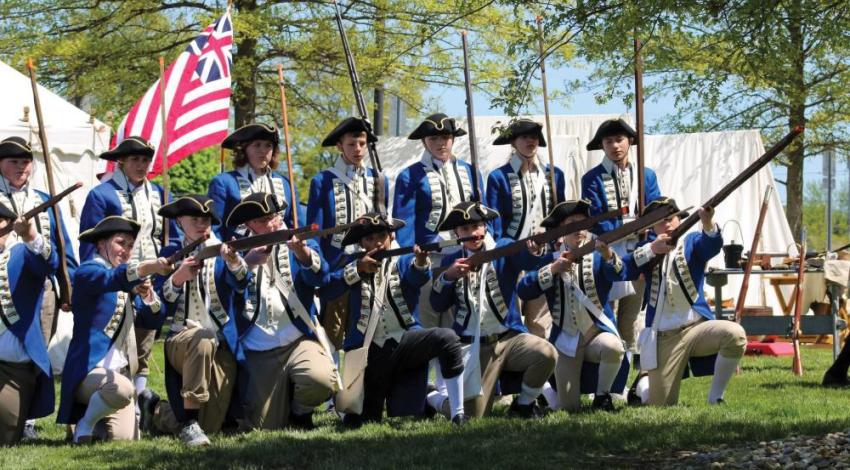
As the United States celebrates its 250th anniversary this year, Americans are paying particular attention to the history of the nation: the “shot heard ’round the world,” the Declaration of Independence, the Revolutionary War, and all of the history from just before and af
“Reading about history in a book is good, but it doesn't give you the same feel as attending a living history event,” says Cindy Jackson, a reenactor who is coordinator of the Fair at New Boston, an annual Labor Day event in Springfield that includes several reenactments during its run. “It helps us get in touch with history instead of it being a dry subject in a textbook — and when you see it happening right in front you, it isn't as pretty as in the movies.”



Pat Mangen Cochran still remembers the time a former classmate recounted undergoing chemotherapy for recurrent bladder cancer.
She had no idea her good deed for a childhood friend would spark an ambitious project that now continues to benefit cancer patients of all ages throughout the state and beyond.
“Red wore the modified shirts to The James Cancer Center in Columbus and the nurses went crazy,” she says. “I made more in different sizes for Red to take in — not just once, but quite a few times. They wanted more that they might distribute at all seven treatment centers in their system.”
Historians note the April 1775 “shot heard ’round the world” — the opening round of gunfire when colonial Patriots engaged the British army for the first time during a skirmish in Massachusetts.
It read, in part, “As the Love of Liberty, and Attachment to the real Interests and just Rights of America outweigh every other Consideration, we resolve that we will exert every Power within us for the Defence of American Liberty, and for the Support of her just Rights and Privileges; not in any precipitate, riotous, or tumultous Manner, but when regularly called forth by the unanimous Voice of our Countrymen.”
In today’s parlance, it might be described as a challenge to “fool around and find out.”

On a wall of screens at the Columbus offices of Buckeye Power, the electricity supplier for Ohio’s 24 electric cooperatives, computer screens show graphs rippling in real time, painting a picture of the lives of the 400,000 co-op members around the state.
In front of those screens at Buckeye Power, the system operations team watches it all unfold, for the most part just as had been predicted the night before, then gets to work on the all-important forecast for the next day. The basic question team members must answer is both simple and complicated: How much electricity will our members need?