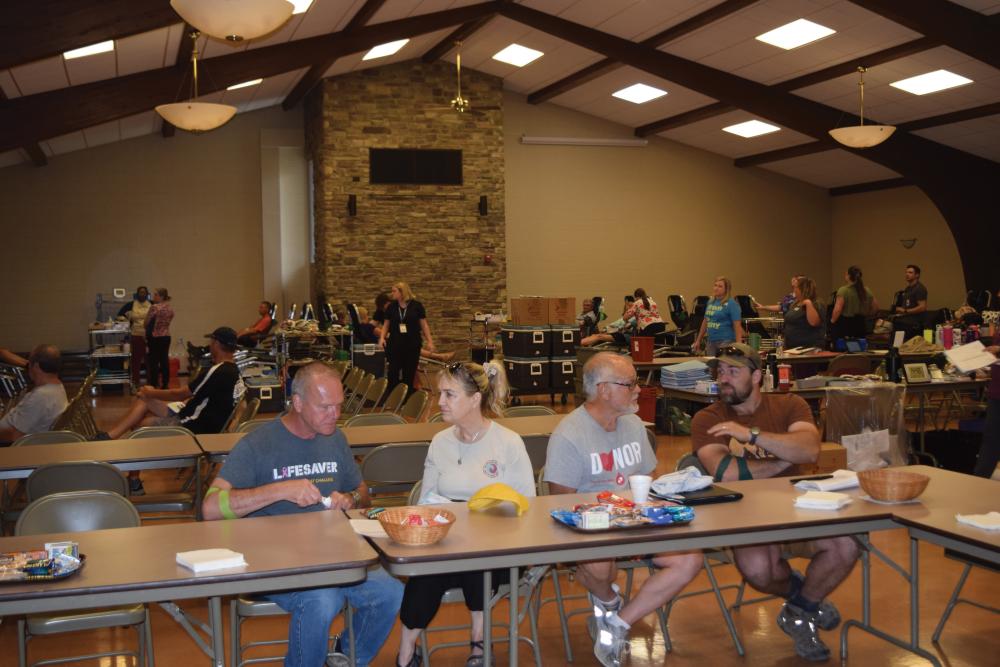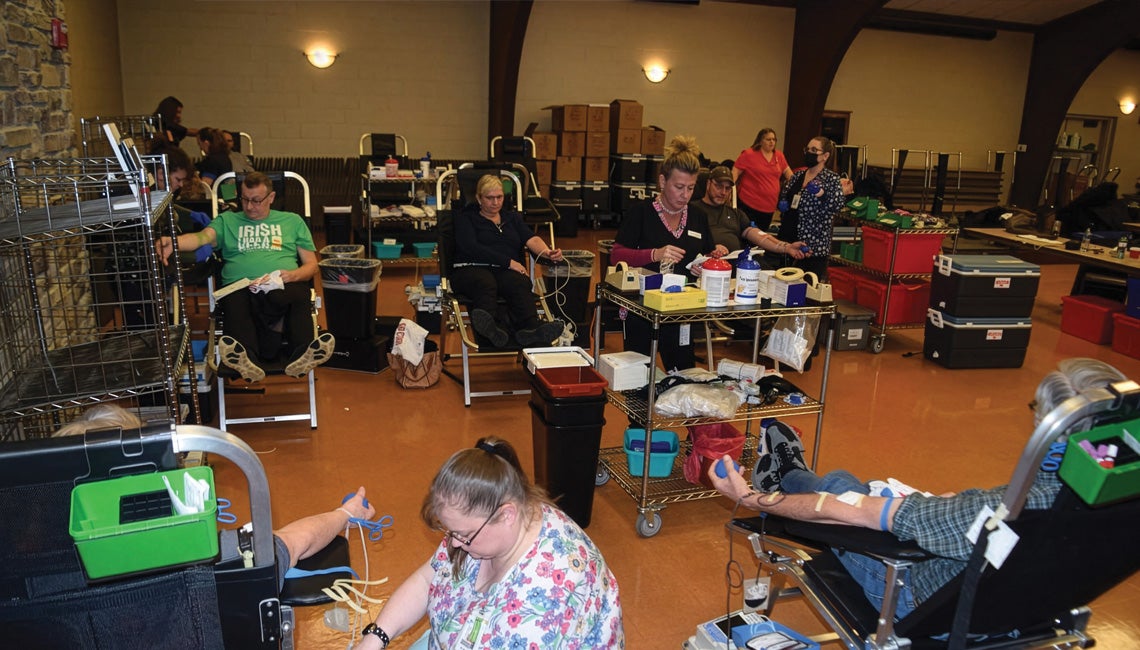
Roger Bender doesn’t think much about the number. From his farm outside Fort Loramie, where he’s a member of Piqua-based Pioneer Electric Cooperative, he’s been showing up to blood drives for more than 50 years. A pint here. Platelets there. Time spent in folding chairs at St. Michael Hall, sleeves rolled up, watching as the same people come through the door.
Over time, it’s added up to hundreds of donations — gallon upon gallon — and a mountain of T-shirts to mark them. Reds, blacks, faded grays, they sit in drawers and closets, each one stamped with a message: “Give blood. Give love.” “Find the hero in you.” “Be the good.” Some mark milestones, others came from small-town drives meant to thank donors and draw in new ones.
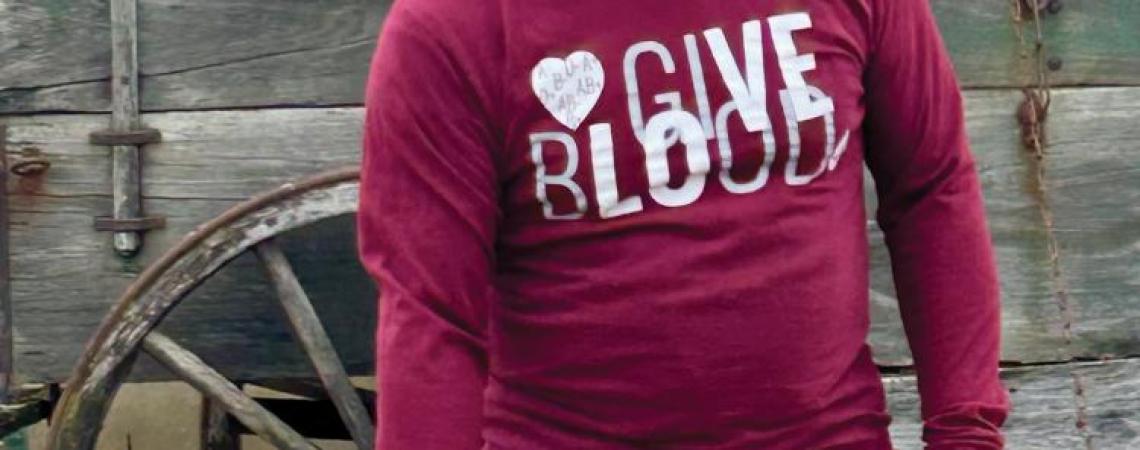
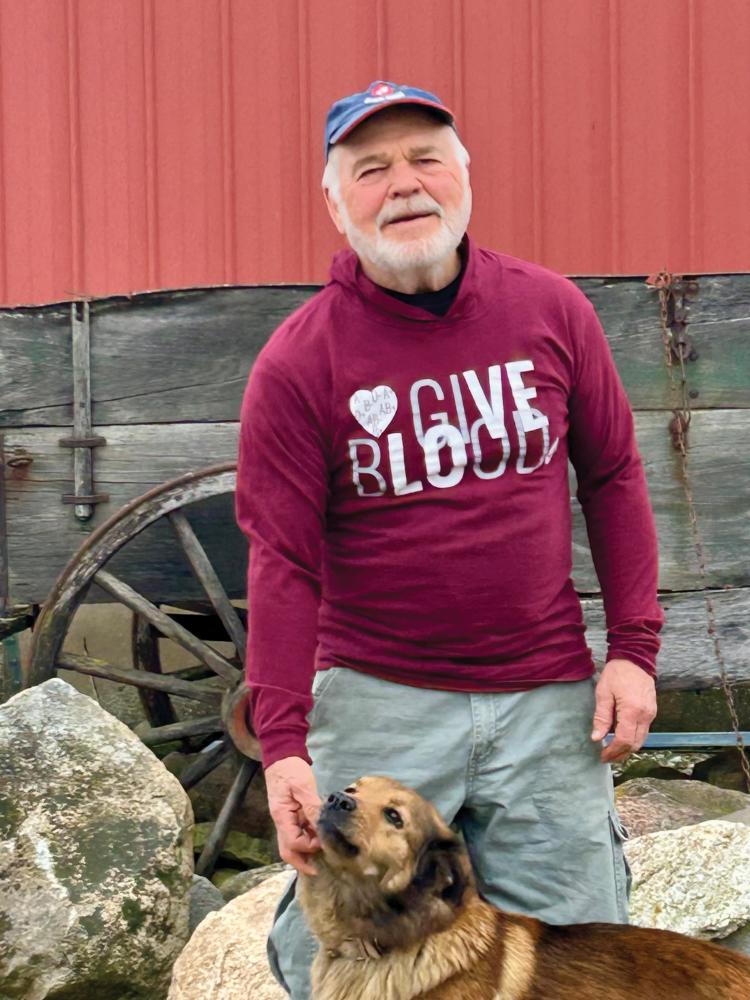
Roger Bender has been showing up to blood drives for more than 50 years.
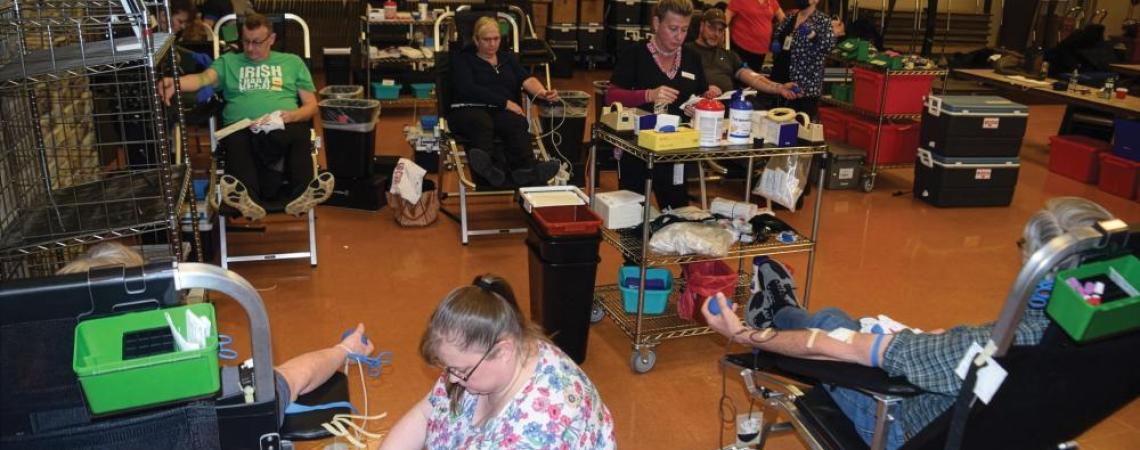
Bender keeps his favorites; they’re a regular part of his wardrobe. But he also gives them away: to neighbors who can’t donate anymore, to friends, to anyone who might wear one out into the world and make someone else think twice about passing by the next blood drive.
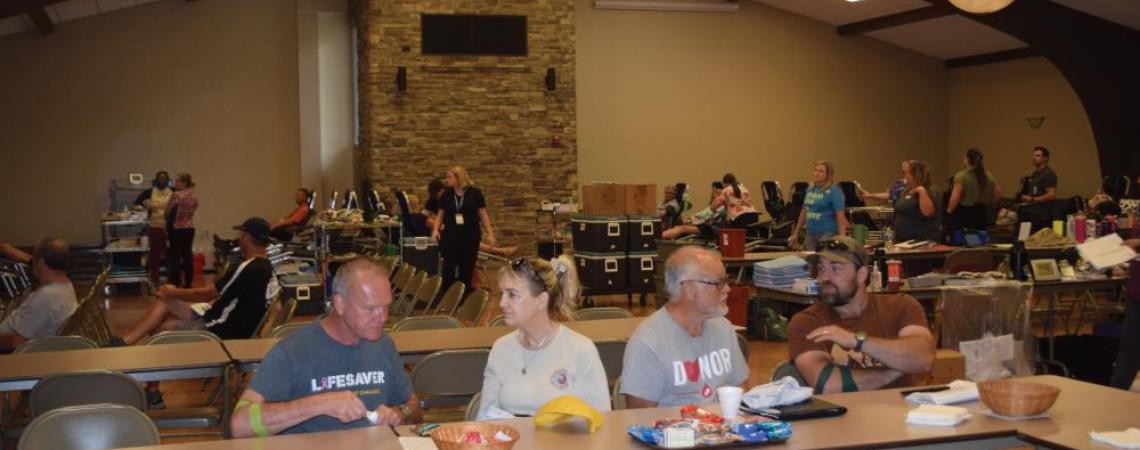
He doesn’t give blood for the shirts. He does it for what happens inside St. Michael Hall, the recurring home to Fort Loramie’s drives.
Behind the scenes
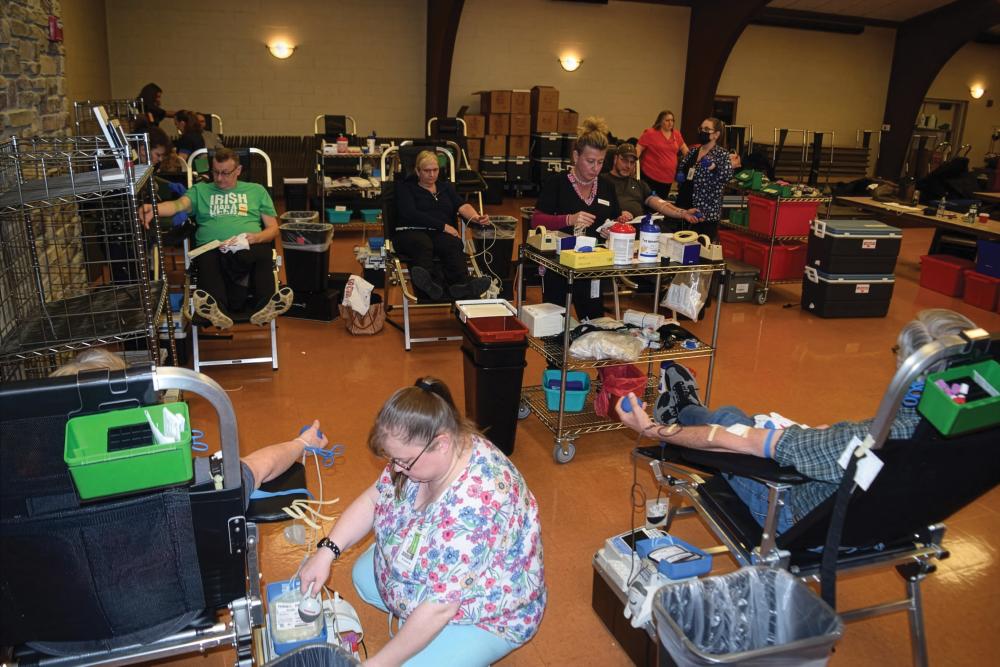
Hours before go-time on the day of a blood drive, St. Michael’s is already awake. The Fort Loramie Community Service Club (of which Bender is a member) handles the setup. Tables are lined up in neat rows, and volunteers move with quiet efficiency to prepare the space.
National Honor Society members from the local high school arrive early to help, taking care of the heavier lifting. The American Legion Auxiliary prepares food for the donors — hot sandwiches and homemade cookies are available for those who give (a step up from the usual bagged snacks available at blood drives).
Roughly one in eight of the town’s residents (somewhere around 200 people) will pass through the hall over the course of the day. It’s more than just a routine for many in the community; it’s become something deeply personal.
Everyone has a reason
Bender has seen it happen again and again. He recalls the story of a young couple who never miss a drive, often bringing their three children along. “Her mom had cancer,” the man says. “And that used a lot of blood.”
Bender sees another man at a table across the way — someone who, by his own admission, hates needles. Still, Bender says he comes to every drive. “If my wife could go through what she did for three years of cancer treatment,” the man told him, “I can deal with this.”
There’s the story of a young man who suffered severe burns and needed transfusions to survive. Before it happened, he had already donated more than 70 times himself. When word spread, the community responded the way it always does, by showing up.
A point of community pride
Years ago, a retired nurse named Irene Boerger helped build the local blood donation program into something lasting. She encouraged people not just to give, but to return, and to bring others with them. Over time, that persistence shaped the culture of the area. At one point, it became one of the highest donor regions in the country on a per capita basis.
It doesn’t matter to any of them that the blood collected doesn’t necessarily stay in Fort Loramie. It goes to supply hospitals across an 18-county area. The need is constant, with the blood being used for cancer patients, trauma victims, and surgeries that can’t wait.
To meet that need, the drives have expanded. What used to be three per year in Fort Loramie is now six. Nearby communities have done the same, creating more opportunities for people to step forward.
Do what you can
For years, Bender donated whole blood, a process that took 10 minutes or less. But after retiring from teaching in 2011, he was encouraged to switch to platelets and plasma, which are especially important for cancer and burn patients. The process takes longer. Blood is drawn, separated, and returned in cycles. Sometimes it keeps him in the chair for more than an hour.
Last year alone, he donated 28 times. It sounds like something worth bragging about, but Bender is more proud of the community effort than he is his own contribution. “I’m just fortunate to be healthy enough,” he says.
There are still small rewards. T-shirts. Sweatshirts. Coffee mugs. Tokens meant to thank donors and maybe catch someone’s attention out in public. For Bender, it’s more about what he leaves behind.