Like many Kelleys Island residents, Charles and Cindy Herndon spent their childhood summers in the bucolic setting on western Lake Erie before returning decades later to live there. But they didn’t just come back to fade away into retirement.
Charles, 79, and Cindy, 74, established the Charles Herndon Galleries and Sculpture Garden, a sprawling art campus that includes two galleries, working studio spaces that have served as a sanctuary for art since 1999, and a sprawling garden with cedar woods with trails for visitors to walk around and view the art.
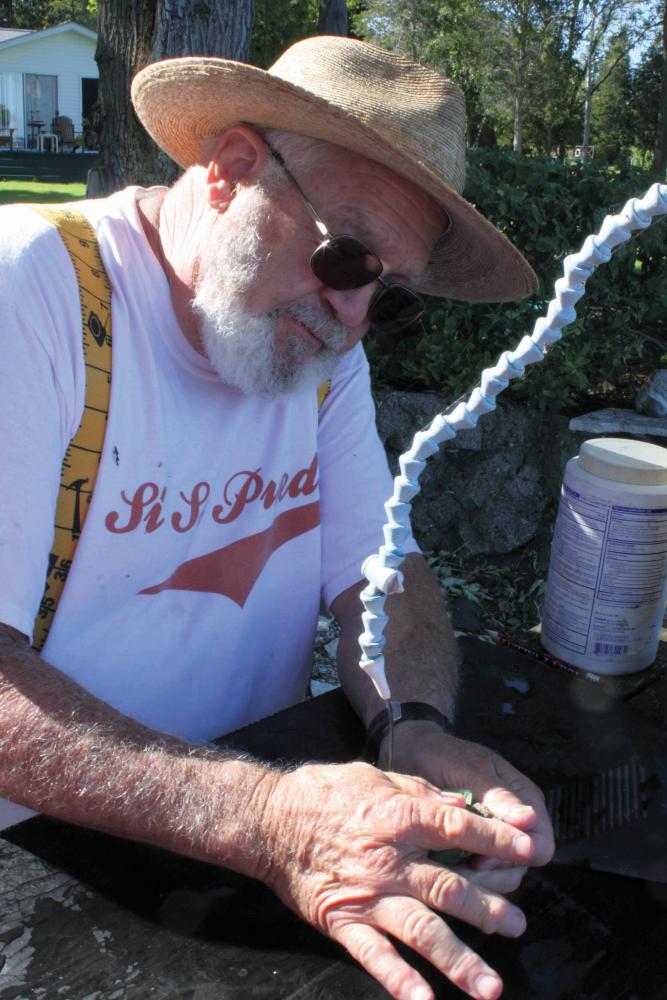
Charles is a retired professor from Columbus College of Art and Design. He is a sculptor, painter, and photographer whose work is intimately connected to the lake — and to the sprawling 10-acre garden on its shore.
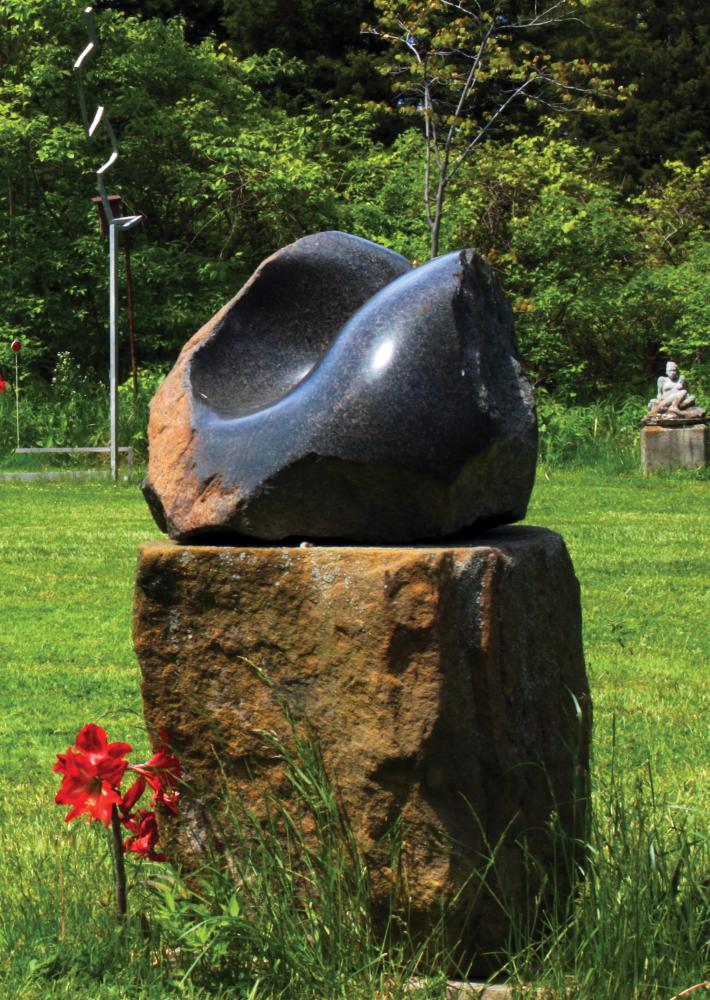
Herndon’s “From Here to the Sea,” a work in glacial erratic granite and a fixture in the sculpture garden.
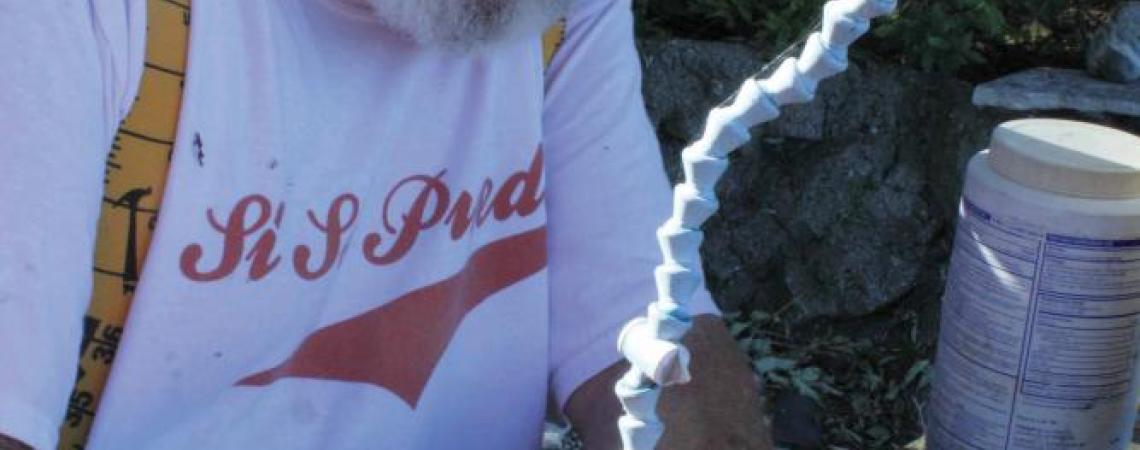
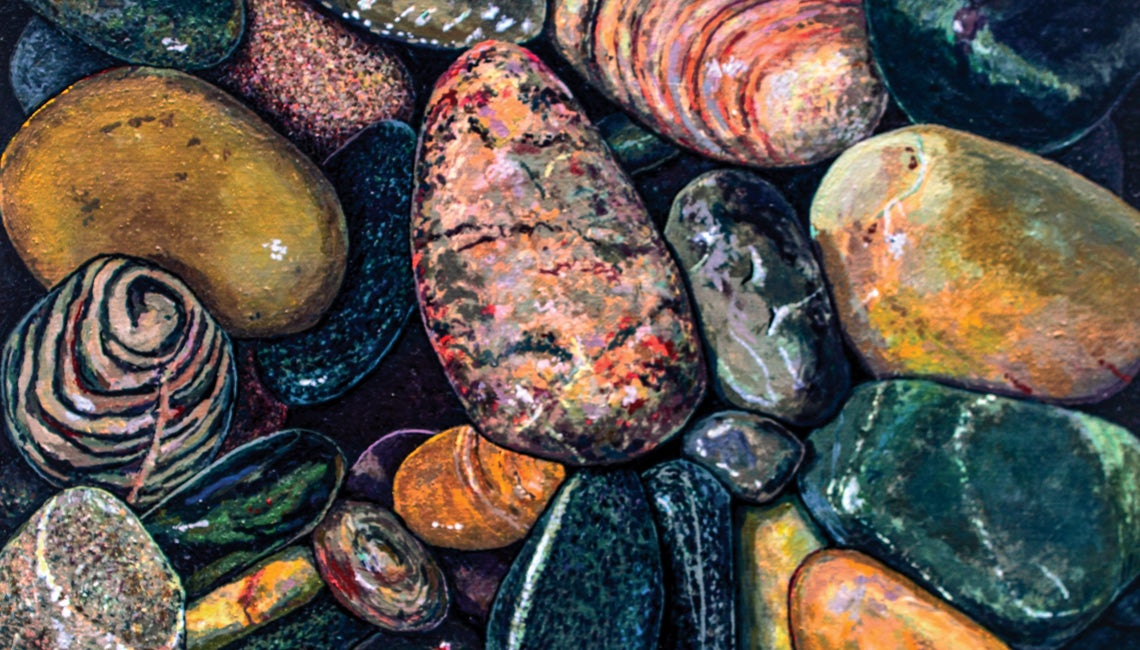
“The lake is a provider for paintings using propagation, waves, the stones it brings to shore, its movement, repetition, and variety,” he says. “The natural world is important to my soul and its creative juices.”
Before he painted, Charles mostly sculpted, and the garden portion of the campus is home to about 150 pieces ranging from smaller works to massive creations 7 or 8 feet tall. Some are wood, steel, or bronze; others are pieces of glacial erratic (granite) and limestone, many quarried from the island.
“The granite came down from the Wisconsin glacier, and you can see it’s gone through the molten process, so there are veins where it was really, really hot,” Cindy says. “They’re very hard and you have to use diamond tools to carve those. And the limestone from Kelleys has all kinds of interesting patterns, so the fossils really show through.”
While the Herndon galleries themselves are seasonal (a no-brainer on Lake Erie islands), the studios serve as creative “hotspots” year-round — a term that’s quite literal for one of the two island artists whose work is born there.
“Jackie Polofka is our glass artist and does amazing things in the studio Thursdays, Fridays, and Saturdays during the season,” says Carmen Smith, the gallery’s manager. “She used to blow glass in different places around the island with a trailer.”
Polofka’s yearning for a larger and more permanent working space eventually led to a perfect marriage with the Herndons’ desire to have artists working on
the campus.
“It’s a huge draw for the gallery and people love her work,” Smith says. “She blows a lot of touristy things you can hang in the window and cute little birds — fun stuff — but also pieces like goblets with extremely fancy stems. Those are stunningly gorgeous.”
The other artist whose work regularly rises from the studios is Smith herself. “I’m a jeweler and also work in fibers, sewing, weaving, and things like that,” she says. “I have a loom where I can make textiles, but I do a lot of wall hangings, more artistic-leaning than functional weaving. I also use a lot of clothing and other textiles that I find, both for the environment and the price.”
Smith says soaring silver prices have cut into her jewelry work, though she’s still a working jeweler with the know-how to mill silver. That’s the process of taking raw silver and forming it into sheets, shapes, wires, or whatever form is needed to create original pieces. She also does free-form casting, in which liquid silver is poured into materials such as beans, water, rice or spaghetti to create one-of-a-kind shapes; she says it’s quite the crowd pleaser.
“It’s fun because it’s visual and so I do it as a demonstration down at the gardens sometimes,” she says. “It’s just very fun to work with.”
The gallery and gardens are free and open to the public during the season, and while the space is located at the eastern end of the island, away from the downtown bars and restaurants, it still sees regular traffic from summer revelers — many with drinks in hand, which Smith says has never caused an issue.
“We like to share the art and garden with visitors, especially our community members,” Charles says. “We enjoy it and feel it’s important to our society to give explanation to some of the stone carving processes and welding of steel. And we always encourage young children to enjoy the outdoor work — we have games they can play to seek a better understanding.”
The Herndons are members of North Baltimore-based Hancock-Wood Electric Cooperative, as are all residents and businesses on Kelleys.
“We have great people on the island here, absolutely,” Cindy says. “That’s another story in itself, just the people that work on the island. It’s a great co-op and we’re happy with things and if we’re ever not, they’re always responsive.”
Island rescues
While Charles Herndon paints and sculpts, plucking ideas and forms from ancient stone and colors and patterns from palettes with a searching mind and heart, he also will occasionally be called upon to transform dark to light in a more metaphysical sense.
In 2007, a small plane crashed into Lake Erie about a half-mile out from his gallery and sculpture garden at the eastern end of Kelleys Island. He launched his small rowboat and saved a young boy whose father and brother had perished in the crash.
Years earlier, he and Cindy were fishing south of the island when they came upon another fishing boat that had sunk and they rescued two anglers from the water — though a third person aboard did not survive.