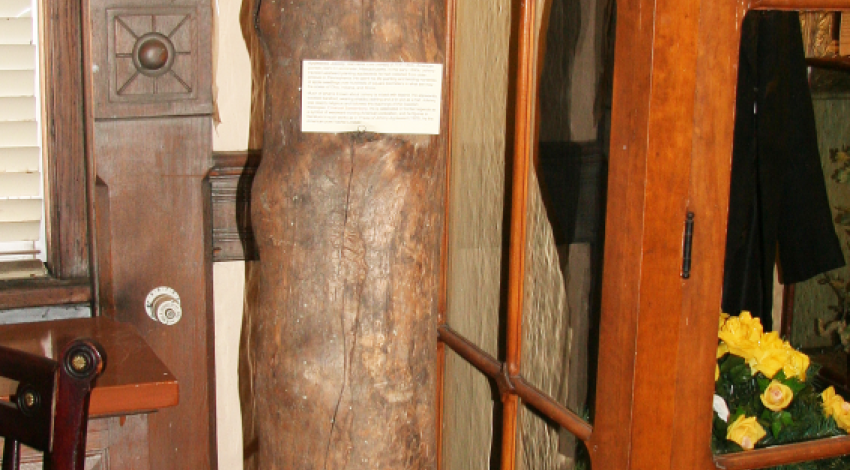

The last organized departure of Shawnee people from Ohio began in September 1832.
Telling the story of the Shawnee — and their relationship with Ohio settlers — is the motivation behind the creation of Great Council State Park, scheduled to open early this year on State Route 68 between Xenia and Yellow Springs.
Wallace, who has tangled with state officials on other issues, praises ODNR and the Ohio History Connection for the efforts to accurately present the Shawnee story in the new park. “I’ve always told them, ‘Don’t talk about us, talk with us,’ and that has happened from day one with this project,” she says.

The integrated electric network that brings power to your home or business is a technical marvel. That network manages the flow of electrons, traveling at the speed of light, from the massive generation stations that produce them to towns and cities, to homes and businesses across the country.
Much of what makes this system work goes unnoticed. Of course, everyone sees the poles, wires, and transformers that connect every neighborhood up and down nearly every roadway, or the few large generating stations that produce the power we distribute.
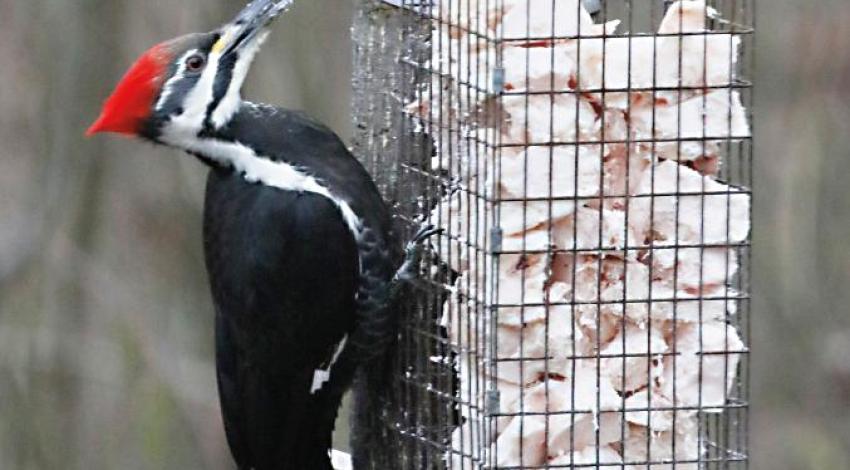
I’m a backyard bird-feeding genius. (Please don’t ask my wife about that statement; she claims to have multiple examples of my less-than-genius status — and not just pertaining to bird feeding. But she does tend to exaggerate.)
I maintain nine bird feeders outside my home-office window. Only two of them were commercially manufactured, and one of those two was given to me as a gift. The other seven I cobbled together from material I had on hand. I don’t mind spending money when I have to, but if I can save a few bucks and still get the job done, I’m all for it, especially with the continually rising cost of bird feed.
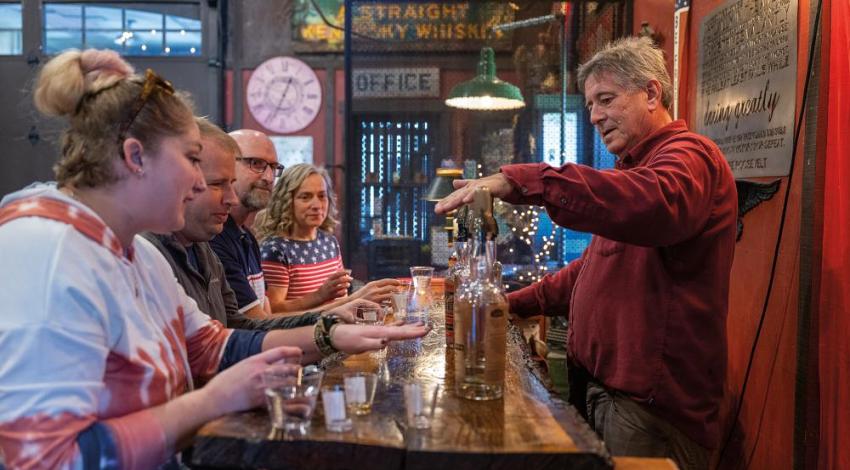
Among Ohio’s numerous tourism “trails” that group loosely kindred attractions to create a single novelty destination, the recently conceived Sweets and Spirits Trail in Miami County seems a perfect pairing for this time of year.
My husband, Mike, and I made a date of it recently. To guide us along the route, we downloaded the Miami County Sweets and Spirits Trail app, which showcases all stops and includes a map with distances between each location. Some spots offer incentives for visiting, including purchase discounts, free samples, or a free shot glass. As we virtually checked in at each location, we earned points toward prizes from the visitors bureau.
We were taken with the area’s charming small towns and the warmth and authenticity of the trail’s shop owners. For example:

January is always a good time to take stock of things — to prepare for what’s ahead in the coming year — and often, your electric cooperative finds a long list of upcoming events and things to consider as we try to make sure we’re ready for whatever comes our way. Our list seems to be a little shorter this year, but that doesn’t mean we have less to do or less to worry about. We have some important long-term goals that we need to make progress on to ensure that we can continue to provide the reliable and affordable electric service that you’ve come to expect.
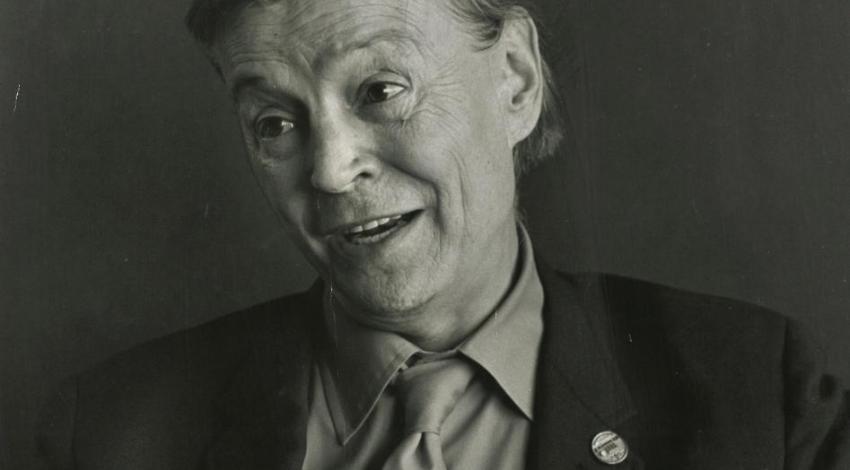
Broadway musicals have dazzled audiences since the 1850s, and this year will be no exception.
Kenley — a theatrical producer and former vaudeville performer — founded the Kenley Players, which brought “America’s most exciting summer theater” to Ohio from 1957 until 1995, drawing crowds with lavish productions, low ticket prices, and big-name stars in leading roles.
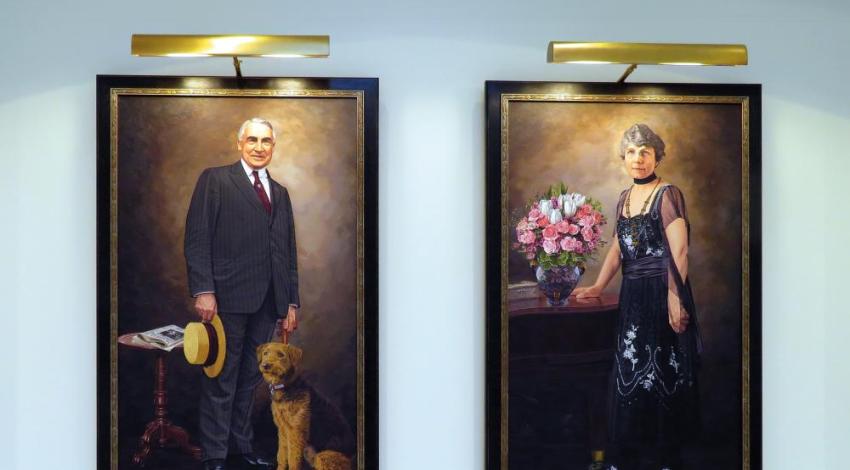
Sherry Hall never tires of showing visitors the paintings of Warren and Florence Harding that hang side by side near the entrance of the Warren G. Harding Presidential Library and Museum in Marion.
The president has a genial twinkle in his eye and holds a straw hat straight out of the Jazz Age. Laddie Boy, the beloved Airedale who attended cabinet meetings and retrieved the president’s errant golf balls, sits at Harding’s feet, and resting on a table behind them is a copy of The Marion Daily Star, the failing newspaper Harding purchased at age 19. He managed to make it profitable and still owned the Star when elected president in 1920.
Electric cooperatives have a long history of standing up for themselves when the needs of their members are not being met.
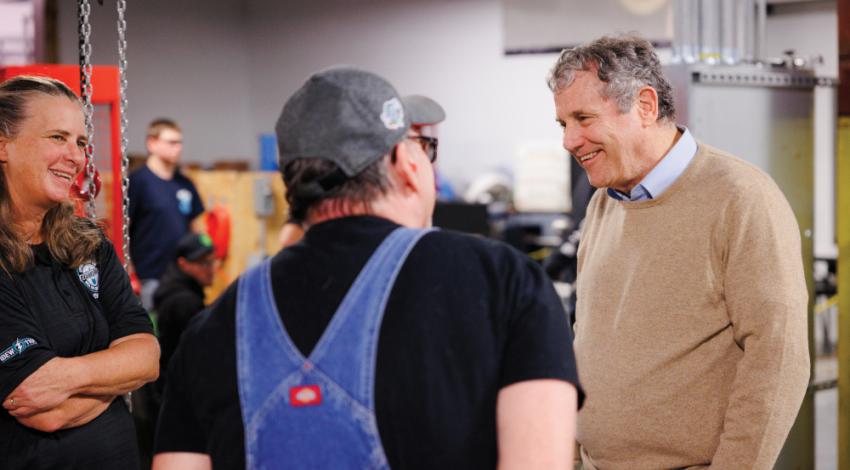
Hosting elected officials at the co-ops’ Central Ohio Lineworker Training Facility in Mount Gilead or the Mone power plant in Convoy gives co-ops a chance to highlight the cooperative difference — to show firsthand how locally owned, not-for-profit co-ops do more with less every day to serve their members.
Co-op managers and trustees also meet those leaders on their own turf, traveling to the Ohio Statehouse or to Washington, D.C., to share a united constituent voice.
When Colleen Jackson instructed her children’s homeschooling group in the early 2000s, she prepared a lesson featuring milk straight from the Holstein cows lolling in the pasture on her family’s 180-acre dairy farm near DeGraff.
Like many dairy farmers in recent years, the Logan County Electric Cooperative members found themselves struggling with high production costs and low milk prices. Ray helped keep the farm afloat by working for a bovine genetics company, but things were tough. Faced with losing the farm and the way of life they love, Ray and Colleen converted an outbuilding into a licensed creamery named for the stream that crosses their land, and Indian Creek Creamery was born.