You might see one while you’re driving down an interstate highway or a country road: a relatively small, robin-sized bird that you might not think much about until you realize that it’s hovering 50 feet or so in the air, intently staring down at the grassy road berm below.
You’ve very likely spotted an American kestrel, the Buckeye State’s smallest falcon; if you’re really lucky, you may see the bird dive, hit the ground feet-first with talons extended, then fly off carrying an unsuspecting victim: insect, mouse, vole, or even another small bird.
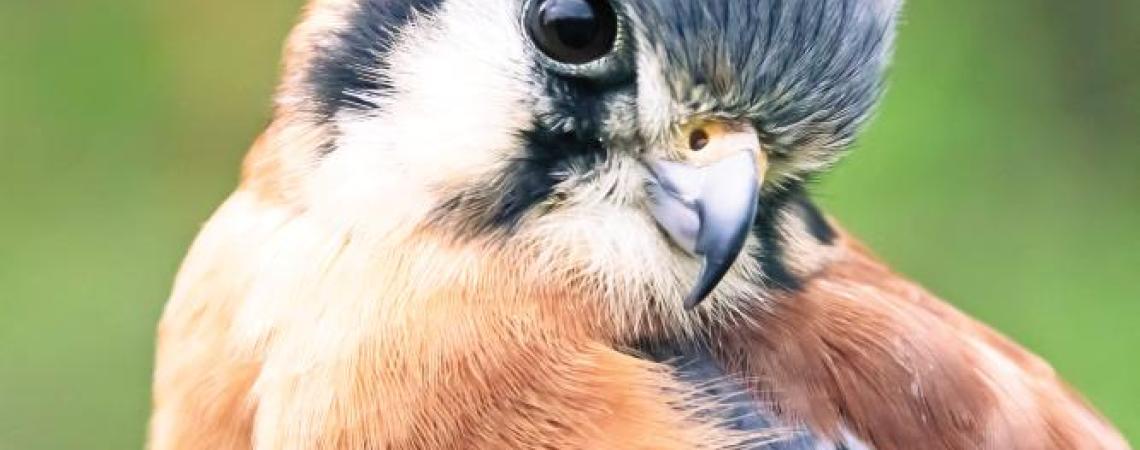
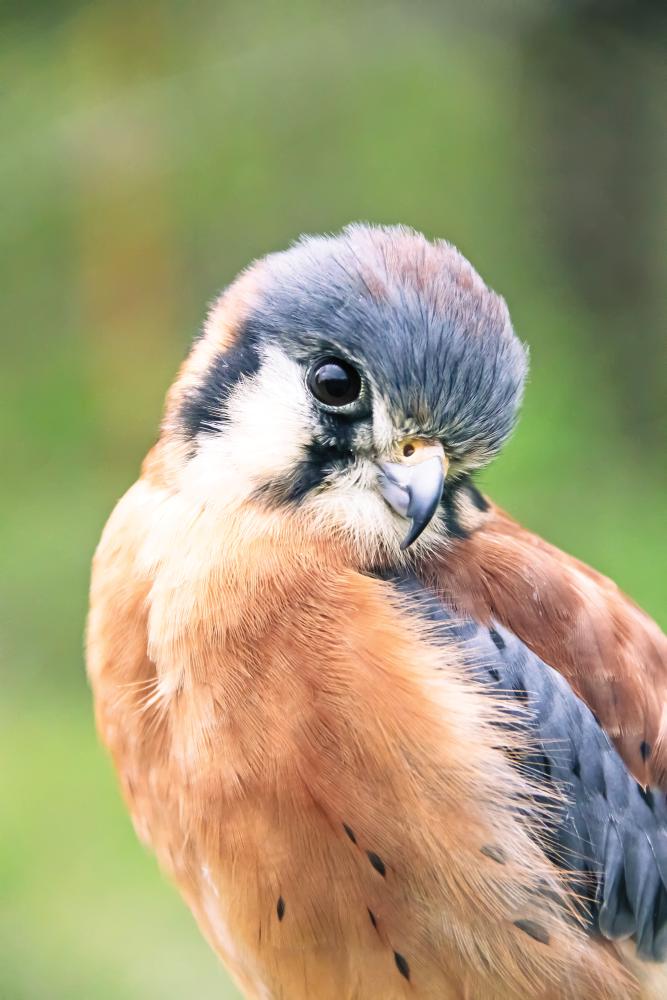
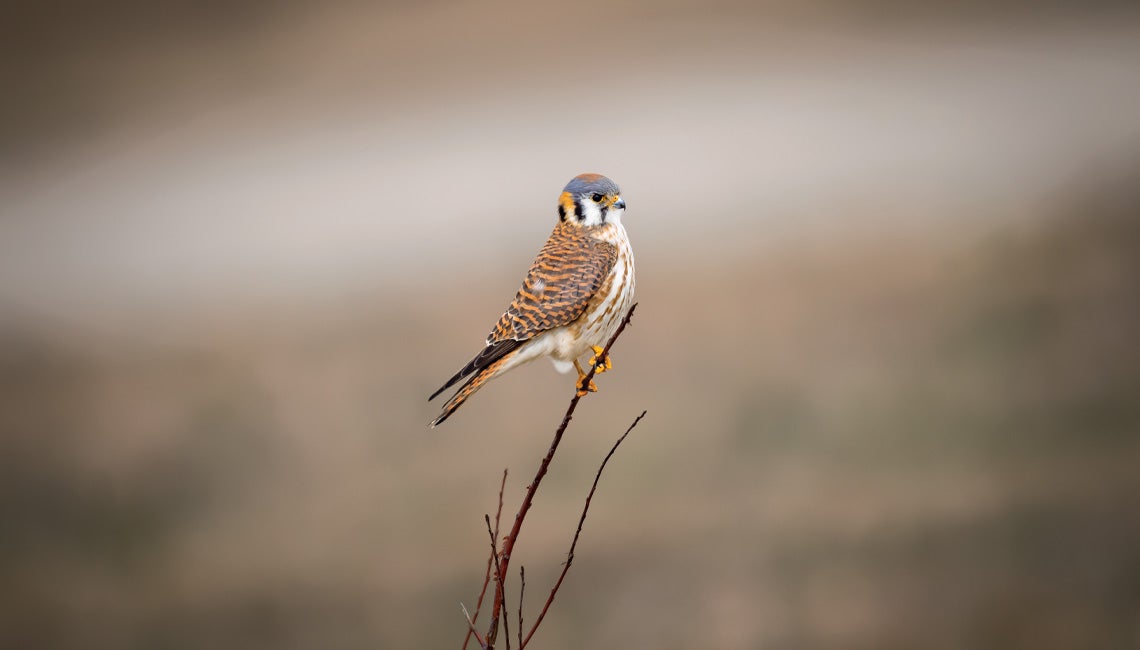
Small but fierce, American kestrels are Ohio's most common and numerous falcon.
More commonly known in years past as sparrow hawks, kestrels measure just a foot or less in body length, but have a wingspan of up to 2 feet, which aids them in their unique hovering style of hunting.
Despite their small size, kestrels possess the same fierce, intense nature of larger falcons, such as the peregrine, which also lives in Ohio. Kestrels, however, are no match for peregrines’ speed. In level flight, peregrines have been clocked at 70 miles per hour, and in a steep dive known as a stoop, they can reach 200 mph — the fastest creature on earth!
What makes a falcon a falcon? In other words, what special characteristics separate falcons from other birds of prey?
“Falcons look like hawks, but they’re not very closely related,” says Kevin McGowan, a native Ohioan and professional ornithologist who works as an avian educator for the Cornell Lab of Ornithology in Ithaca, New York. “Both falcons and hawks are fast-flying daytime predators that capture prey with the strong talons on their feet and rip them up with their sharp down-curved bills. But falcons are built for speed, with long, pointed wings and long tails. Hawks and eagles have broad, blunt wings that are made for soaring and using updrafts to travel long distances without beating a wing. Falcons can soar a bit, but they prefer to flap their wings, and do it fast, to get where they want to go.”
McGowan says there are other “modifications in design” that set them apart from hawks. “Falcons typically have a dark ‘mustache’ mark on their faces: broad and bold on a peregrine, weaker and thinner on a merlin or gyrfalcon, and small and precise on a kestrel,” he says. “Falcons also have a ‘tomial tooth,’ a notch on the cutting edge of their upper bill that they use to kill their prey by cutting through the spine. They also have a bony tubercle in each nostril that may help them breathe better when traveling at high speeds, kind of like a hood scoop on a fast car.”
Kestrels are the smallest and most numerous falcons not only in Ohio but in all of North America. Yet even though they’re a predator, sometimes the hunter can become the hunted. Kestrels are preyed upon by other raptors, both diurnal and nocturnal: goshawks, red-tailed hawks, barn owls, sharp-shinned and Cooper’s hawks, even crows.
Kestrels have played an important part in wildlife conservation history. During the late 20th century, they were the principal species used to document the accumulation of harmful pesticides in birds of prey. That discovery, in turn, ultimately led to the recovery of the bald eagle population in Ohio and across the U.S.
A little-known fact about kestrels is that they’re avid baseball fans, especially fond of night games. Perching on light poles, foul poles, and other high vantage points surrounding a lighted baseball diamond, the birds seem to enjoy the game like anyone else. Occasionally, they’ll swoop down into the powerful stadium light beams to catch a snack of a moth or other winged insect. Many of those nocturnal hunting flights at ball games have been caught on camera, becoming part of national TV sports coverage — sure beats waiting in line at the concession stand.