It’s entirely possible I was a belted kingfisher in a former life. The ultimate introverts of the bird world, kingfishers only spend time with others of their kind when raising their young; other than that, they’re fishing.
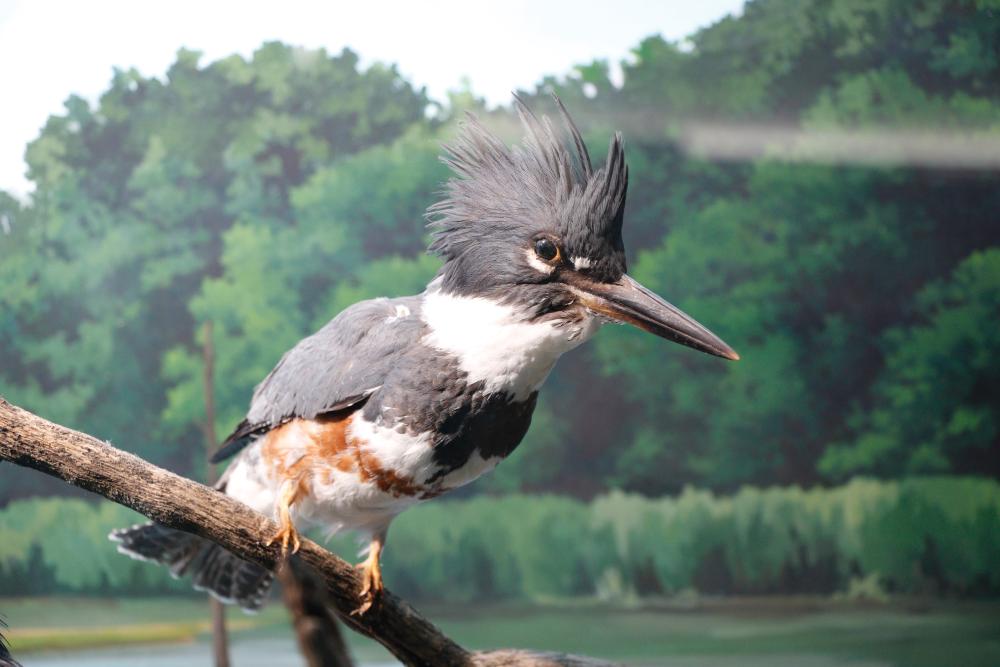
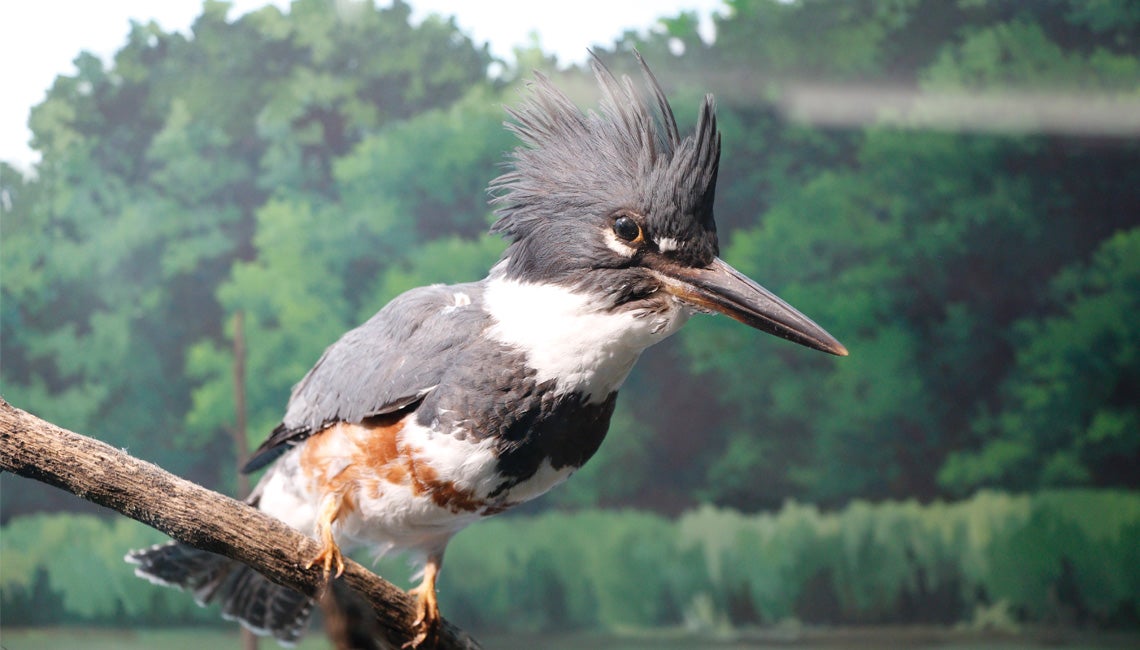
Every accomplished angler has learned the lesson of patience, and the belted kingfisher is the quintessential example. The medium-sized, blue-and-white bird (picture a blue jay with a Bart Simpson haircut) will either perch on a dead snag or hover in midair along the edge of a lake, river, or stream, staring intently into the water below. When opportunity presents itself in the form of a fish near the surface, the bird will suddenly hit the water face-first, leading with its stiletto-like beak to snag its prey.
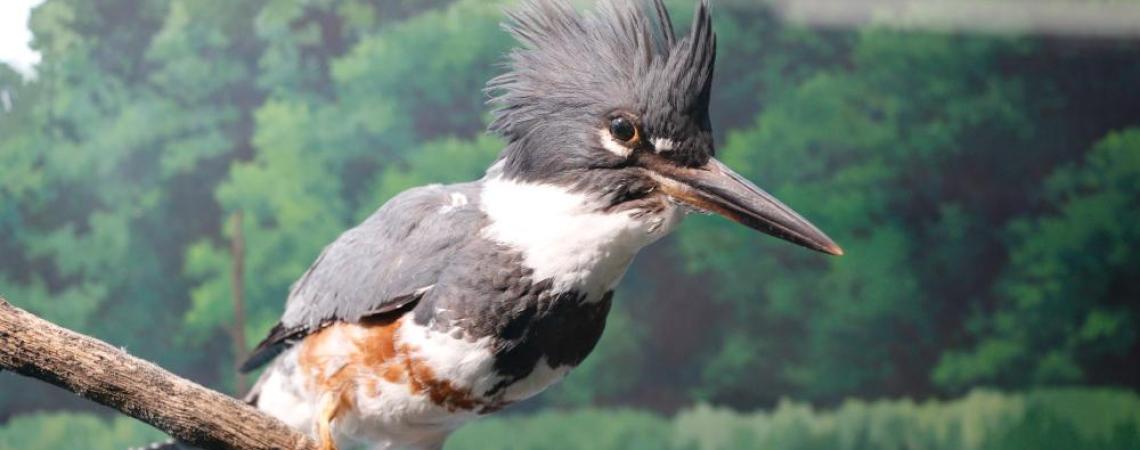
The ultimate introverts of the bird world, kingfishers only spend time with others of their kind when raising their young; other than that, they’re fishing.
It’s one of the most intriguing sights in all of nature. Whether from a perch or a hover, the bird folds its wings and drops like a rock, hitting the water with a splash. Within a split second, an opaque nictitating membrane — a kingfisher’s third eyelid — closes horizontally over the eyeball to help protect it under water. The kingfisher doesn’t spear the fish, but instead grabs it between its upper and lower jawbones. The bird then pivots 180 degrees and allows the natural buoyancy of its body to pull it back to the surface, where it spreads its wings and pushes off into the air with its prize.
Jim McCormac, the author of the identification guide Birds of Ohio, describes what happens next: “The unfortunate victim is taken back to the perch, where it is often savagely pounded against an unyielding surface until stunned, at which point the kingfisher gulps it down.”
Experienced birders, however, know it takes a sharp eye and a pair of powerful binoculars to see the exceptionally wary kingfisher up close. All a beginning birder usually gets is a quick glimpse of a disappearing blue blur and a loud, raucous, rattling call. Kingfishers have half a dozen common colloquial names, but one of the most descriptive is “fly-up-the-creek,” because that’s usually all you see of the bird. They are hardy birds, often overwintering in Ohio as long as there is enough open water in which to fish, so watch for them year-round.
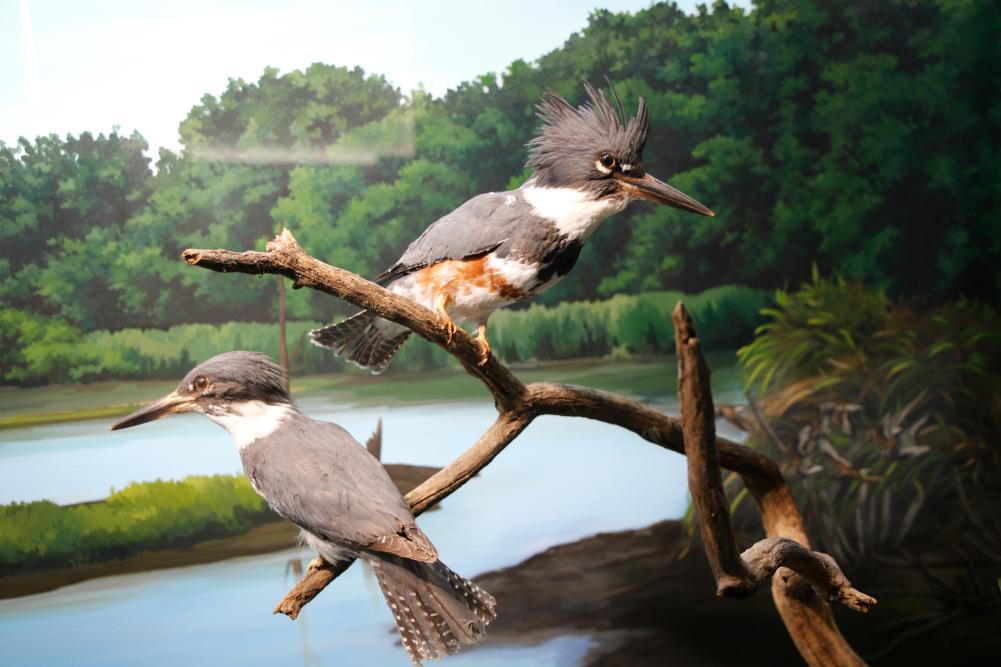
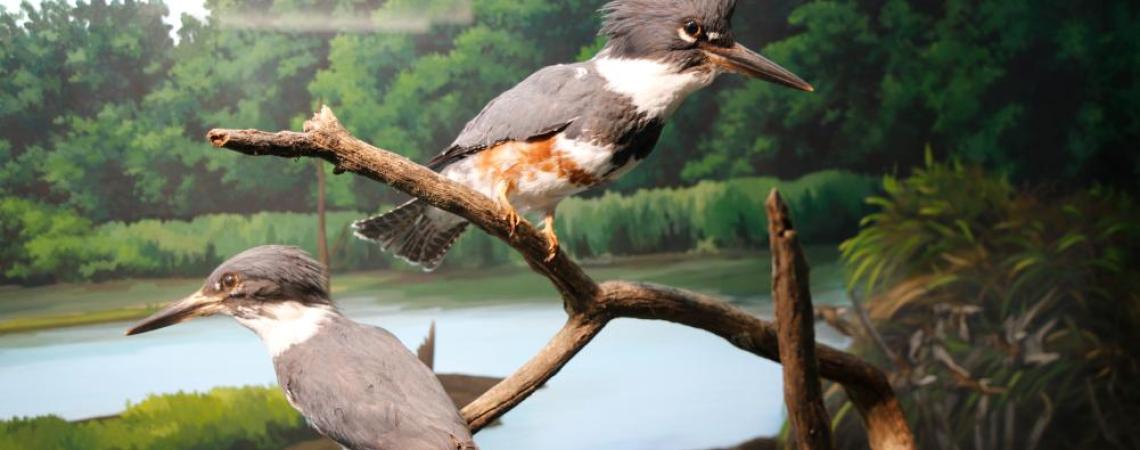
Unlike most birds, female kingfishers are more colorful than the males. Both sexes sport a blue-gray chest band, but the female also boasts a rust-colored belly band. After breeding, the pair nest by excavating a horizontal tunnel several feet long into a steep earthen riverbank. They take turns digging with their bills, pushing the dirt out behind them with their feet. At the end of the tunnel, they hollow out a round nesting chamber, which the female fills with five to eight translucent white eggs.
Incubation lasts about 24 days, and the mated pair alternates sitting on the eggs. Once the young birds hatch, the female broods the young while the male keeps busy fishing for the family. It isn’t long, however, before the voracious appetites of the young kingfishers — who can eat from one to nearly two times their weight in fish daily — keep both parents fishing full-time. The young birds leave the nest after about five weeks, and learn to fish on their own a week or two after that. From that time on, young kingfishers will make their own solitary way in the world until taking a mate the following summer.
Although kingfishers eat mainly fish, I once saw a short video clip taken by a friend’s trail camera of a male kingfisher bringing a sizable frog, which he had already beaten senseless, to his mate. The female kingfisher came to the entrance of the nesting tunnel and unceremoniously — without so much as a “Thanks, Honey” — grabbed the frog by the nape of the neck with her beak and pulled it backward into the tunnel. It looked like a gangster movie in which the unconscious hero is dragged through a door in a dark alleyway by the bad guys. Only in this case, I don’t think our “hero” survived to save the damsel in distress.