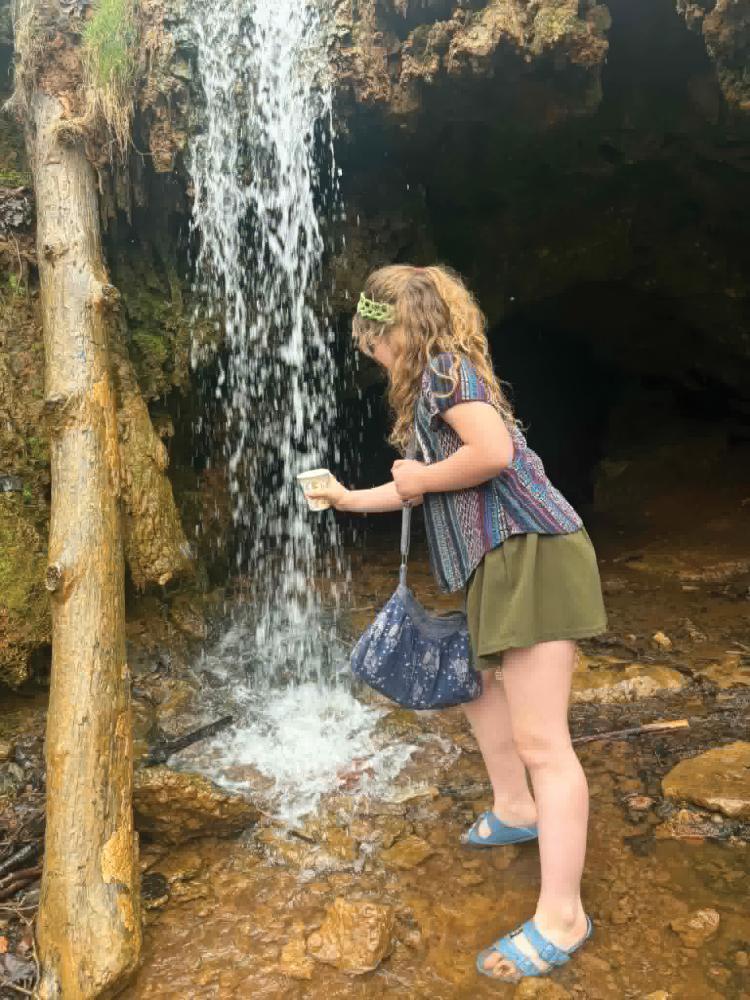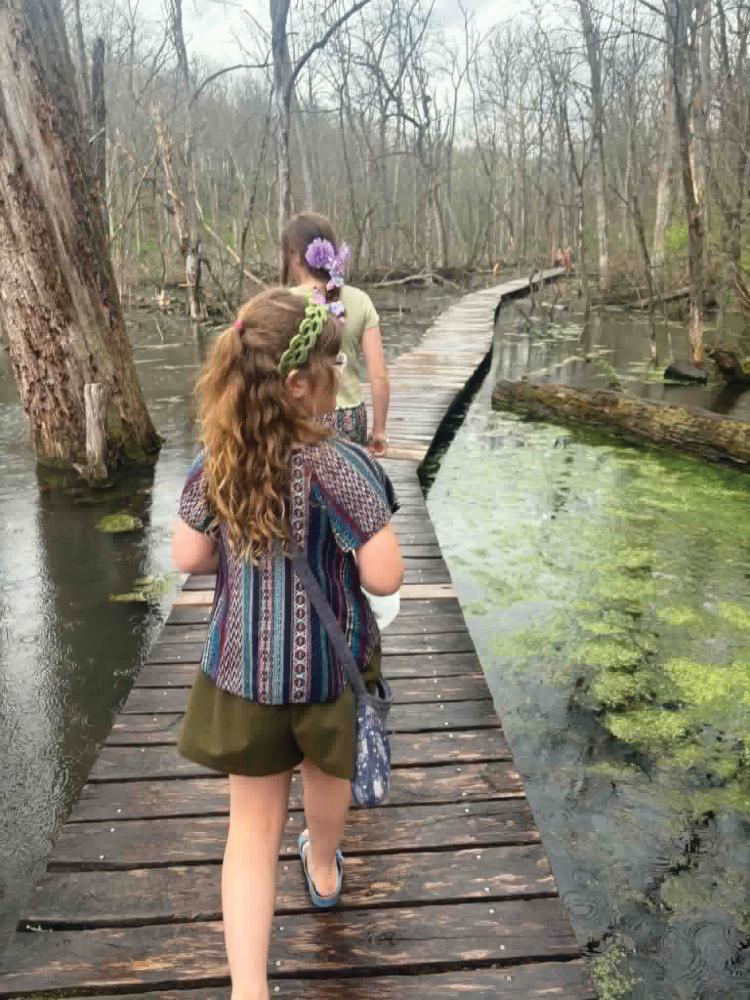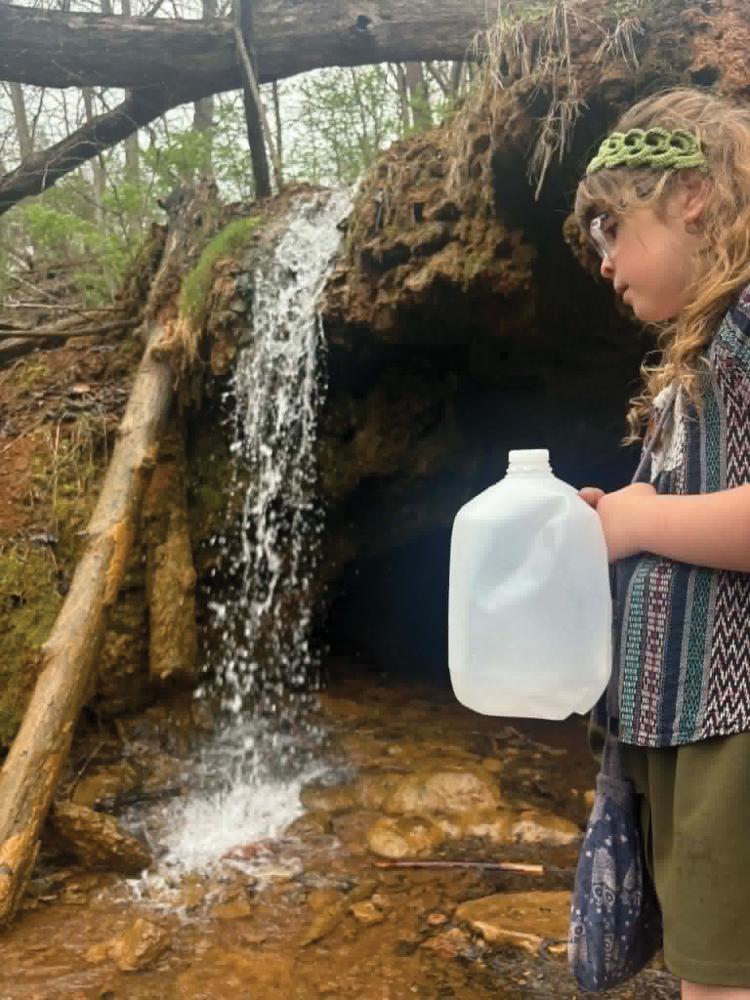
It was a cloudy, misty afternoon that belied the spring season when my children and I arrived at Glen Helen Nature Preserve near Yellow Springs, in search of the nearby town’s iconic namesake.
We had heard tales of locals drinking from the spring (some for decades), and my children and I were enchanted with the prospect. But there’s a lot to think about before sipping (or chugging) that clear, cool water from the Yellow Spring, or any of the hundreds of naturally occurring springs in the state.
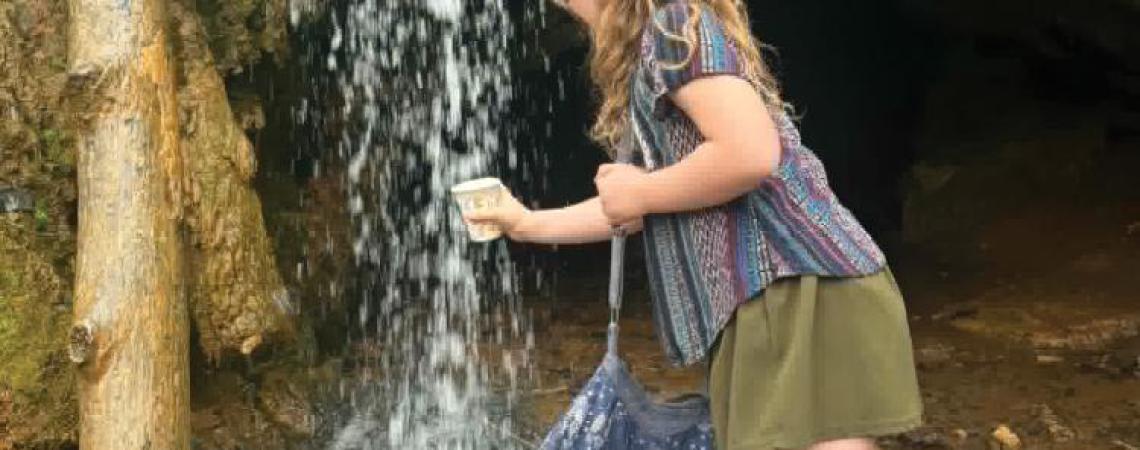
There’s a lot to think about before sipping (or chugging) that clear, cool water from any of the hundreds of naturally occurring springs in the state.
ACCORDING TO A MAP from the Ohio Department of Natural Resources, most of Ohio’s springs are in the southeast part of the state, with a fair number in central and southwest Ohio as well. Steven Lyon, an associate professor at the School of Environment and Natural Resources at Ohio State University, says they’re driven by the state’s geological history and the prevalence of limestone, sandstone, and shale.
“Much of what we see in Ohio comes as a result of the glaciers that once covered the state,” Lyon says. “Geology determines how much water is in the ground and how easily it moves; then, if the geology intersects with the surface, you can get natural springs.”
But just because they are naturally occurring doesn’t mean the water is necessarily clean and pure. Nick Boutis, executive director of the Glen Helen Association, which oversees the Yellow Spring, says the water coming from the spring there is not routinely tested and is not certified as a source of clean drinking water. “Water that looks and smells clean can still have nitrites, coliform bacteria, or other human-caused pollutants that you would not want to ingest,” he says.
Erik Larson, professor of geology at Shawnee State University, who studies this sort of thing, says he steers clear of drinking fresh spring water as a matter of practice. “I personally wouldn’t drink it; there’s just too many ways that the groundwater can get contaminated by any number of things, so it’s just not worth it to me,” he says. “But lots of folks do.”
LYON SAYS WHAT DETERMINES whether you can drink water from springs (or rivers or lakes) is what activities are happening in the watershed.
“If there are people living in the region above where the spring is, then things like E. coli from their waste can be an issue,” Lyon says, noting that a leaky septic tank could spoil an otherwise pristine spring in a populated area. He also noted that farms and cows can bring things like cryptosporidium or other pathogens. “That’s why we can drink straight from small streams up high in the mountains, since no people or animals live above them,” he says. “All it takes is one microscopic bad guy in the water to make you sick, so in a populated area especially, best to steer clear.”
If people and their activities are few and far between, and the water goes through the geology getting filtered, risk can be lower. Sandstone in particular, Lyon says, is good at filtering water. “Think about all the people in the state that have well water at their house rather than municipal water.”
FOR MANY LOCALS WHO CHERISH the crisp, cold, clear water coming from the ground, the risk is one they’re willing to assume.
Just outside of Greenfield, for example, on a piece of private property just over the Ross County line, runs another freshwater spring that locals have drawn from for generations.
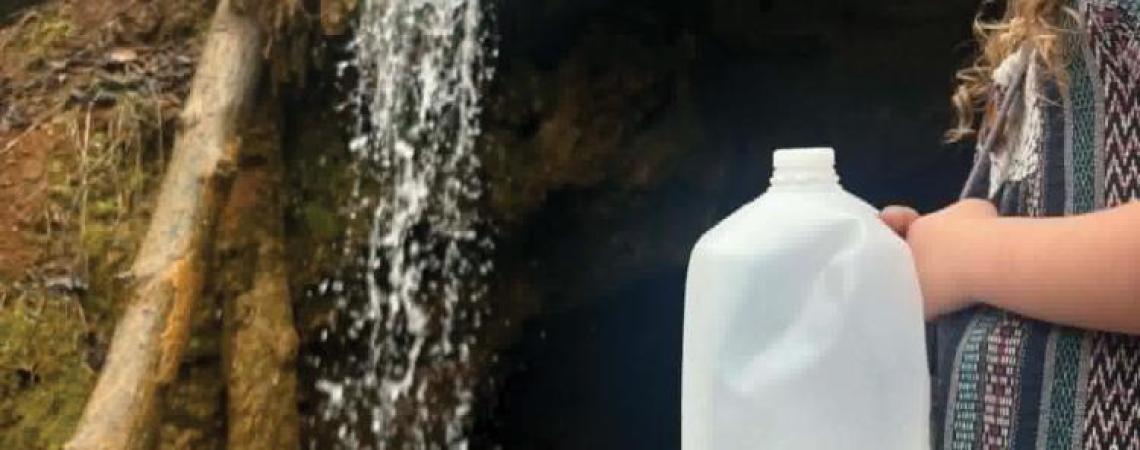
I watch as visitor Greg Gentry fills about 100 1-gallon jugs in an hour. He says his family goes through about 20 gallons a week, but it’s his first time at this particular spring. “It tastes good,” Gentry says. “We’ll see how it stores before getting more.”
Buchtel Spring, outside Nelsonville, is another spring popular with locals, as is Christopher Spring in Cadiz and the Malabar Spring in Holmes County.
Spring-seekers expecting a bubbling spring emanating from the earth might end up disappointed. Water from the spring near Greenfield, for example, flows cleanly and crisply from a pipe that property owners have put in to route it from the earth and make it easier to collect. Many of the more popular springs in the state have been similarly piped.
BACK IN YELLOW SPRINGS, within minutes of being on the trail in the Glen Helen Preserve, we ran into a local woman who not only kindly guided us to the spring, she told us what we had heard elsewhere: that people drink from it all the time with no problems.
We heard it before we saw it. The tranquil yet unmistakable sound of water rushing and rippling over rocks confirmed we were headed in the right direction.
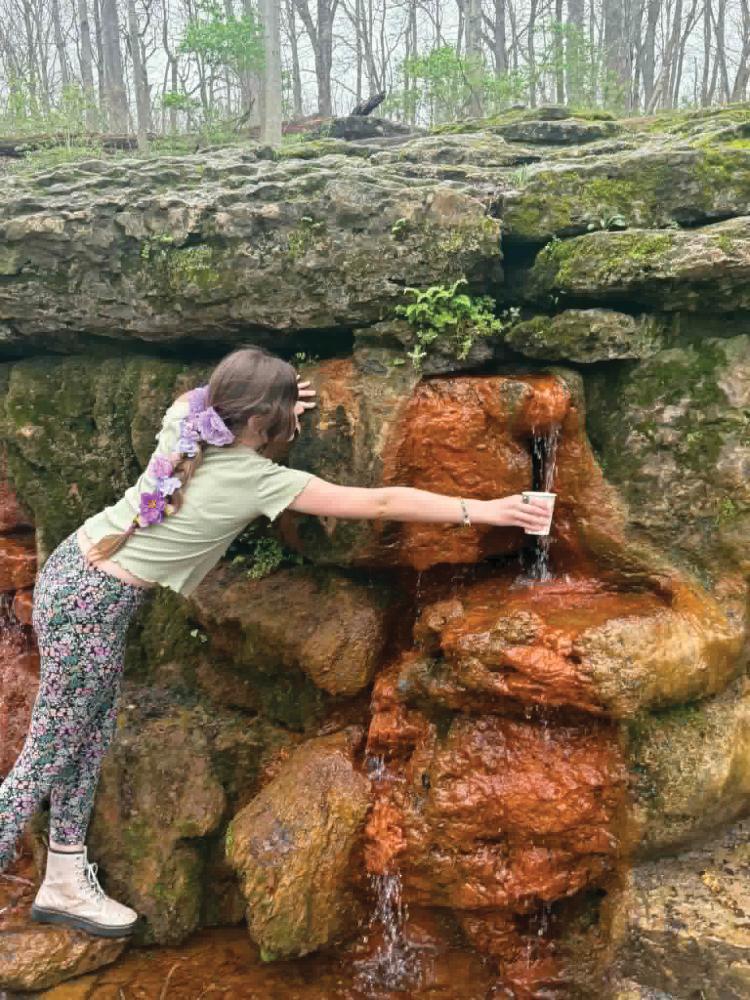
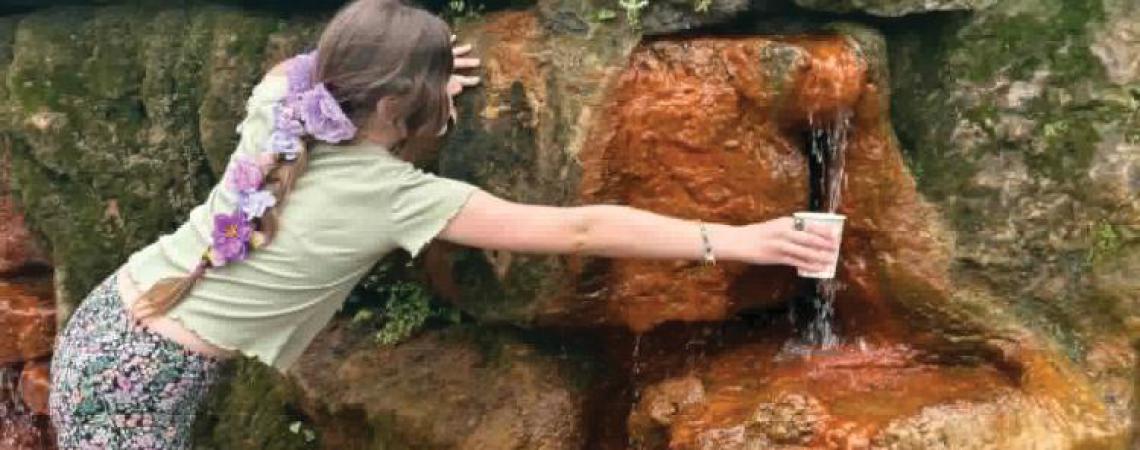
Soon, we came upon the cool, cascading water spurting out in a steady stream. Where the water came from the earth, rocks were tinted a bright yellow-orange from the water’s high iron content, but after the spring water had run over the rocks for a few feet, the iron had been filtered out and the rocks were clean.
Iron, however, isn’t all that’s in the water here. Boutis says it also contains trace amounts of arsenic and cadmium. “If a person used it as their sole water source, those trace amounts could bioaccumulate and cause problems,” he says.
DESPITE THE WARNING, we filled some cups, and I guzzled it straight down. It tasted pure and clean and it was truly refreshing. I can’t speak for others, but we never felt any ill effects.