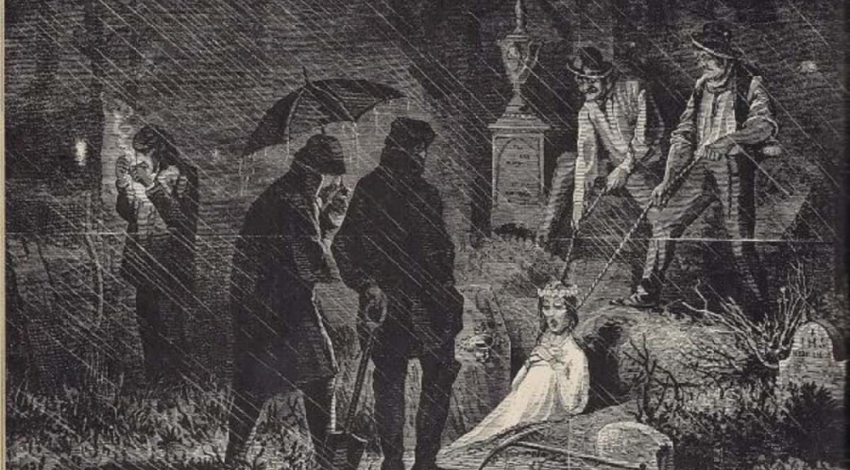
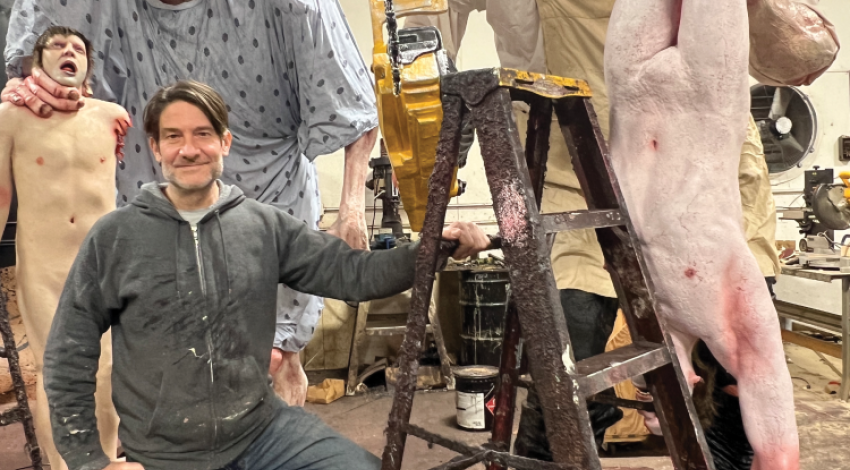
Is there really a Lake Erie monster, as some claim? Well, yes, at least potentially. In fact, thousands of small ones are swimming in the big lake right now. Let me explain.
By mid-century, however, market conditions were rapidly changing, and from 1850 to 1870, products derived from sturgeon transformed this once-worthless fish into a valuable commodity. Caviar, fish oil, and a substance known as isinglass — a gelatin used in adhesives made from the air bladder of various fish, especially sturgeon — became extremely valuable. The fish became so sought after, in fact, that one of the largest sturgeon fisheries in America developed on Lake Erie. In 1885 alone, commercial fishermen on Erie netted more than half a million pounds of lake sturgeon.
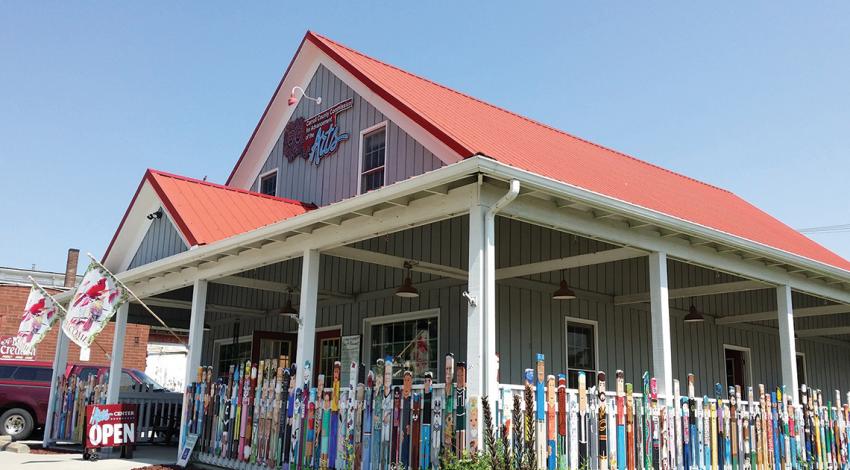
In the eastern part of Ohio near the Pennsylvania border, Carroll Electric Cooperative provides reliable and affordable energy to more than 10,000 consumer-members.
Carroll County attractions
The Carroll County Arts Center features exhibits designed to inspire an appreciation for the arts. It provides classes taught by local artists in birdhouse decorating, woodcarving, oil painting, and more. In keeping with their mission to provide a creative outlet for the community, admission is free to the public.

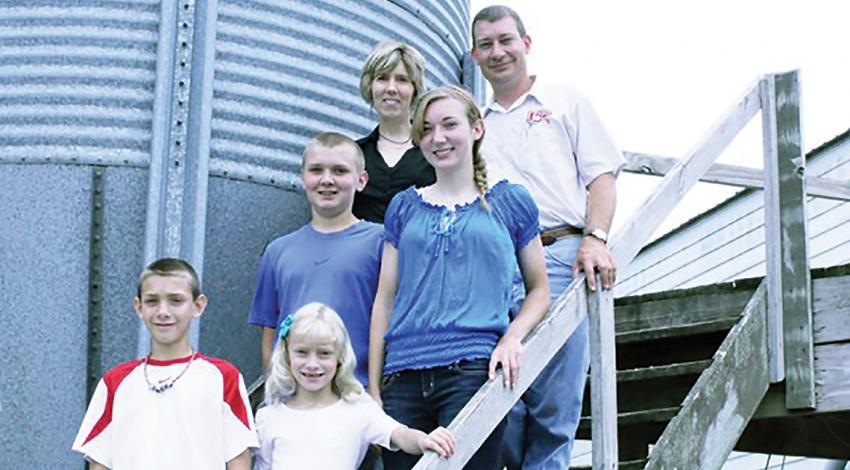
On any given day, 360,000 chicks roam the high-tech henhouse at Meiring Poultry Farm in Fort Recovery.
The four-story henhouse uses an elaborate lighting system that Knapke can control from his smartphone to simulate dawn and dusk. The system controls individual lights within the building, creating total blackness to bright-as-daylight and back again so the chicks become adjusted to the “natural” dawn and rising of the sun to a sunset that draws them into the roosting module where they nest for the night.
Around Sunbury, when Lanie Montgomery shows up at a potluck, folks inevitably find something a bit familiar about the dish she brings.
“We rarely had them at home, but we always had it in the school cafeteria,” she says. “When my grandma retired, I asked her for the recipe, and from then on, I carried it out more into the public. Every potluck I take it to — it’s gone. And everybody wants the recipe.”

Every election is determined by the people who show up.” It’s a platitude that Americans dust off every four years as we prepare to go to the ballot box either to cast a vote for change or to stay the course. Pundits traditionally delight in telling us that this is the most important election in the history of the democratic process. In reality, every election is an essential exercise of democracy that allows our voices to be heard through the ballot we cast.

One of America’s leading naturalists of the 19th century was the prolific Louis Agassiz (1807–1873), who, while teaching at Harvard, taught his students the skill of in-depth observation of natural objects. He did it by what his students termed “the incident of the fish.”
The same approach can be used to learn outdoor photography. Not that you have to stare at the same photo subject for hours on end, but developing the ability to “see” the details of photos before you attempt to take them is a crucial skill — yet one that anyone can learn.
One of Ohio’s best outdoor photographers is Art Weber, founding director of the Nature Photography Center for Metroparks Toledo. He says there’s a difference between looking at the natural world as an artist and as a photographer.
Lavender has been treasured for thousands of years. In ancient Egypt, it was used in mummification; in medieval France, to perfume the air and ward off infection; and in 16th-century England, it was cherished by monarchs and mentioned by Shakespeare.
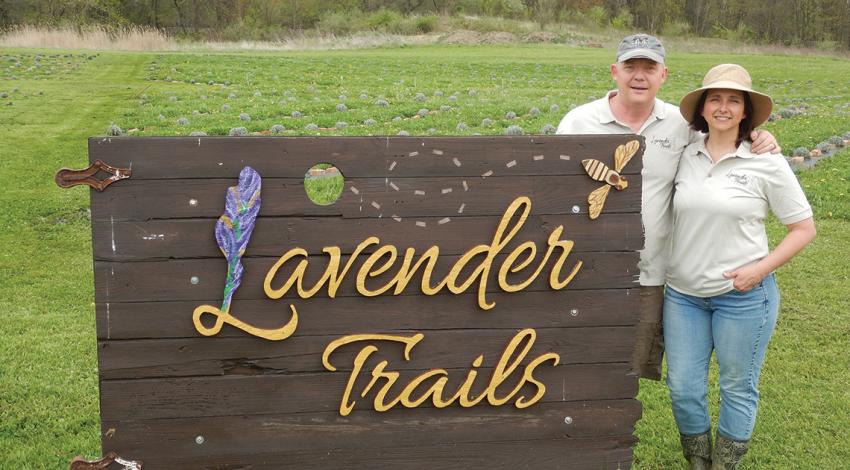
Lavender Trails
The idea for a lavender farm had been rattling around in the minds of Jim and Amy Duxbury — both Orrville high school teachers, of science and English, respectively — for years. In 2018, they leased a 4-acre “brownfield” (a former industrial site) that had been a concrete dumping ground, surrounded by facilities that produced pet food, packaging, and metal fabrication.

Joey and Kristin Huber have been considering — consciously and subconsciously — the benefits of electricity for some time.
The Hubers are part of a growing number of people taking advantage of the benefits of using more electricity as part of a strategic plan to save money and reduce environmental impact. That, in turn, improves their quality of life and helps the stability of the entire electric grid.
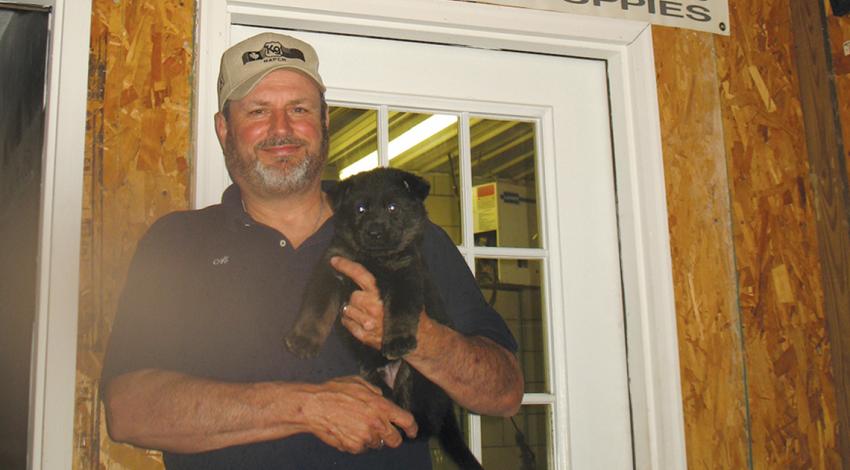
Al Gill believes well-trained German shepherds can mean the difference between life and death in many law enforcement situations.
The property is now home to a world-class training facility as well as housing units for male and female officers who come from across the country to participate in academy classes. There is also a kennel that can accommodate 60 adult dogs as part of the business’ breeding operation.