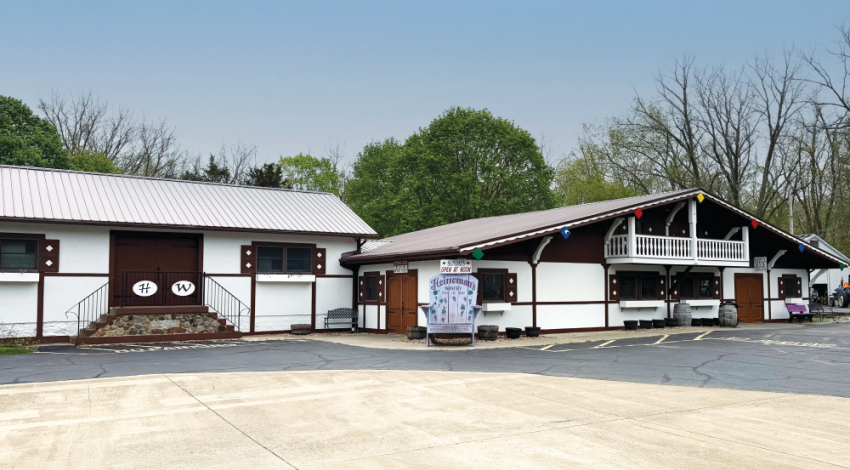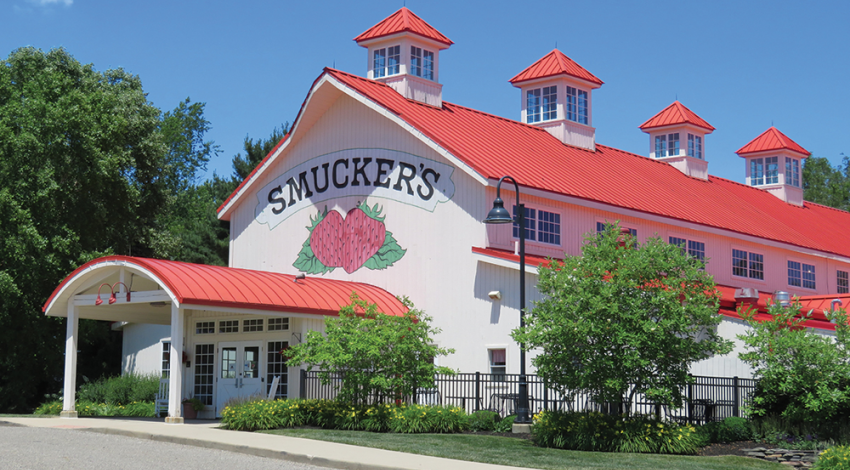
Whenever merchandise manager Kate Fox welcomes tour bus groups to the J.M. Smucker Co. store and café, she asks visitors to guess Smucker’s first product. “Everyone always answers, ‘strawberry preserves,’” says Fox, “but the company actually started with apple butter.”
Located near U.S. 30, the store sits along a rural road in Wayne County just minutes away from the J.M. Smucker Company’s headquarters in Orrville. The town’s population is less than 10,000, yet it’s home to a Fortune 500 corporation with some 7,000 employees who work in offices and manufacturing facilities spread from Quebec to California. Why Orrville? In 1897, local farmer Jerome Monroe Smucker opened a cider mill there and began making apple butter from concentrated cider.
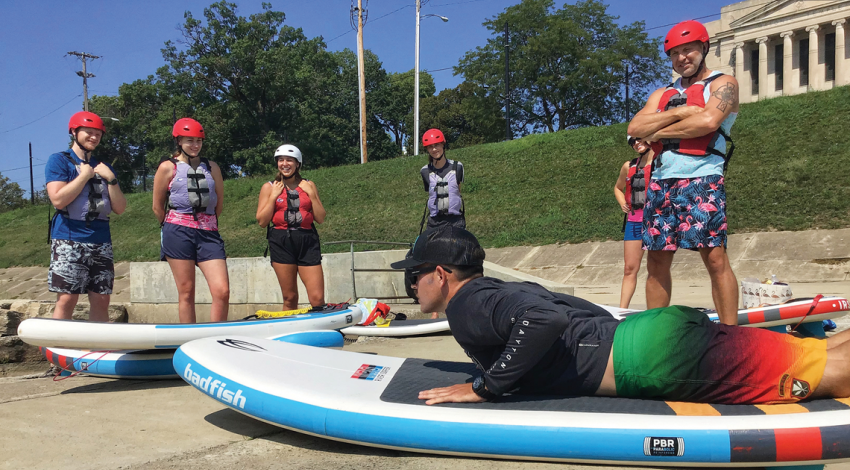
Downtown Dayton is your typical urban Midwestern city, filled with blacktop and busy streets, high-rises, and noisy traffic.
But wait: There are also surfers, who are apt to be happily catching a wave out on the water.
River surfing is similar to ocean surfing, but instead of catching waves caused by the wind, it’s done on standing river waves created by flowing whitewater.
“It’s a rush,” says Shannon Thomas, a Dayton native and pro river surfer and paddleboarder. “Anyone who has surfed knows that special feeling you get when you’re on a wave. It’s amazing; very spiritual, very addictive.”
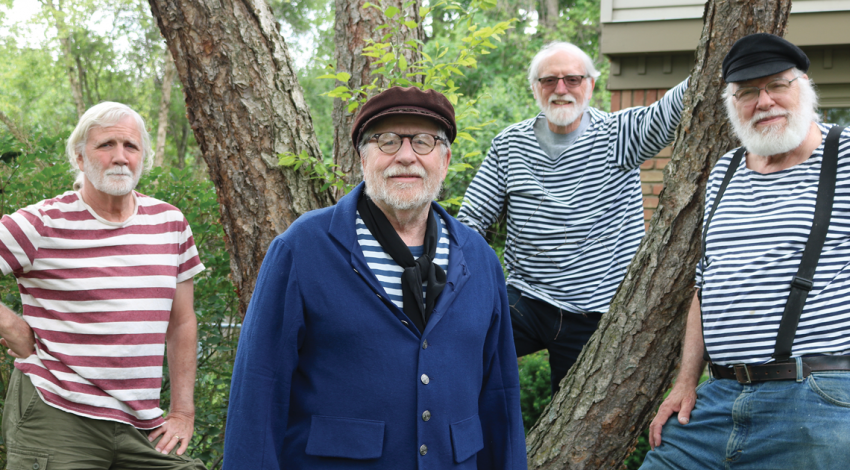
Ohio is the only state in the union with a burgee flag — a shape usually associated with a boating organization.
Shanties date to the mid-1400s era of tall ships, when sailors’ work was grueling and labor-intensive. The rhythms of the call-and-response style of shanty songs helped the crew push and pull, hoisting sails and hauling lines in a synchronized effort. Often adapted from familiar folk tunes and ballads of the day, shanty lyrics were flavored with nautical terms and names of places the sailors had been — or hoped to see. ]
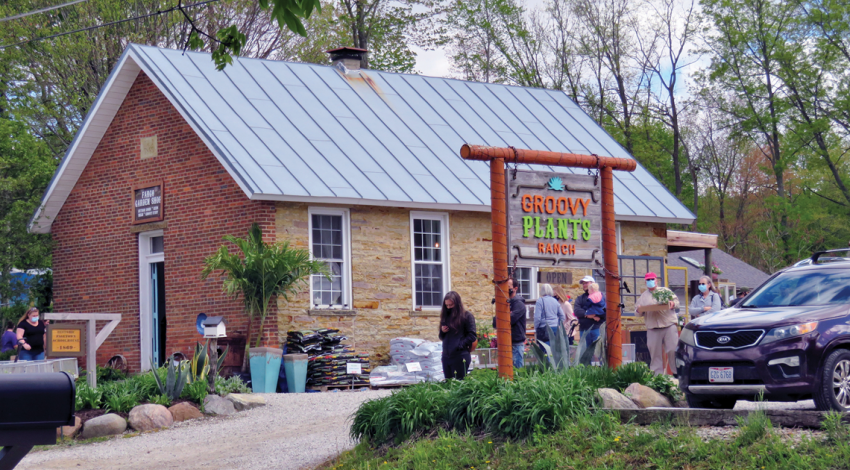
As the summer-of-love sound of Van Morrison’s “Brown Eyed Girl” echoes through the shady grounds of Groovy Plants Ranch, shoppers give their toddlers and dogs a leisurely wagon ride, pulling them slowly along while oohing and aahing over hanging baskets brimming with lush b
Situated along a rural road about 30 miles north of Columbus, Groovy Plants Ranch is a 5-acre complex where Jared and his wife, Liz, grow and sell plants that they ship to customers around the world. It opened in 2016, but Jared began cultivating the business in his late teens while studying landscape design at Columbus State Community College and working at a Delaware County greenhouse. “I started growing succulents in my room because they’re easy to care for and propagate,” Jared says. “It was a side hustle to earn extra Smoney.”
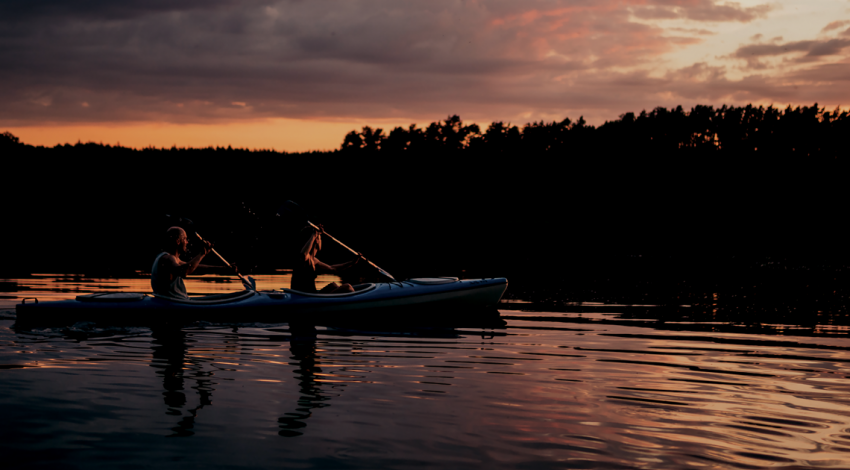
As twilight comes, the rugged cliffs, crevices, and outcroppings at High Rocks Adventure add a sense of mystery to what’s already an adrenaline rush.
Night rappels are trips into the unknown. “You can’t see the bottom of the cliff, so there’s a lot of trust needed,” says Kayce, a member of South Central Power Company. Sometimes, the trust pays off with even more thrill — one time during a solo rappel, with her headlight turned off,
a screech owl’s wings brushed silently past her face.
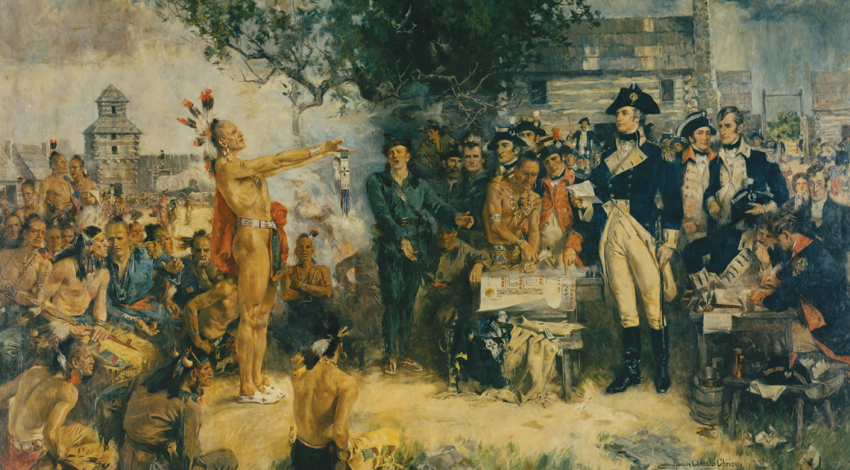
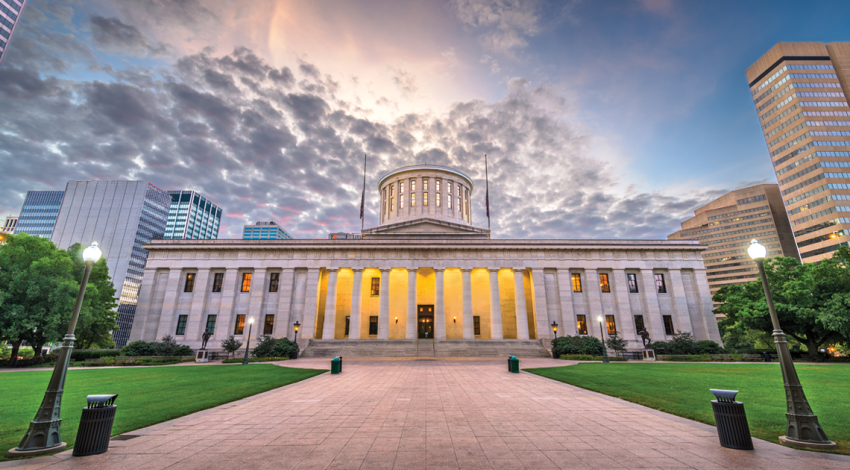
Of the many paintings hanging in the Ohio Statehouse in Columbus, the largest by far measures 22 feet long by 16 feet high and is titled The Signing of the Treaty of Green Ville.
Setting the scene
At the end of the Revolutionary War, England ceded to the fledgling USA ownership of the Northwest Territory — an immense area north and west of the Ohio River that would one day become five states: Ohio, Indiana, Illinois, Michigan, and Wisconsin, as well as part of Minnesota.
The major problem with the agreement was that it completely ignored tens of thousands of indigenous people who were already living on that land — from dozens of major tribes — who were not about to give up their claims on the land without a fight.
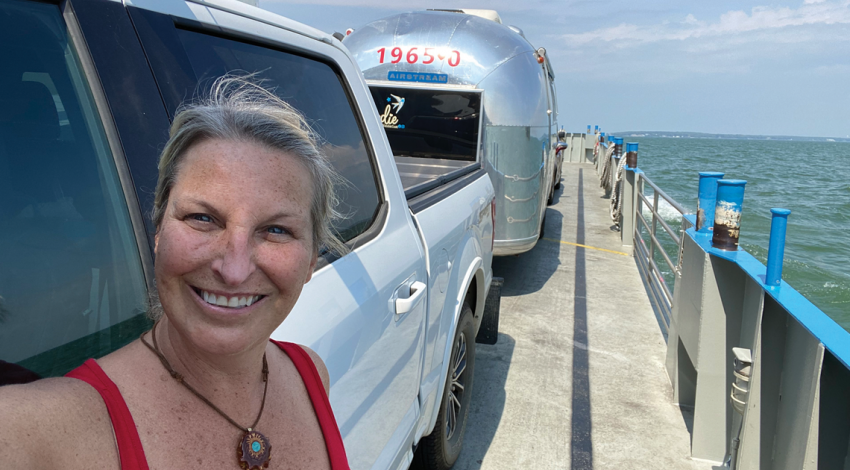
Wally Byam’s childhood was spent immersed in nature. He worked on a West Coast sheep farm, where he lived in a donkey-towed wagon that was outfitted with a stove, food, water, and just about everything else he could possibly need.
Byam’s love of camping and the outdoors, combined with American ingenuity, resulted in a product that lasts for decades and is instantly recognizable around the world.
Perhaps best of all, it’s made in Ohio — Byam moved the production to Jackson Center in rural Shelby County right after World War II, and workers there build upward of 120 of the iconic silver bullets every week, all by hand.
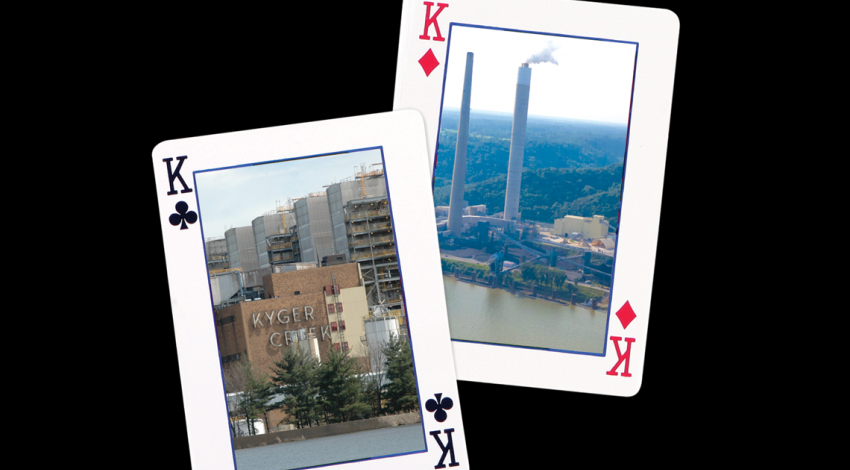
In a game of cards, assembling the strongest hand means having the right card to play at the right time. Depending on the situation, the value of each card changes. It might be best to play a jack, to hold a queen for later, or to pull out that ace in the hole.
Buckeye Power pursues an all-of-the-above generation strategy, taking into consideration cost, reliability, environmental impact, and more when deciding which cards to pick up and which ones to discard. From coal to natural gas to renewable sources, each one is an important part of keeping power flowing to our members. This month, we take a look at the cards in Buckeye Power’s hand.