Think about a fast, maneuverable flyer in nature and likely a hummingbird may come to mind — so agile it can even fly backward! But if you want to see some aerial acrobatics that would make even a seasoned stunt pilot airsick, look no further than the order of insects known as Odonata: dragonflies and damselflies.
These colorful critters so inspired the Russian-American aviation pioneer Igor Sikorsky (1892–1972), he named one of his early helicopters the Dragonfly as a tribute.
“Ohio is a great state for dragonfly and damselfly numbers and diversity,” says Bob Glotzhober, curator emeritus of natural history at the Ohio History Connection in Columbus and one of the leading experts on the Buckeye State’s Odonata. “Currently 173 species have been identified, with new species still occasionally added to the list.”
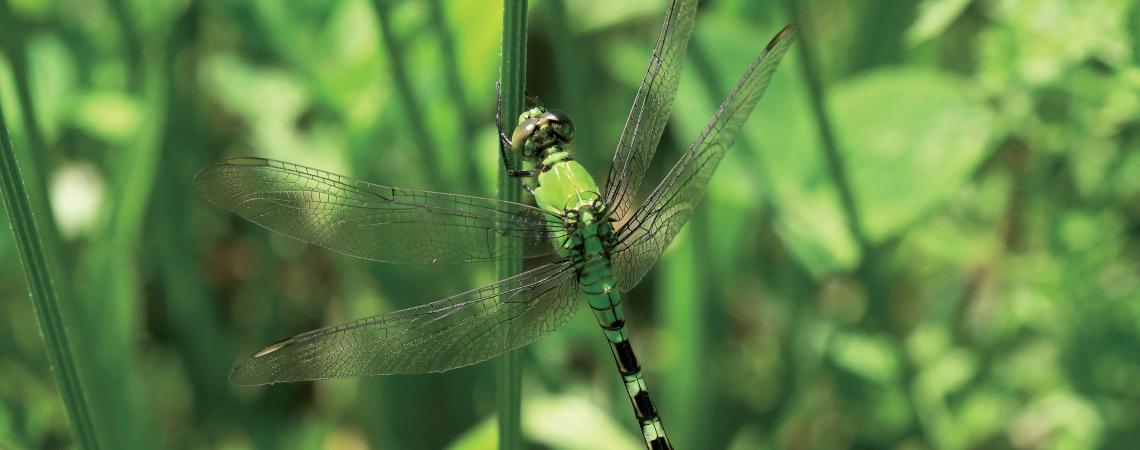
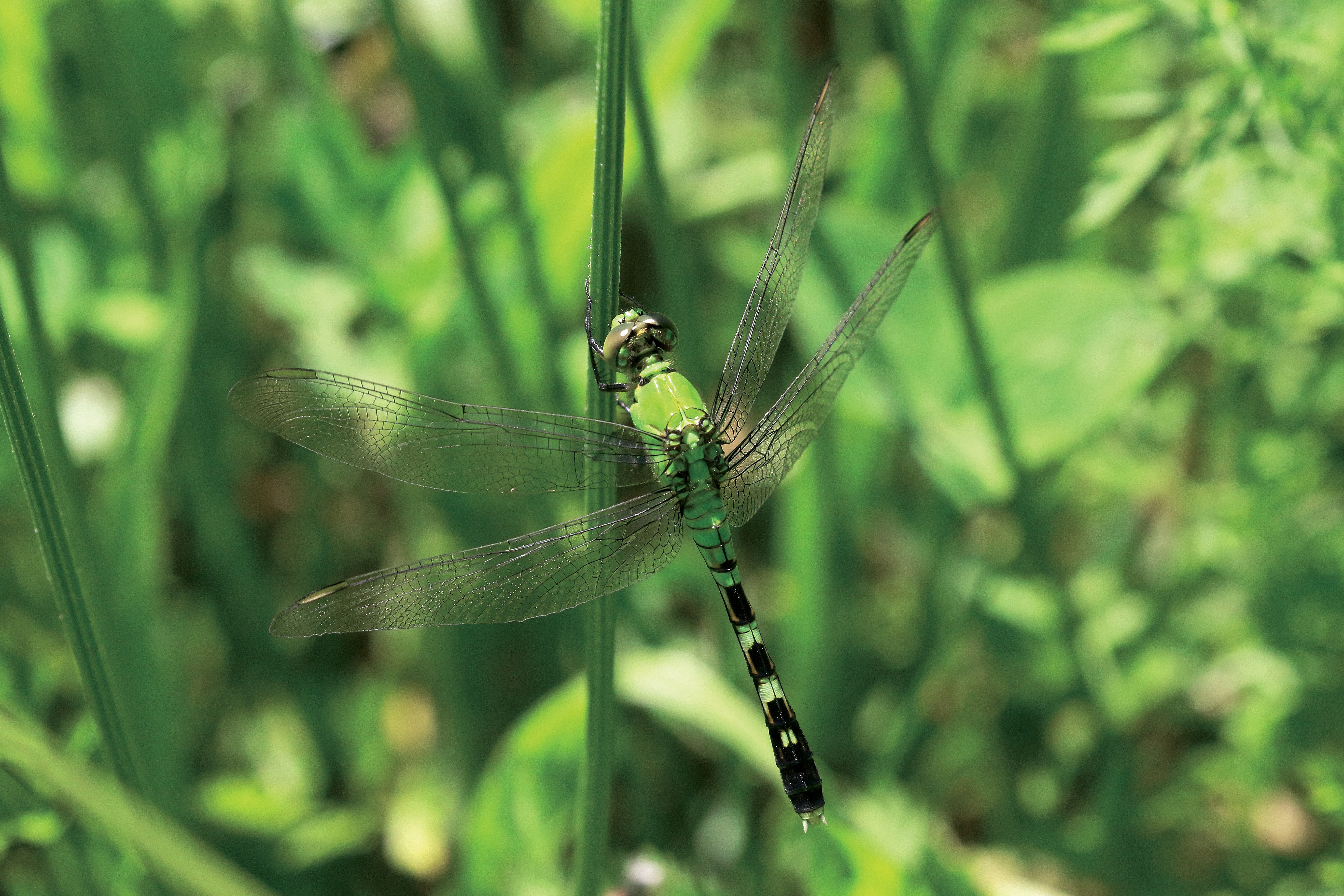
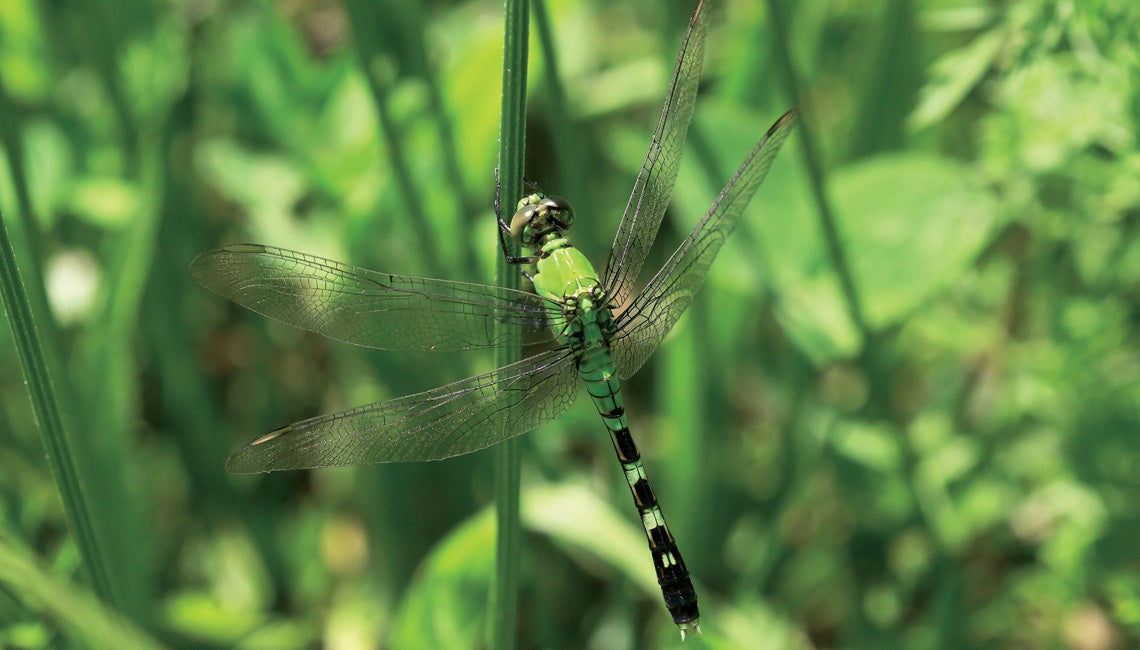
While at rest, dragonflies hold their wings perpendicular to their body.
Aggressive mini-predators, dragonflies and damselflies hunt their prey on the wing, capturing other flying insects such as small flies, mosquitoes (hooray!), and, at times, other dragonflies. Larger dragonflies can even take down swallowtail butterflies. And their appetite
is voracious.
Glotzhober cites an early 1900s researcher in Florida who had reared a cageful of houseflies to present to a large dragonfly of the darner family for feeding. “The researcher kept feeding the dragonfly until he ran out of flies, and all in one sitting,” he says.
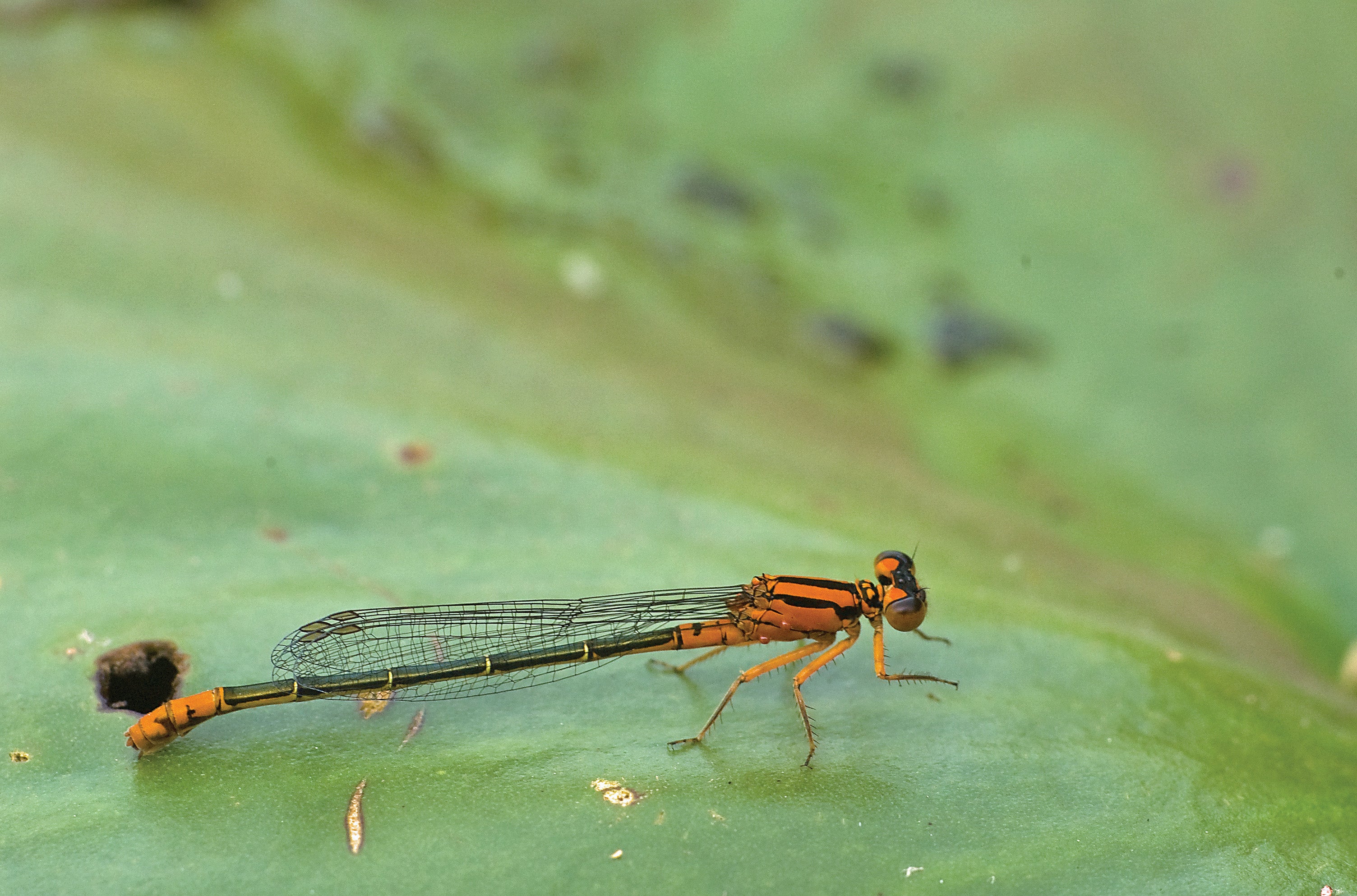
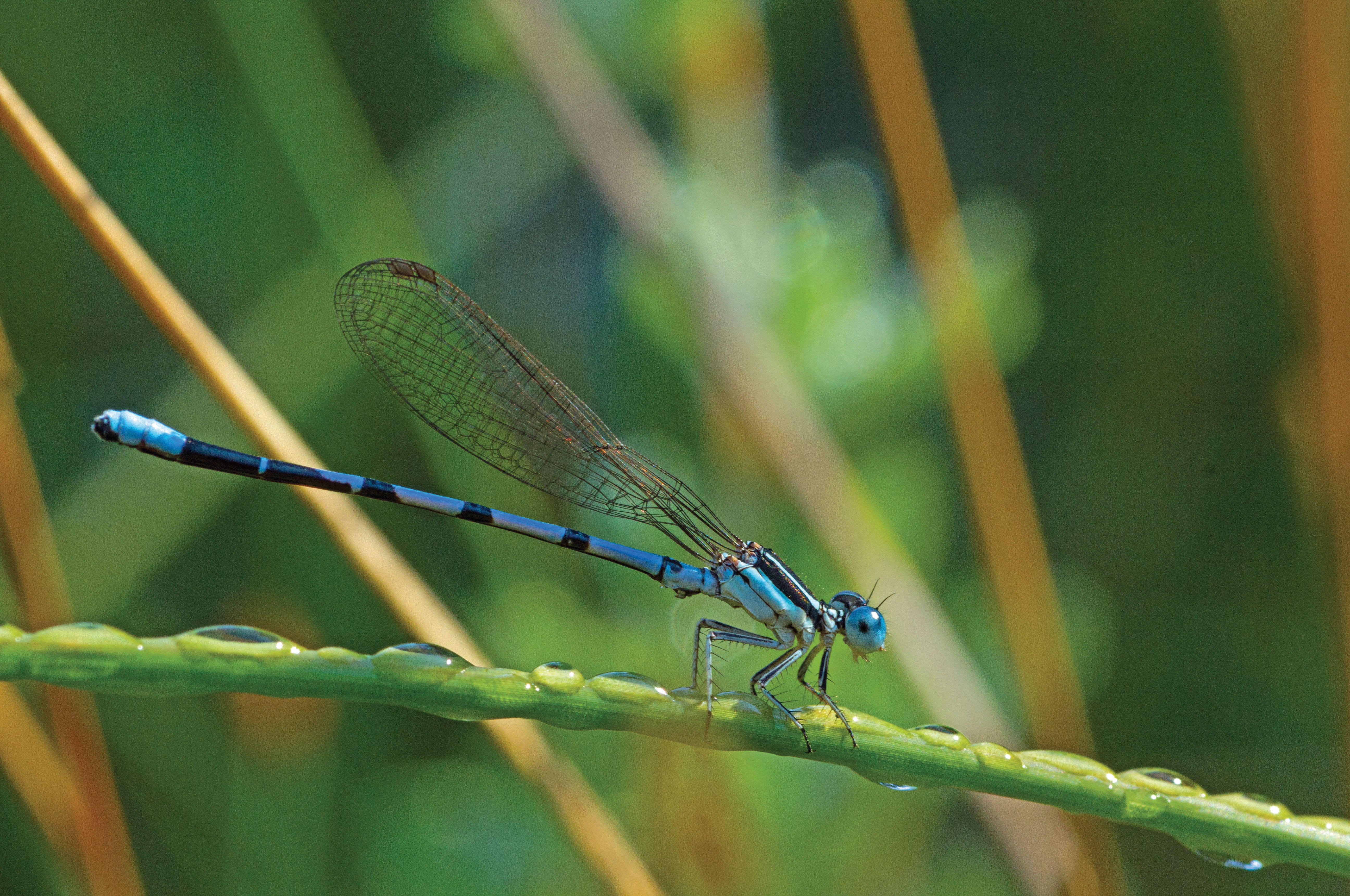
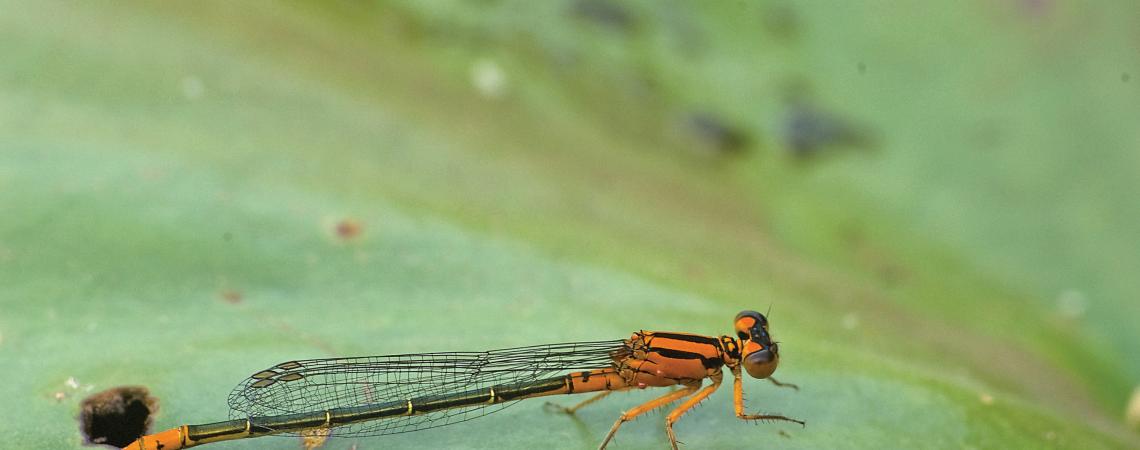
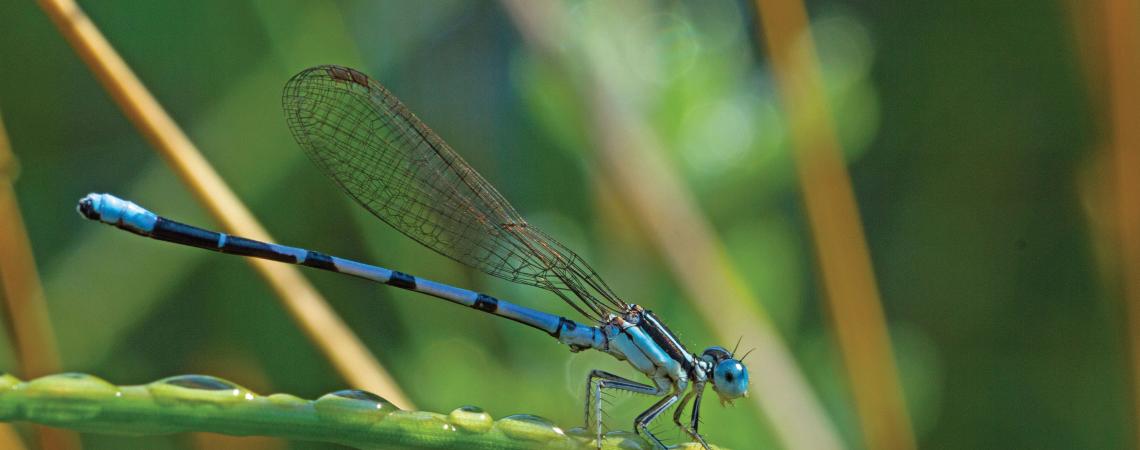
Although there are dozens of species of dragonflies and damselflies, separating the two categories in the field is simple. While at rest, dragonflies hold their wings perpendicular to their bodies, while damselflies rest their wings over their backs, parallel to their bodies. Dragonflies are also usually larger in overall size; damselflies are more slim and delicate.
Few wild animals have the vision of dragonflies. Their large, compound eyes make up the majority of their heads, with each eye having up to 30,000 facets. Each facet is a photoreceptor and is angled in a slightly different direction, resulting in extremely acute vision and the ability to see in nearly every direction simultaneously. That skill comes in extremely handy for an insect attempting to hunt prey and avoid being eaten at the same time.
Dragonflies and damselflies are also indicators of water quality, serving as barometers of the health of wetlands. The habitat determines the specific species found there. Glotzhober studied the rare tiger spiketail dragonfly in Ohio for months before discovering its primary habitat. “The reason tiger spiketails had been so little known is that they occupy a habitat almost exactly the opposite of most dragonflies and damselflies,” he says. “Most Odonata operate in brightly lit, sunny ponds, lakes, streams, or wetlands. In contrast, the tiger spiketail thrives along heavily shaded woodland streams.”
Though found in scattered habitats around the state, they seem to be most abundant in the hemlock ravines of southeastern counties, like those of the Hocking Hills region. “Furthermore,” he says, “they use only the smallest headwater streams, which are typically 1 to 3 inches in depth and may often be less than a foot wide.”
Glotzhober says the spiketails got their name from the unusual manner in which the females lay eggs. “They hover a few inches above a section of stream with a sandy bottom, usually with only an inch of water or less below them,” he says. “Then, pointing their abdomen downward, they ‘pogo-stick’ their abdomen into the stream bottom, ‘spiking’ their ovipositors into the sand to deposit an egg. I have observed tiger spiketails depositing eggs up to 370 times nonstop, presumably releasing at least one egg with each thrust.”
The eggs hatch into larvae, also known as nymphs — some of which survive several years before transforming into adult dragonflies. Adults, by contrast, live only a few short weeks or months, their primary goal being to reproduce.
Much like birding, the hobby of watching, identifying, and studying dragonflies and damselflies has been increasing in recent years. Aiding the popularity of that fun, leisure outdoor activity has been the proliferation of close-focusing binoculars and camera lenses. Field guides, too, have helped, becoming more plentiful and user-friendly.