At about 4:30 a.m. one frigid Monday this past December, a signal went out from Columbus that temporarily switched off electric water heaters, furnaces, heat pumps, and geothermal systems in tens of thousands of electric cooperative members’ homes around the state.
As dramatic as that sounds, though, most of those members likely didn’t even know it had happened.

Buckeye Power, the generation and transmission cooperative that provides the electricity Ohio’s co-ops distribute to their members, can reduce costs and ease strain on the grid by cycling those appliances off and on for short periods of time when the demand for power is at its highest. More than 100,000 co-op members in Ohio volunteer to participate in the program.
“It was actually the third time this winter we’ve issued a control like that,” says Kevin Zemanek, Buckeye Power’s vice president of operations. “We typically do it four or five times per winter season, but in every instance, we try to manage the duration of those controls so people usually won’t even notice.”
‘Beat the peak’
When potential “load control” events approach, co-ops try to head them off by issuing a “peak alert” — a text message, email, social media post, or app notification to members asking them to voluntarily reduce electricity usage (see tips in the infographic below). Members may think of peak alerts as a ritual of summer, coming as they often do on the hottest, muggiest days. But winter alerts are, in fact, just as common.
One reason those summer alerts tend to be more memorable is that, well, people are usually awake for them — they typically happen during the hottest part of the day, between 2 p.m. and 6 p.m. The winter temperature extremes that trigger alerts, on the other hand, usually happen later at night or during early morning hours.
Why the peak matters
It’s important to note that a peak alert doesn’t necessarily mean there’s an emergency or some kind of power shortage — even when it’s followed by load control. It’s more of an opportunity to reduce costs and save money.
Electric utilities have an obligation to provide electricity at all times, so even though their systems may only rarely be called upon to handle that peak level of demand, that’s the level they need to be designed for. Some of their annual operating costs, then, are based on ensuring their ability to meet whatever peak is set during the course of the year.
If the co-ops can reduce their contribution to that peak, Buckeye’s costs will be lower for the year, and that savings is passed through to its owners: Ohio’s co-ops. Zemanek says beating those peaks can collectively save the co-ops $7 million to $10 million annually, and since co-ops are member-owned and not for profit, they pass those savings directly to their own members by holding their rates down.
In it together
The peak alert messages are usually effective at reducing load, because simple measures can make a big difference. Many co-op members appreciate being able to save money and are willing to help.
If those measures are enough, the alert will pass on its own. But if not, load control may come into play. With a member’s permission and usually in exchange for a bill credit or a rebate or both, some co-ops will install a radio-controlled switch on the member’s water heater and/or HVAC unit. (Specific offers and availability differ, so call your co-op to see if and how they participate.) Then, when the need arises, Buckeye Power sends a signal that cycles those appliances off and on for short periods of time.
“We have more than 5,000 members participating in our switch program,” says Peter Niagu, business development and key accounts coordinator at the Paulding-based co-op Paulding Putnam. “Often, members contact us about rebates, and once they learn how the switch program works, they like knowing they’re helping the cooperative control costs while doing something good for the entire membership.”
Benefit to the grid
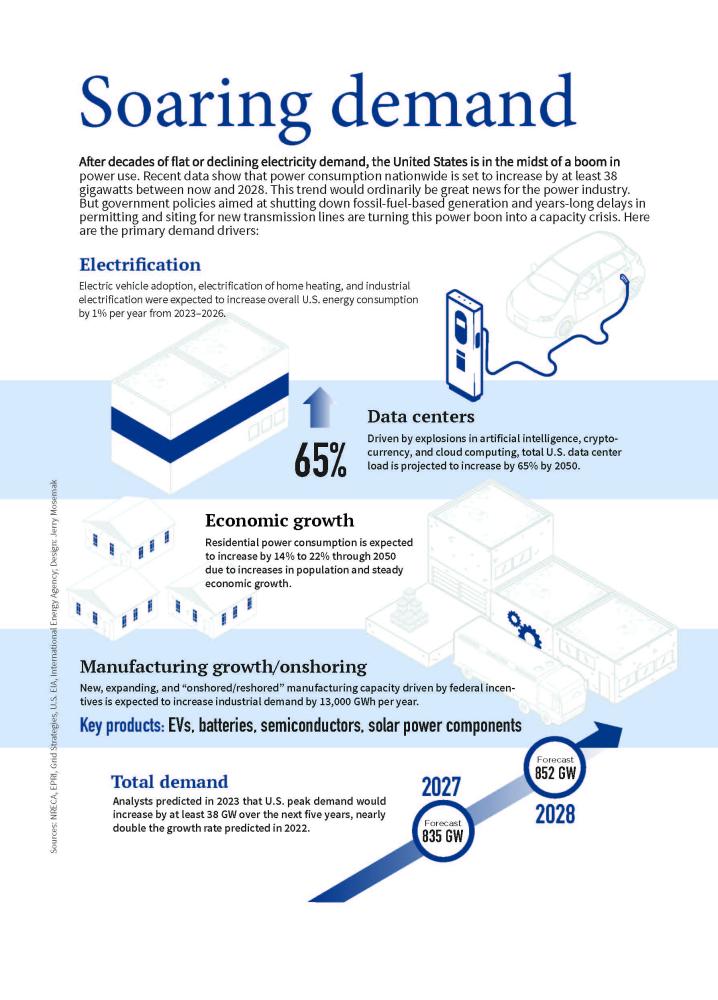
Another reason it’s important to hold down those peaks is that while electricity use has been increasing over the past decade as homes and businesses rely more on electric vehicles, smart devices, and digital technologies, the supply of electricity has not necessarily kept pace.
In 2009, there were 21 coal-fired power plants generating always-on, economical electricity in Ohio. Today, only four remain, including the co-op-owned Cardinal Power Plant in Brilliant. Natural gas plants and weather-dependent sources like wind and solar have expanded, but they simply are not as reliable — especially during extreme weather.
In December 2022, for example, Winter Storm Elliott brought a prolonged deep freeze to Ohio. For six days, electricity demand nearly exceeded available supply. While Ohio avoided rolling blackouts, some states to the south were not as fortunate. It underscored how vulnerable the electric grid can be during extreme winter conditions.
“Peak alerts and load reduction will continue to be about cost savings, but they’re also needed to help maintain grid reliability into the future,” Zemanek says.
No matter the season, your local electric cooperative will keep you informed so you can plan ahead. And your cooperative is always ready to help you find additional ways to save energy, reduce costs, and ensure reliable service for your home, business, and community.
How to weather a winter peak alert
A winter peak alert works much like a summer one — it’s a call to use energy wisely during periods of extreme demand. Here are a few simple ways to beat the peak:
- Pay attention to extreme cold forecasts.
- Expect peak alerts during the coldest hours — early morning and late at night — and adjust your thermostat down a few degrees.
- Limit the use of space heaters, which are notoriously power hungry. If you must use a portable heater, use it only in a small area and turn it off when you leave the room.
- Whenever possible, delay high-energy tasks like doing laundry or running the dishwasher until outside temperatures rise and the peak risk passes.
- Conserve hot water during extreme cold by spacing out showers, laundry, and dishwashing.