When people consider renewable energy sources, many people tend to look up. Solar power, after all, is a common choice for someone looking to go green or potentially save money on electricity.
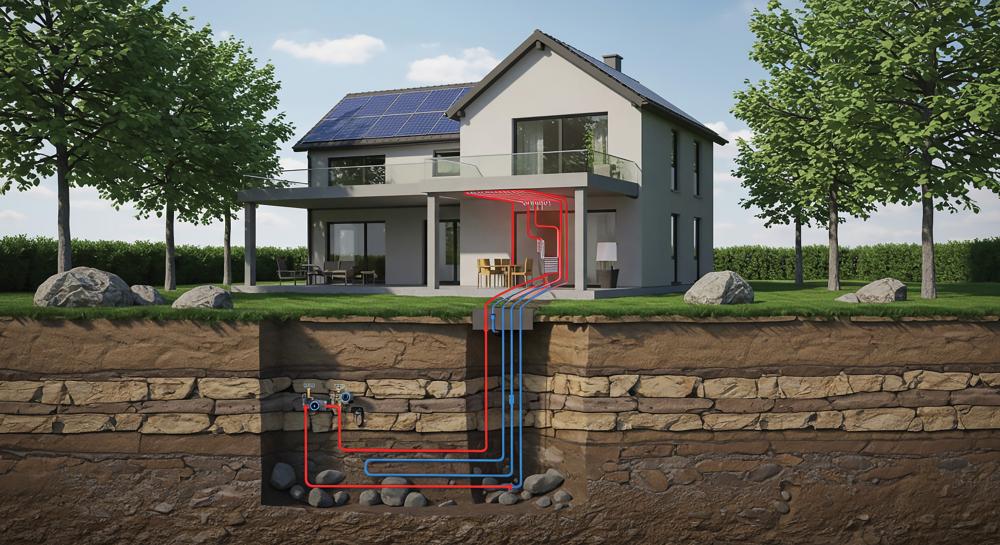
For some, however, it can pay to look down. Geothermal systems take advantage of the naturally consistent temperature underground to provide energy-efficient heating and cooling year-round.
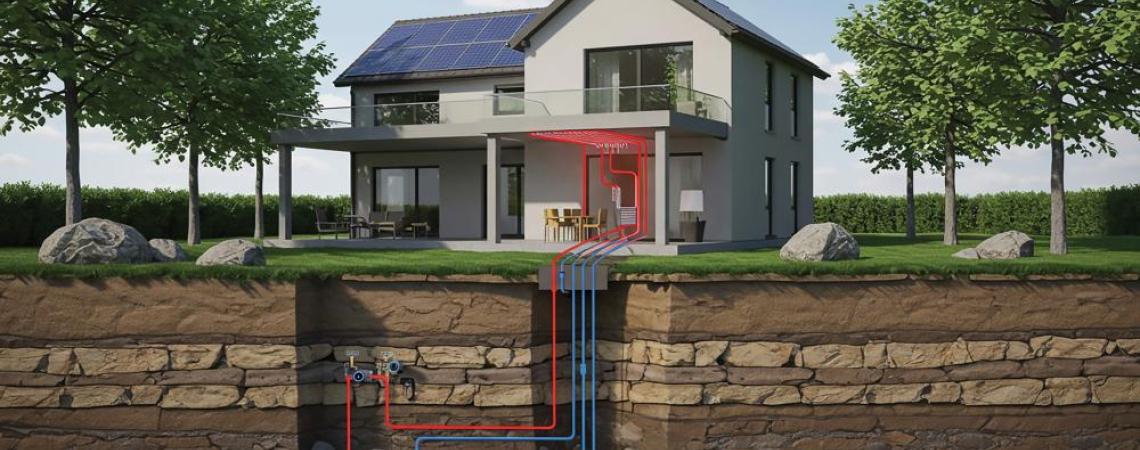
Geothermal systems take advantage of the naturally consistent temperature underground to provide energy-efficient heating and cooling year-round.

“People choose geothermal for the environmental benefits and to save money,” says Tim Litton, director of marketing for WaterFurnace, an Indiana-based geothermal system manufacturer. “Geothermal is twice as efficient as any traditional heat pump, which means people can save more money on heating and cooling.
Avoiding extremes
Home geothermal systems work generally the same as the more-common air source heat pumps, which use refrigerant and a compressor to transfer heat, says Bruce Warnecke, energy service advisor at Hancock- Wood Electric Cooperative in North Baltimore. “But geothermal uses ground temperatures, which remain constant compared to air temperatures, which fluctuate widely,” he says.
In the Midwest, the temperature just a few feet under the ground stays at a consistent 55 degrees, no matter the air temperature above. “The system uses pipes that circulate liquid through the ground to either extract warmth to heat the refrigerant or deposit the heat to cool the refrigerant,” Warnecke says. “On a day when it’s 90 degrees outside, it’s much more efficient to use 55-degree water to cool than to use 90-degree air. If it’s 15 degrees outside, it’s much more efficient to use 50 degree water than that extremely cold air.”
The harder the system works, the more electricity it uses, raising the homeowner’s electric bill. “In the winter, the colder it gets, the harder a traditional heat pump has to work to get heat from the outside air,” Litton says. Extremely cold days can push air-source heat pumps to switch to auxiliary or supplemental electric heat, which can use five or 10 times as much electricity as the normal heat pump mode. Geothermal heat pumps almost never use backup heat, Litton says, because of the consistent ground temperature.
Real-life application
Hancock-Wood member Doug Schwiebert of Hamler recently put a geothermal system into a newly constructed barndominium in Henry County. The choice was easy, he says, because he’d had a positive experience using geothermal in an old farmhouse.
“The one in the farmhouse is 20 years old,” Schwiebert says. “When we put it in, our electric bill did drop. It’s also been really reliable. We just clean the furnace filter and we haven’t had to do anything else to it.”
Litton says longevity is another advantage of these systems. “A geothermal unit lasts about 25 years, while most other types of HVAC units are expected to last 15 to 18 years. There’s no combustion, no flames or fumes, and no outdoor components. It’s quieter and there’s no risk of carbon monoxide poisoning.”
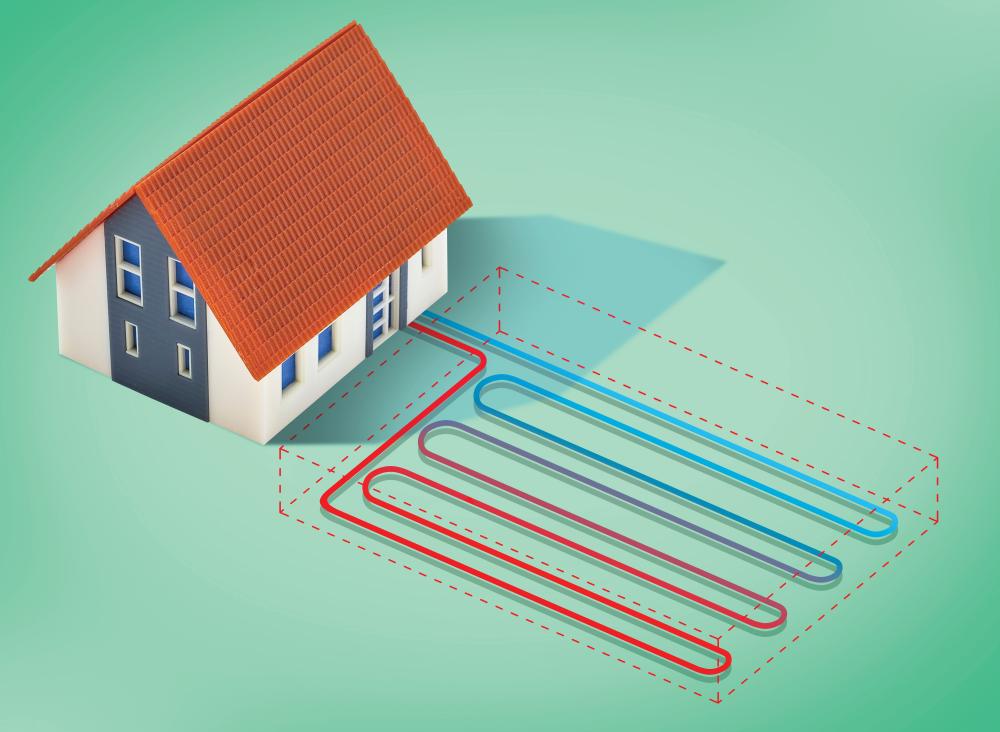
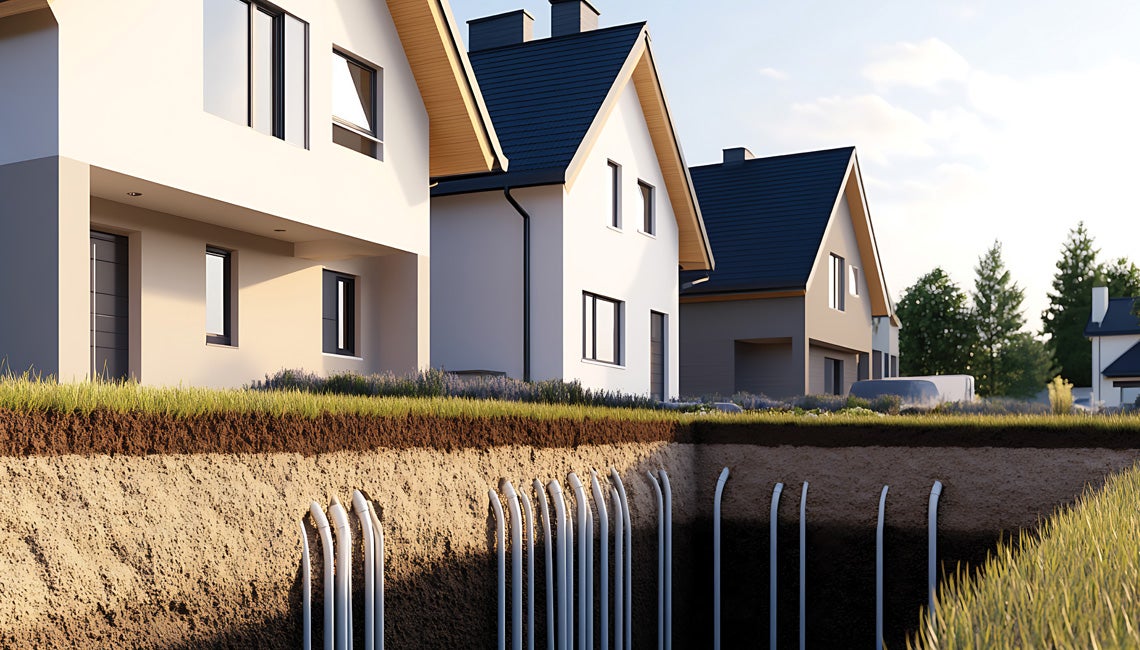
Schwiebert’s systems use horizontal loops buried in the ground.
“We’re in the middle of a field, so we’ve got plenty of room here,” he says. Other configurations include vertical loops that go straight down and open-loop systems that use water from a nearby pond.
Investing in efficiency
Geothermal systems can be a good option for people building new homes, especially if they have available land for a horizontal loop, which is the most cost-effective option, Warnecke says. Geothermal may also be installed in existing homes. The choice makes the most sense for people who plan to stay in their homes for a significant time, he says.
“They cost more up front to purchase, often about 1 ½ to two times a traditional system,” he says. “But the month-to-month energy savings will pay off.” How long that payoff takes varies, he says, but a good contractor can provide a cost-savings analysis to help homeowners decide whether geothermal is a good investment in their particular situation.
Litton said that, on average, homeowners recoup the costs of a geothermal system in about 10 years, depending on the initial costs, incentives, and other variables.
Another factor to consider is rebates from electricity providers and possible state or local tax credits or incentives, as well. “Our cooperative offered a rebate and we also got a 30% federal tax credit,” Schwiebert says. “That made the investment much closer to what we might have paid for another type of system.”
On its website, WaterFurnace offers a calculator to help potential customers estimate their savings and also directs them to available local incentives, Litton says.
A win-win for co-ops
Because geothermal systems avoid the worst energy-use spikes in extremely hot or cold weather, they keep homeowners’ bills more constant. At the same time, they don’t contribute to the energy demand surge that comes with extreme temperatures, benefitting utilities, which have prices set based on their peak energy use. For co-ops, lower peak demand means lower costs for everyone.
“For every 1,000 homes that adopt geothermal, it reduces peak demand by about 10 megawatts,” Litton says. “That’s why utilities offer geothermal incentives.”
URE: LEED-ing by example
Electric cooperatives frequently advise and educate members about energy efficiency. When Marysville-based Union Rural Electric Cooperative built its new headquarters in 2007, the cooperative led by example, constructing a LEED-certified green building.
A major component of its energy-efficiency plan was a geothermal system for heating and air conditioning, says Matt Zarnosky, URE’s chief operating officer and vice president of engineering.
“We have geothermal for the whole building,” he says. “We have 18 compressor units in the building for geothermal heating and air conditioning. If you put geothermal in your house, you’d have just one.”
The co-op benefits both from lower overall energy usage and from consistent costs throughout the year. “Because the temperature of the ground is always constant, we don’t see huge spikes in cost during especially hot or cold weather.”
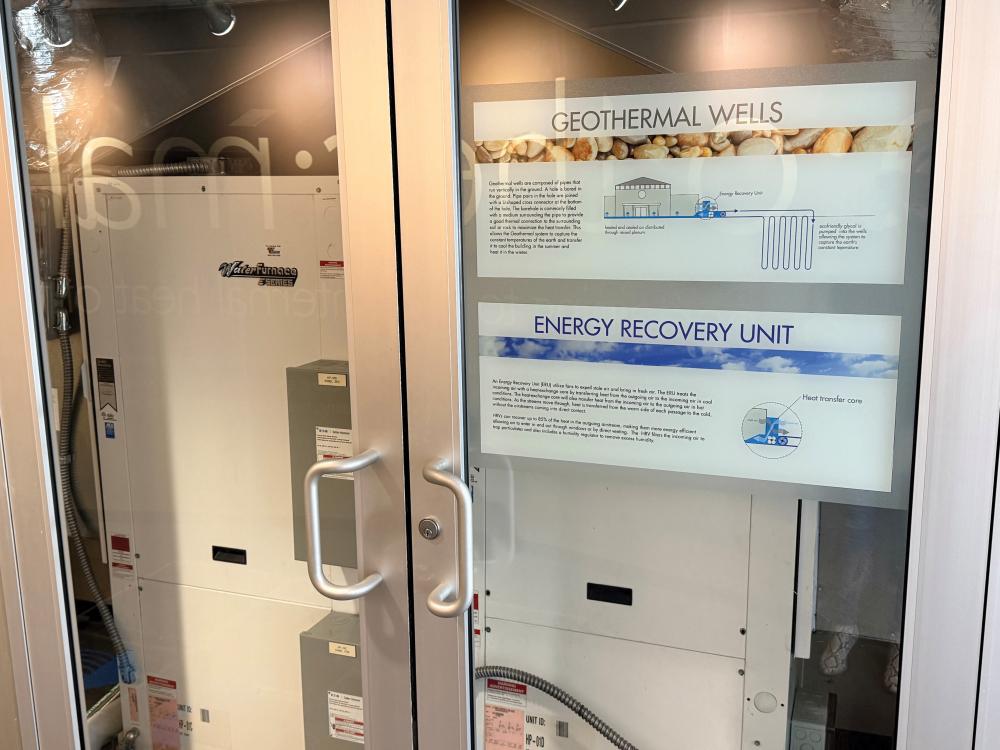
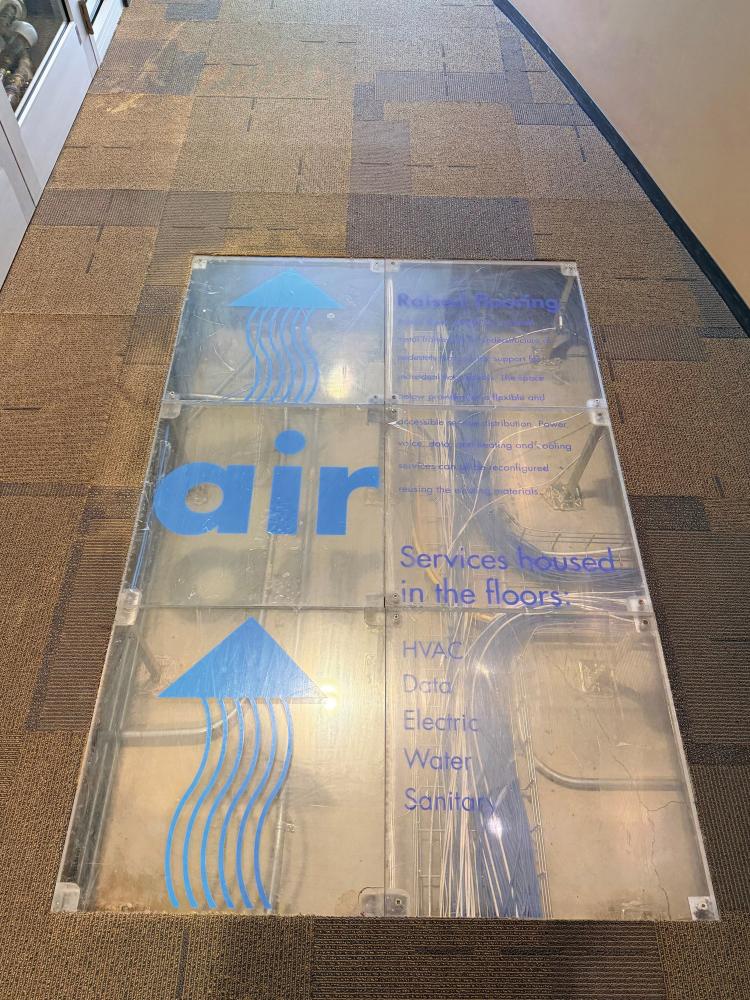
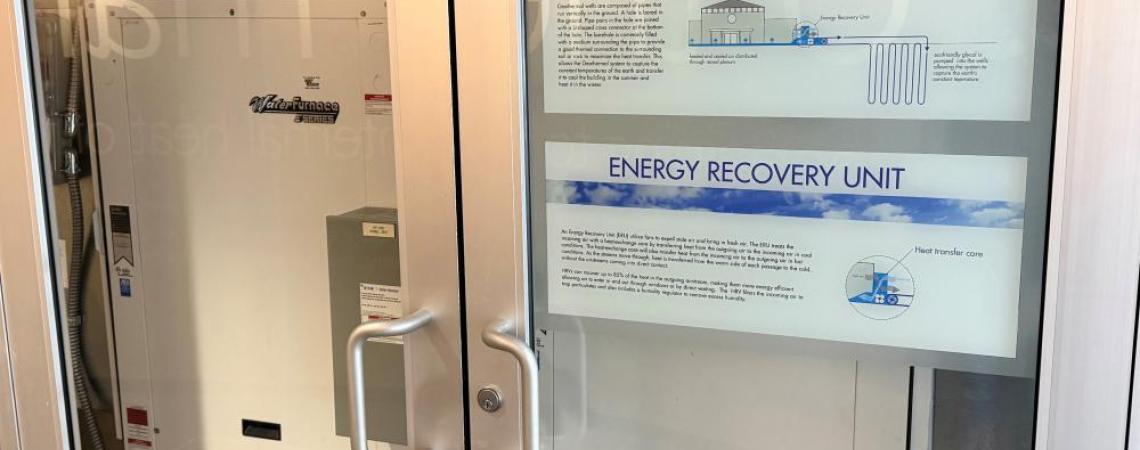
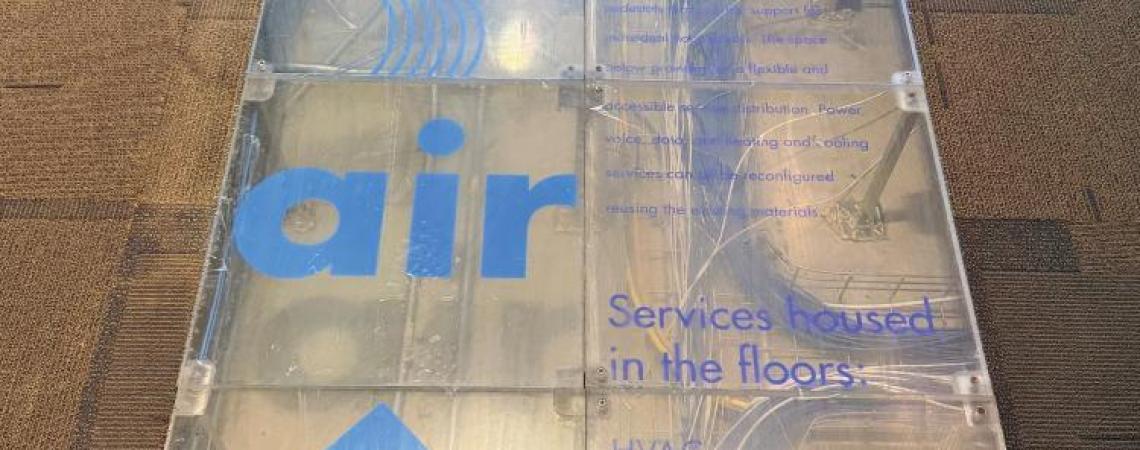
URE’s building is raised off the ground and heat comes through vents in the floor, Zarnosky says, and a glass section of flooring makes that space visible. Additionally, some of the geothermal units may be seen behind glass doors in the co-op building.
The co-op’s building also has an enthalpy wheel, an energy-recovery unit that saves heat from exhaust air.
“It transfers heat from exhaust air to intake air, and tempers the air as we’re bringing in fresh air,” Zarnosky says. “We don’t let any heat go to waste.”