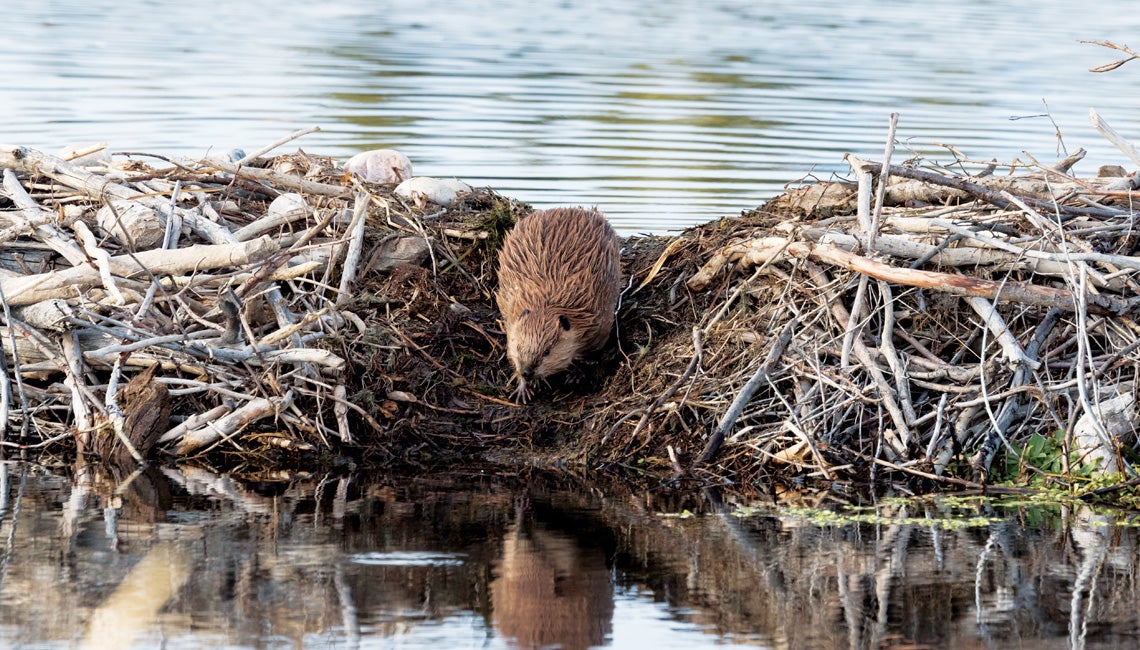
With the exception of humans, likely no other species on earth can control its environment like the beaver. They do so, of course, by building dams — creating habitat not only for themselves but for other wetland wildlife species as well.
The problem, however, is that the ponds beavers create can also inundate homes, roadways, crop fields, and countless other bits of human environment, causing significant damage every year.

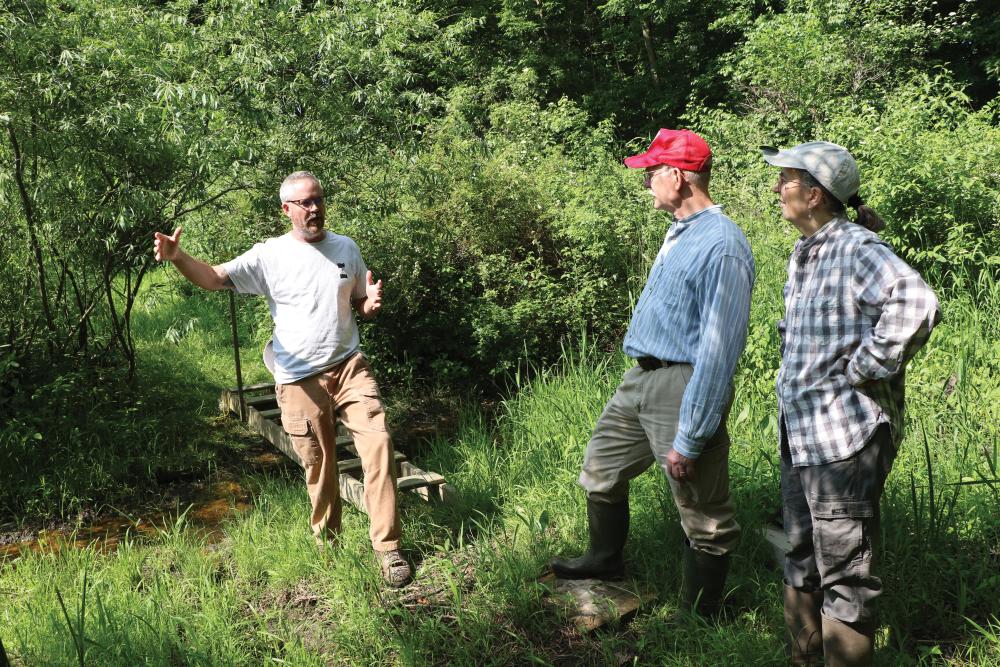
Steve Ecrement (left) discusses beaver-management strategies with Chris and Hyla Skudder.
The rodents are so large (weighing up to 60 pounds) and unrelentingly industrious (“busy as a beaver,” of course), sometimes it may seem their secret motto is “Dam the Humans!”
Until recently, the main solution to beaver issues has been to do away with the beaver; eliminate the beaver and you eliminate the problem, or so goes the theory. But that kind of thinking is slowly beginning to change. Many rural landowners enjoy having beavers on their property, along with other wildlife their ponds attract — as long as the beavers and their dams can be kept under control.
Take, for example, Chris and Hyla Skudder, members of Mount Gilead-based Consolidated Cooperative who live on 22 acres near Cardington that include a small wetland.
“Two years ago, a pair of beavers moved in and began damming the wetland to increase its size,” Hyla says. “That was unacceptable to us because our house sits near the wetland and the water level was rising toward our foundation. Each morning, we’d have to spend an hour or two tearing out the section of the dam the beavers had built the previous night. It was dirty, wet, exhausting work.”
Finally, the Skudders had to admit the beavers were winning.
So they made a call to Steve Ecrement, a certified wildlife biologist, professional wetland scientist, and certified beaver coexistence professional. Ecrement and his company, Ohio Beaver Strategies, solve beaver problems for landowners. If at all possible, they do so using nonlethal methods — in other words, without killing the beaver.
“Trap and kill a beaver and all you’re doing is beginning a cycle where you’ll have to trap and kill more beavers as they move into the unoccupied habitat,” Ecrement says. “Instead, the solution is to outsmart a beaver. The goal is to stabilize the situation for both the landowner and the beaver, which solves the problem.”
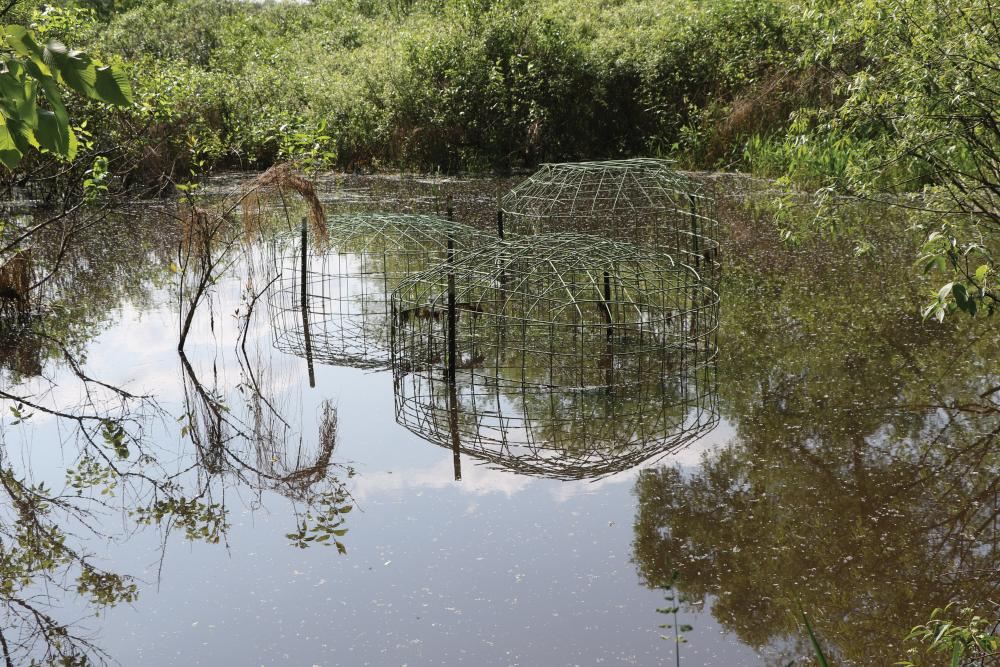
Of course, that’s easier said than done. In the case of the Skudders’ property, Ecrement installed a Flexible Pond Leveler pipe system, a flow device that creates a permanent leak through the beaver dam that beavers can’t plug. “That eliminates the need for repeated trapping despite the presence of beavers.”
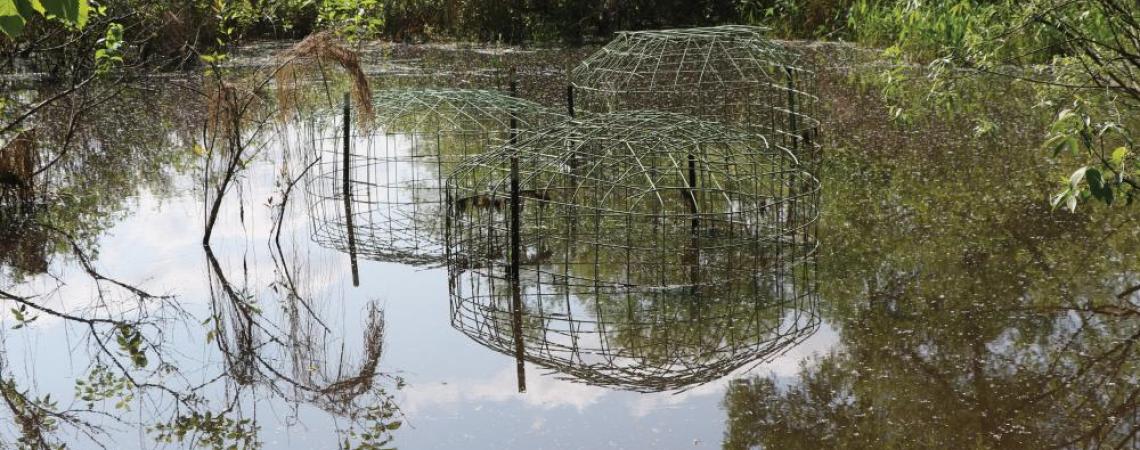
In order for the pipe system to be effective, it must be designed so that beavers can’t detect the flow of water into the pipe. The Flexible Pond Leveler does this by surrounding the submerged intake of the pipe with a large cylinder of fencing that is placed in water that’s as deep as possible. As a result, beavers do not try to clog the pipe with sticks and mud, and a safe, steady water level is maintained. Ecrement said that every situation he encounters is a bit different, but he’s seen plenty of beaver damage during his career and he usually wins the battle.
“Working with Steve has been a big win for us,” says Chris Skudder. “We now have the water level in our wetland stabilized, and yet we have beavers, too.”
Beavers in the Buckeye State
Beavers could be found all over Ohio during pioneer times, but they disappeared from the Buckeye State by the late 1800s due to habitat loss and the unregulated trapping of the animals for their valuable, luxurious pelts.
To contact Ohio Beaver Strategies, email steve@ohiobeaverstrategies.com or visit https://ohiobeaverstrategies.com.