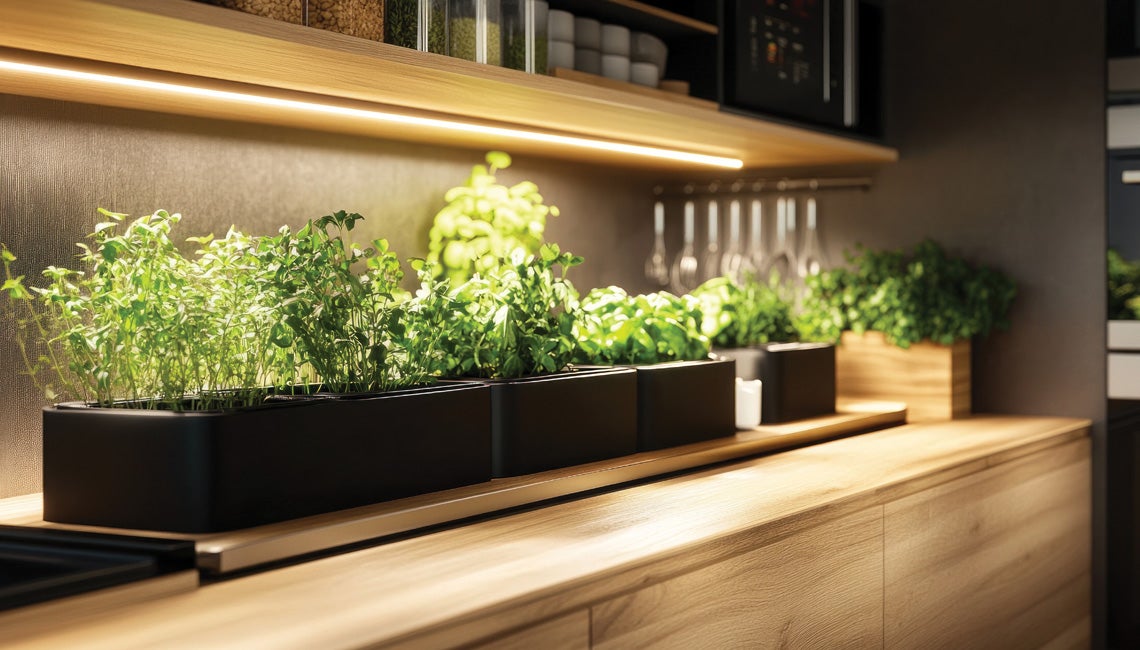
Harvesting your own fresh, aromatic herbs provides a satisfying connection to nature and lets you bring garden-to-table zestiness to your meals. But most herbs need full sun to thrive, and Timothy McDermott, assistant professor and Extension educator at Ohio State University, says that in winter, a sunny kitchen windowsill isn’t enough.
But you can still get vibrant summer flavor all winter long by growing fresh herbs indoors under LED grow lights.
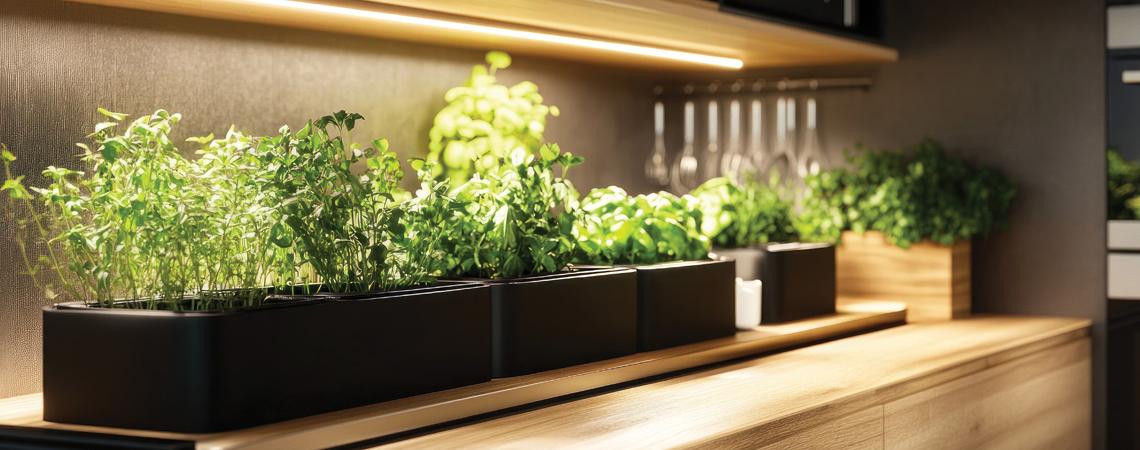
Even with proper lighting, McDermott says, you still need to take proper care of your indoor herbs to keep them thriving.
Why LED?
In years past, indoor gardening often meant bulky, hot lights that were as hard on your electric bill as they were on your plants. Modern LED lights, McDermott says, have revolutionized the kitchen garden. The slim, cool bulbs use up to 50% less energy than traditional fluorescents, yet deliver a full spectrum, which prevents plants from becoming “leggy,” or thin. The result is a sturdier, bushier herb that thrives on your countertop.
Choosing the right light
LED lights come in an assortment of sizes, shapes, and uses. For your indoor garden, choose an LED light that specifically says “grow light” or “for plants.” Make sure to look for these three things on the packaging:
Full spectrum: Bulbs that mimic natural daylight deliver the entire spectrum that herbs need during different phases of growth.
Temperature: Look for 5,000K (often labeled “Daylight” in the description) to encourage compact, bushy growth.
Wattage: Ignore the manufacturer’s phrasing that says what it looks like to the human eye (“100 watt equivalent,” for example) and look for actual power draw. For a single potted herb, an LED light with a 15W–20W LED bulb or panel is plenty. Otherwise, 20W–30W of LED power per square foot of countertop garden is a good guideline.
Easy-to-grow herbs
The easiest way to start your garden is to buy herbs that are already potted. Most major grocery store chains sell potted living herbs in their produce section. Fortunately, some of the most forgiving herbs to grow are also some of the most widely used in cooking:
Basil: tasty in hearty Italian dishes and also a wonderful topper for pizzas, pasta, and soups.
Chive: adds a mild onion-garlic flavor along with a pop of green to baked potatoes and eggs.
Rosemary: adds a slightly piney, earthy flavor to roasted meats and delicious depth to bread and soups.
Handle with care
Even with proper lighting, McDermott says, you still need to take proper care of your indoor herbs to keep them thriving. “Make sure you don’t overfertilize or overwater them,” he says. “Use a well-drained potting mix and fertilize them only if you’re positive they need it.”