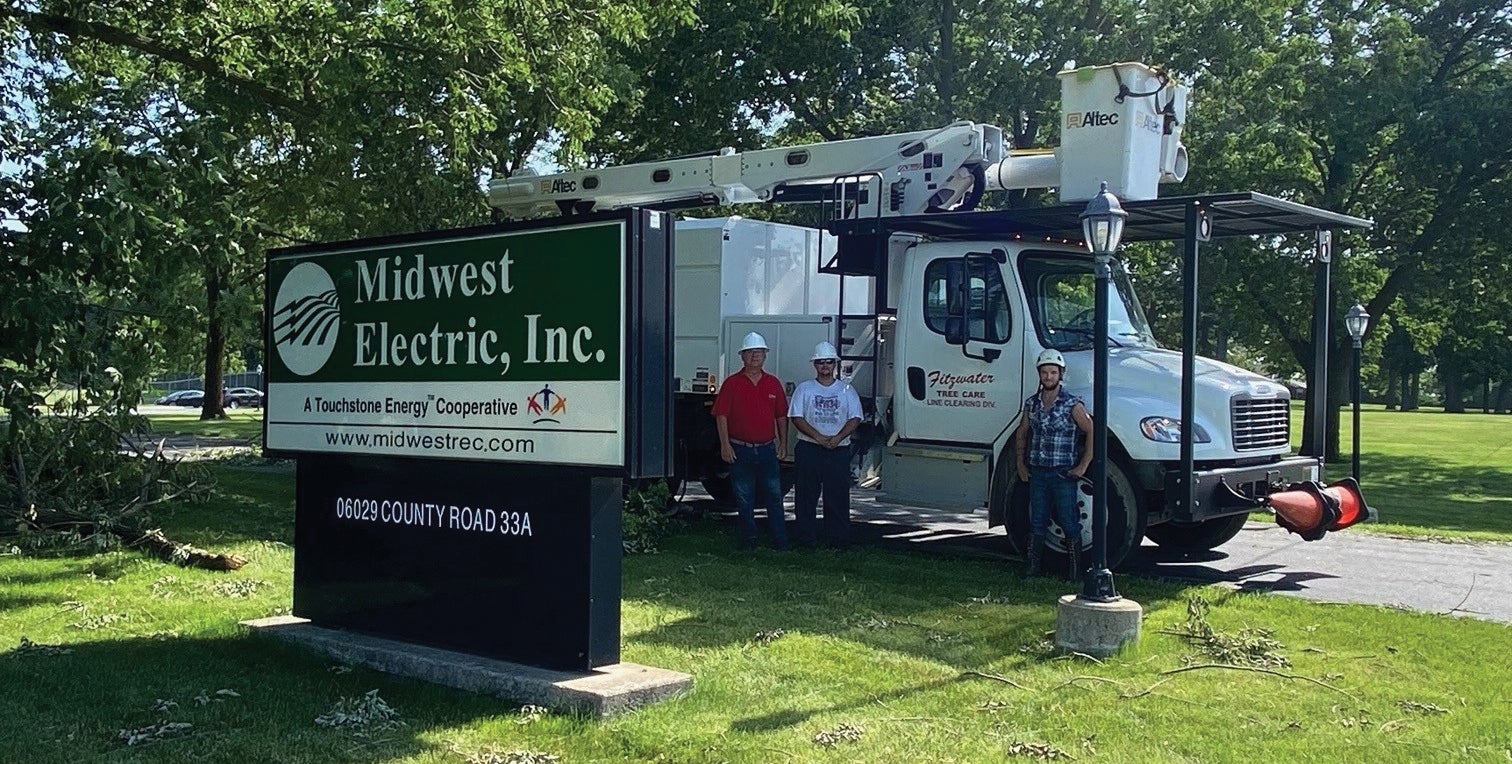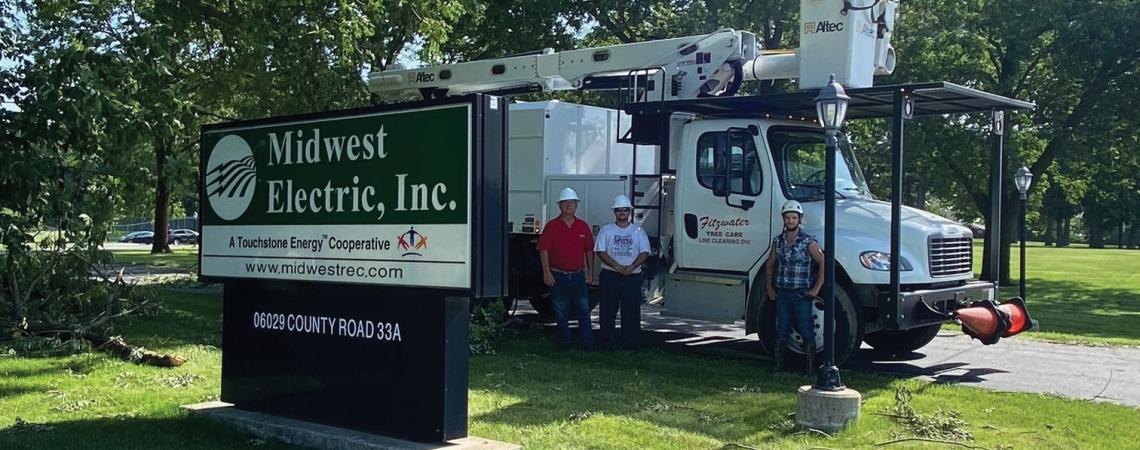
Midwest Electric’s contractor, Fitzwater Tree Care, uses industry-approved methods that focus on both safety and tree health.
Trees do a lot of good for our communities. They clean the air, absorb carbon dioxide, and — when planted in the right places — help shield homes from harsh winds and summer sun. That natural protection can even reduce the energy needed to heat and cool our homes. But when trees grow too close to power lines, those benefits can quickly turn into serious safety risks.
In fact, trees are involved in up to half of all power outages. Sometimes the trouble comes suddenly, when high winds or ice storms snap branches into lines. Other times, it happens slowly as branches naturally grow closer and begin rubbing against power lines. Trees near lines can also pose a hidden danger to children who may try to climb them or to homeowners who attempt trimming on their own. Any limb touching a power line can become energized, creating a potentially life-threatening situation.
That’s why maintaining safe clearances around power lines is so important. To improve reliability and reduce outages, our co-op follows a proactive tree and brush management program. This work isn’t just about keeping the lights on — it’s about protecting people, property, and the long-term health of our local trees.
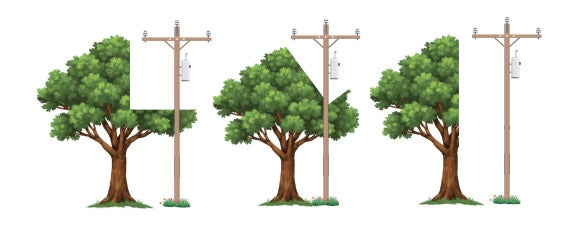
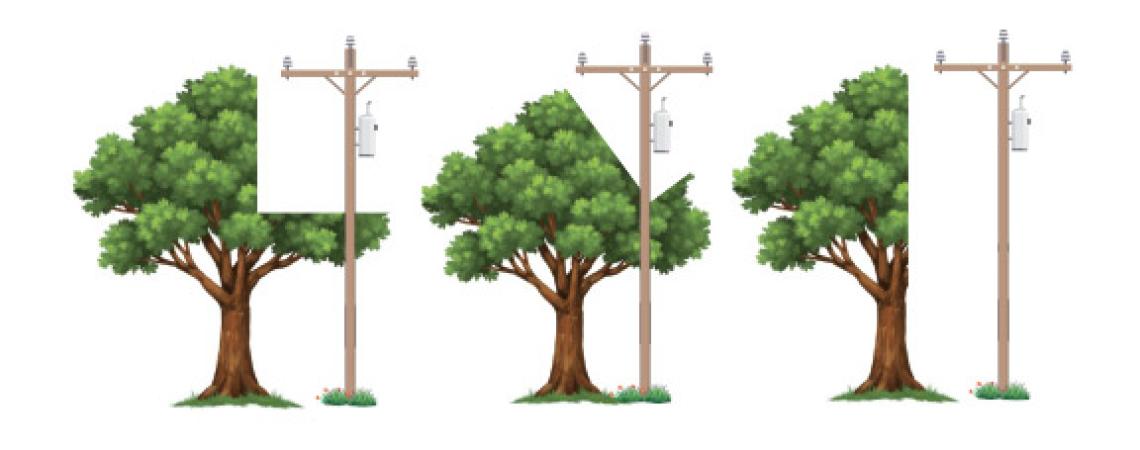
We partner with professional tree contractors who share that commitment. Our contractor, Fitzwater Tree Care, uses industry-approved methods that focus on both safety and tree health. Trimming is done using directional pruning, a technique designed to guide future growth away from power lines rather than straight back toward them.
Directional pruning removes entire limbs — or portions of limbs — back to a suitable branch or trunk, where they would naturally shed over time. This approach preserves the tree’s natural defense system, minimizes stress on the tree, and helps maintain a healthier crown. While the results may look different than the old practice of simply rounding off the top of a tree, directional pruning is far better for the tree in the long run.
In some cases, trimming alone isn’t enough. Trees that grow rapidly directly beneath power lines, lean toward high-voltage lines, or have structural defects may need to be removed entirely to prevent future hazards. These decisions are never taken lightly and are made with safety and reliability in mind.
Before any trimming takes place, affected members are notified by email or letter so there are no surprises. By working together — planting the right tree in the right place and allowing trained professionals to handle trimming — we can enjoy the many benefits trees provide while keeping our electrical system safe and reliable for everyone.