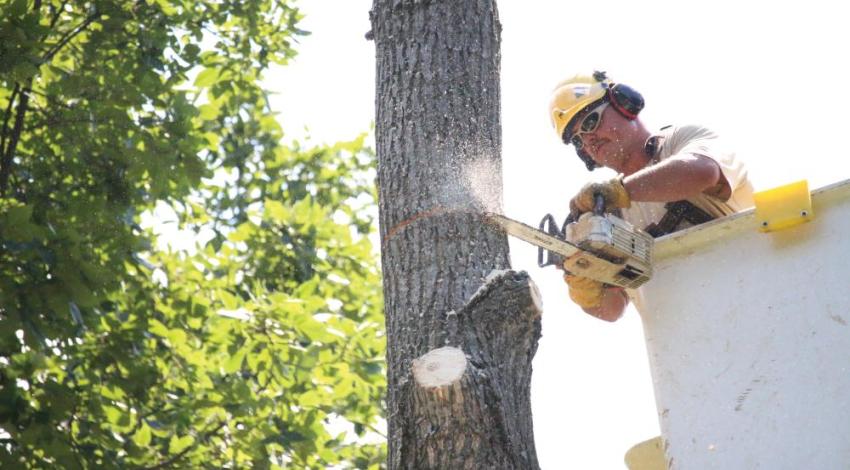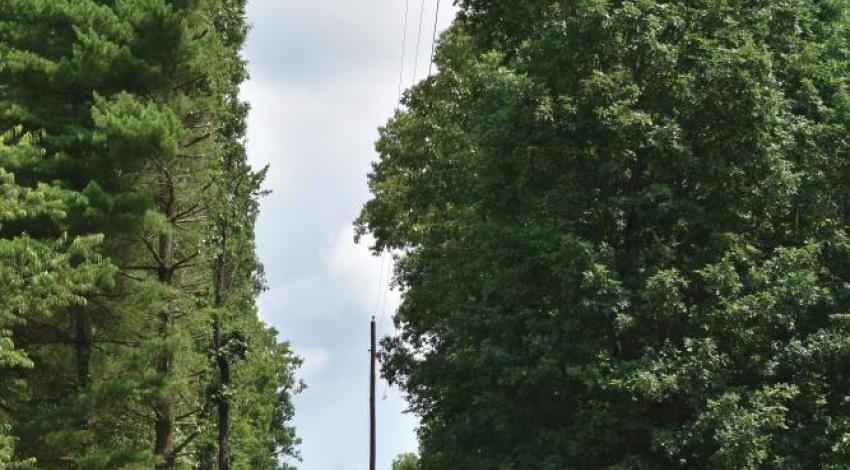
Some people might be alarmed by the sight of a low-flying helicopter dangling what looks like a prop in a horror movie passing over their property.
Nancy Thompson was excited.
“Washington Electric called me last week and told me they would be here, and here they are,” she says. “I think it’s kind of exciting. They came through and cut the trees without cutting the wire. I’ve never seen anything like it.”
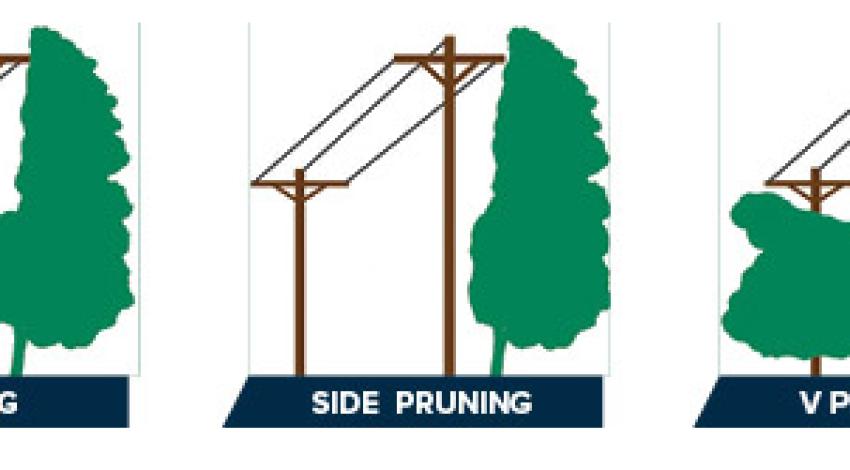
About 50% of all power outages are caused by vegetation. That figure varies widely depending on the landscape through which power lines run, and it reaches two-thirds for some Ohio co-ops. Many outages occur during storms when limbs or entire trees fall across electric lines, but others arise less dramatically when branches grow into lines.