June 2020
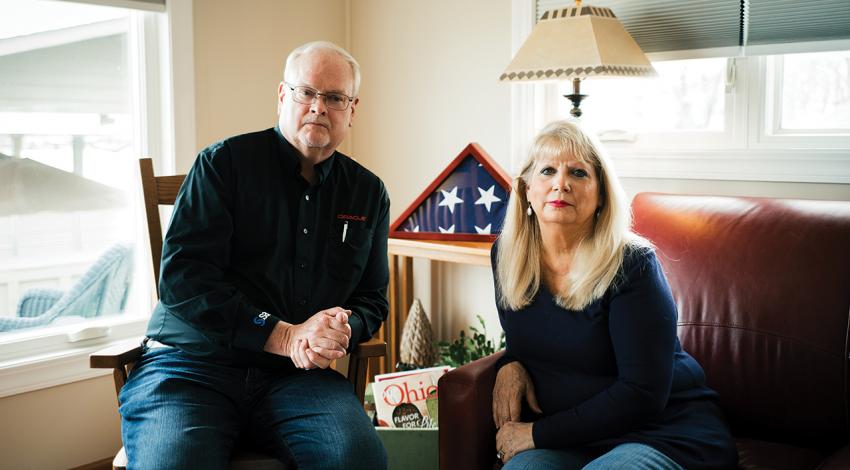
There’s an idealistic nature about rural and small-town Ohio. People know their neighbors, they support their community, and they take care of each other when families face tough times. On its surface, it’s like Mayberry — but better, because it’s real.
With all of the wonderful aspects of small-town life in Ohio, however, there are challenges, and right now, one of the toughest of those is a growing struggle with mental health problems.

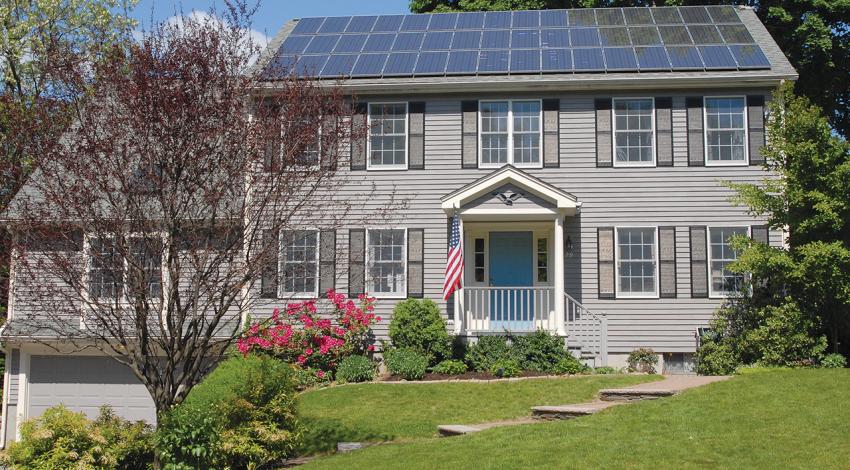
As summer approaches, it’s time to think about ways to make your home more comfortable when the sun beats down. Some of the solutions are low-cost, while others require a bigger investment, but in the end, you can be more comfortable and have lower energy bills.
The first step is to reduce your home’s solar gains — the heat energy it collects from the sun. Since most solar gains originate through your home’s windows, awnings are an effective solution. They can reduce solar heat gain by as much as 65 percent on south-facing windows and 77 percent on west-facing windows.
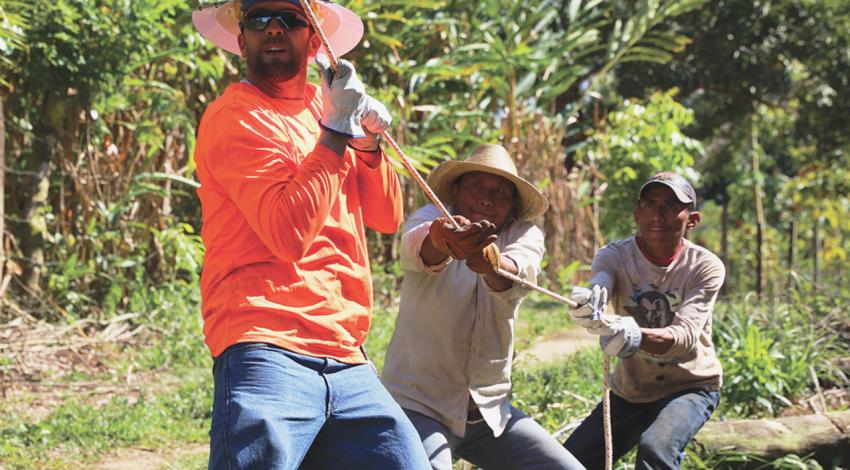
In a way, the scene was reminiscent of 1930s and ’40s rural America: two out-of-the-way villages getting electricity for the first time. This past March, however, the setting was a remote area of Central America, where a team of 17 linemen from Ohio electric cooperatives traveled to the villages of Las Tortugas and San Jorge, in northern Guatemala, on a humanitarian mission to supply electricity for the first time to the small villages.

You descend from a long line of walkers. Walking was a way of life for virtually all of your ancestors. Other forms of conveyance, from bicycles to jet propulsion, are, in the scheme of things, quite new to us.
This primal form of getting from one place to another is an elixir: it burns some calories, improves your heart’s health — and takes the wrinkle out of your brow.

Dairy farming is not an easy life — the hours are long, milk prices are volatile, and smaller farms are rapidly disappearing as the industry consolidates. Kyle Sharp, the owner of Stoutsville-based Sharp Family Dairy, knows this all too well. His day starts at 4 a.m., and it’s often past 8 at night by the time he’s finished milking his herd of just over 70 cows.
The internet has changed the way people live and work around the globe. Access to the internet is the emerging essential utility service. In larger cities across the U.S., there’s no concern that high-speed access is available via cable providers, cellular networks, Wi-Fi, and other broadband channels. However, throughout much of rural Ohio and rural America, high-speed internet access, commonly known as “broadband,” isn’t available.