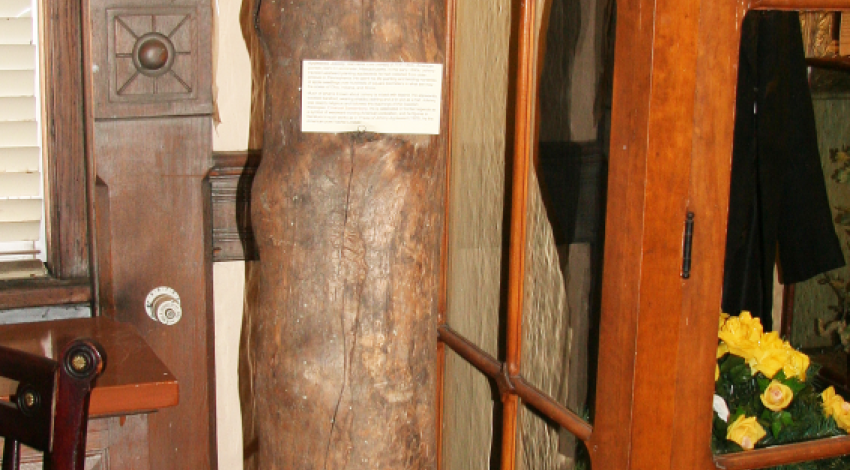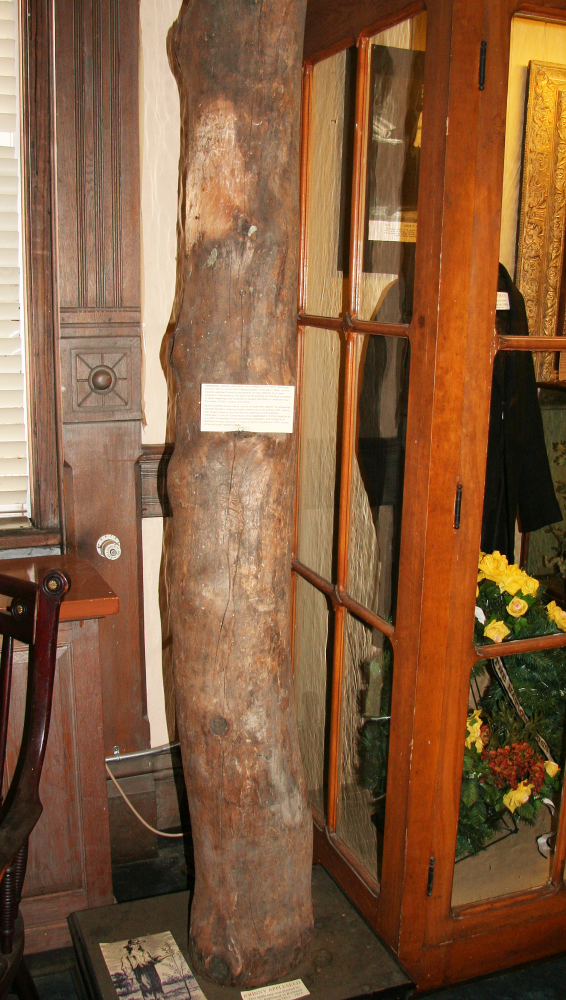
Standing in a dusty corner of the eclectic Memorial Museum in Mansfield is part of a tree trunk, dark with age, measuring about 8 feet long and a foot wide. A faded paper note attached to the base of the trunk reads, “This tree was planted by Johnny Appleseed in Richland County between 1812 and 1815.”
“The tree was well documented as having been planted by Johnny in what today has become the Woodland neighborhood of Mansfield,” says Scott Schaut, the museum’s director. “A photo of the tree even appeared in Life magazine after it was blown down by a storm in 1956.”
Many don’t realize that Johnny Appleseed was not merely a fictional folk legend, but a real person. He was born John Chapman in Leominster, Massachusetts, in 1774. His family had been orchardists for generations, so he already possessed that type of knowledge and skills when he arrived on the Buckeye State’s frontier sometime during his mid-20s.
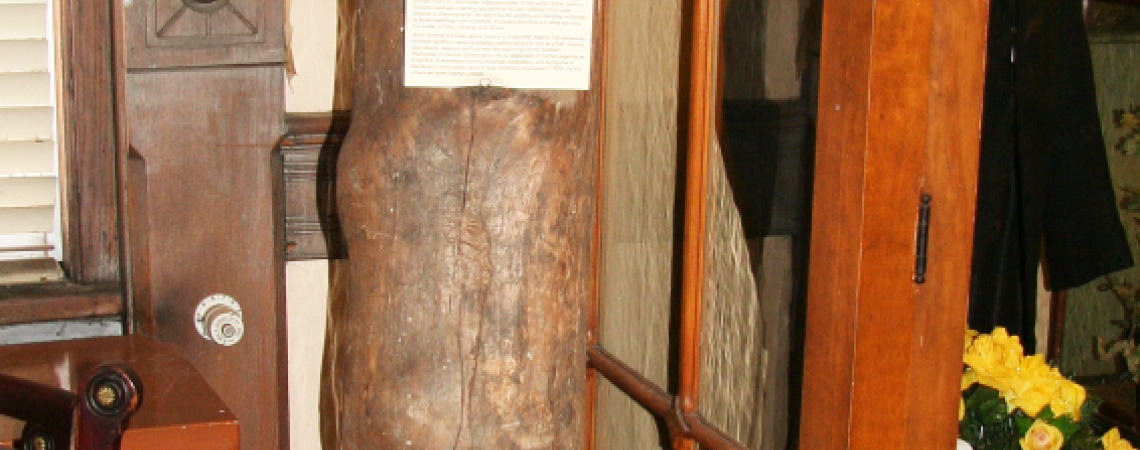
This apple tree trunk stands in the Memorial Museum in Mansfield, along with a faded paper note that says, “This tree was planted by Johnny Appleseed in Richland County between 1812 and 1815.”
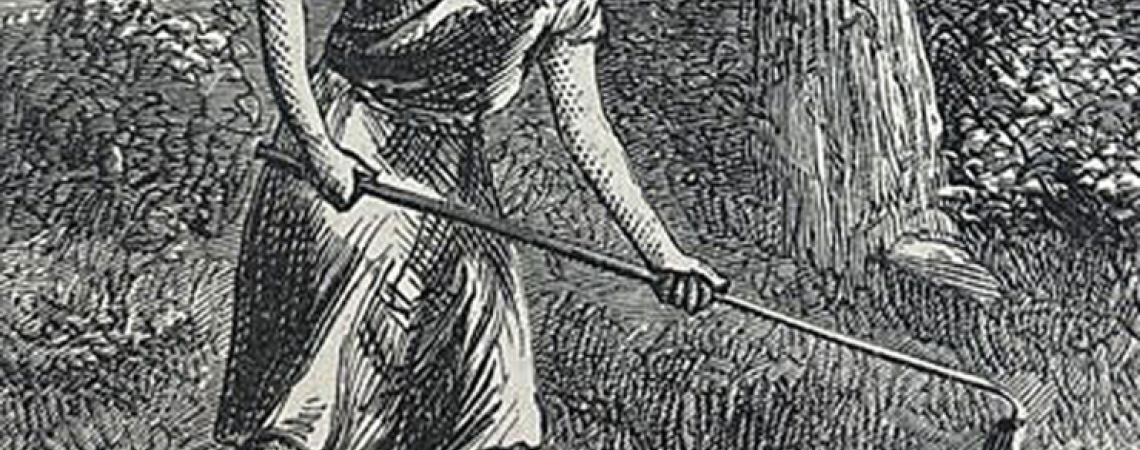
Chapman had always been drawn to the woods and wilderness, intrigued by Native people, wildlife, and the many medicinal plants the vast forests provided. A kind, gentle, religious man, he was also a born storyteller. And he respected all animals, both domestic and wild — he was never known to have carried a weapon. Historian Henry Howe, who traveled Ohio during the early 19th century, while Johnny was still alive, even related this story:
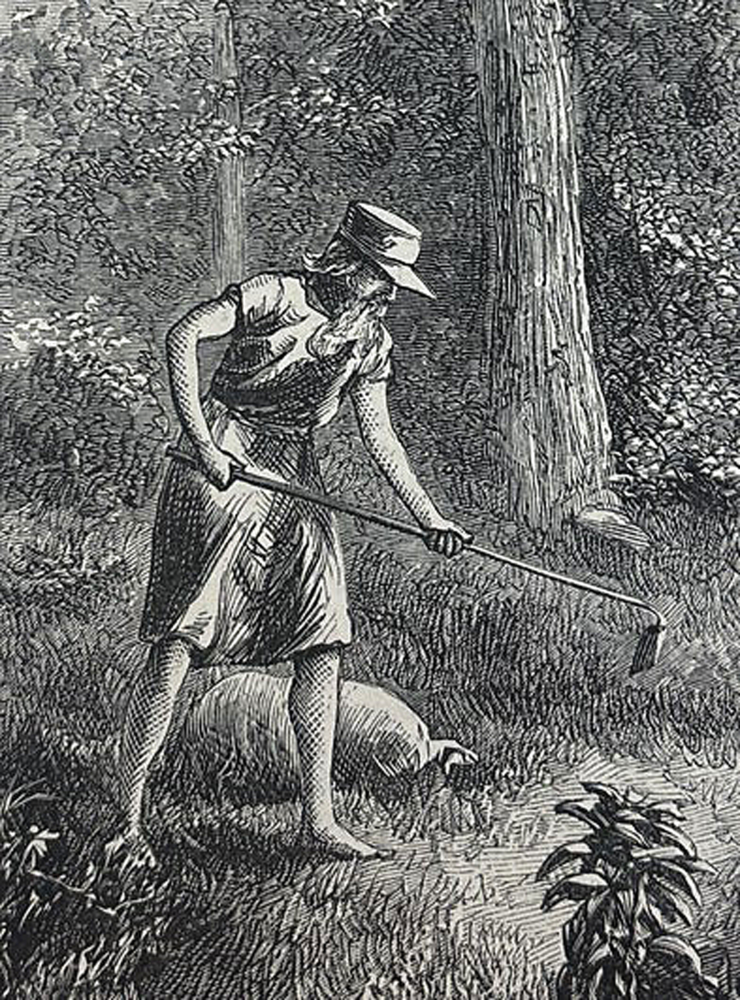
This odd, eccentric man cared little about his appearance, wearing castoff clothing or even a feed sack from which he’d cut holes for his head and arms to fit through. He famously wore his cooking pot on his head like a hat. He often went barefoot, even in the coldest weather, and when he decided to wear shoes or boots, they often didn’t match (sometimes a shoe on one foot and a boot on the other). But Johnny was always generous and willing to share what little he had. If he met someone who needed food or clothing, he simply gave them his.
One cool autumnal night, while lying by his camp-fire in the woods, [Johnny] observed that the mosquitoes flew into the blaze and were burned. Johnny, who wore on his head a tin utensil which answered both as a cap and a mush pot, filled it with water and quenched the fire, and afterwards remarked, “God forbid that I should build a fire for my comfort, that should be the means of destroying any of His creatures.
That said, John Chapman was no dimwit. Foresighted in his business dealings, he knew that settlers pouring into the Ohio country would want and need apple trees. In anticipation of that need, he’d clear an acre or two in the wilderness, plant an apple nursery from seed, fence it with brush, then move farther west, repeating his efforts hundreds of times. He would then return a year or two later to tend those growing seedlings, selling or bartering the young apple trees to the pioneers.
The apples not only were used for food but were pressed into cider. Sweet cider, of course, eventually ferments into hard cider, a favorite “adult beverage” of the time. Hard cider could also be further distilled into applejack, often more common on the frontier than moonshine. It’s no wonder Johnny Appleseed was always welcome at frontier cabins.
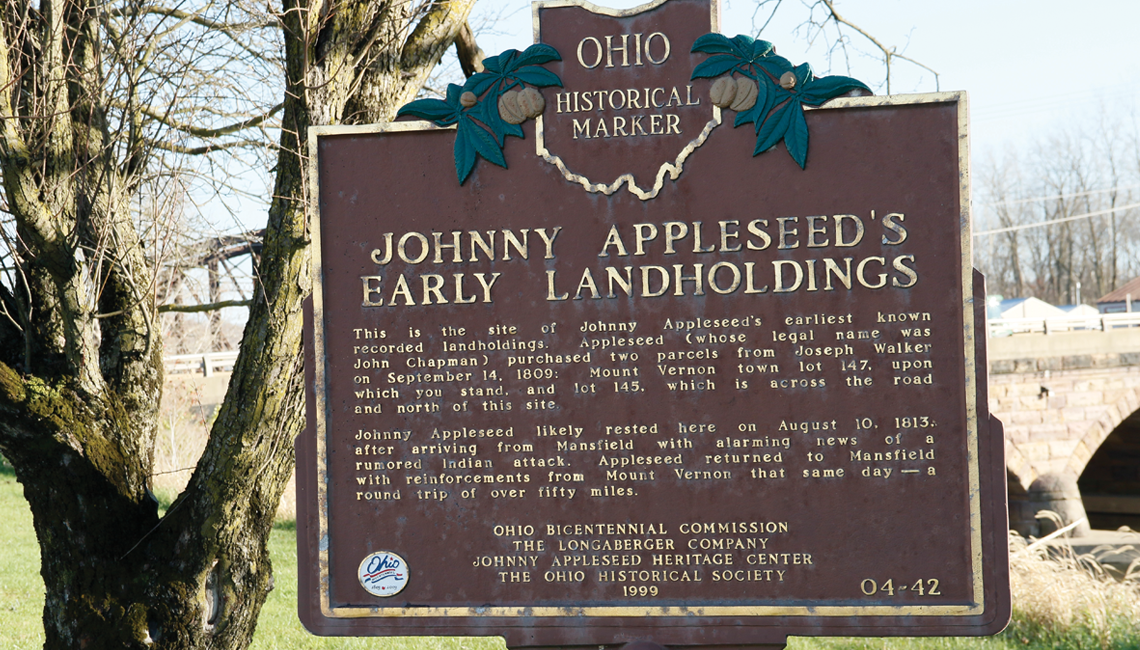
One of Johnny’s largest apple tree nurseries was planted along the banks of the Mohican River in Ashland County. He spent much time in and around the towns of Mansfield, Lucas, Perrysville, and Loudonville, and owned two town lots in Mount Vernon, purchased in 1809.
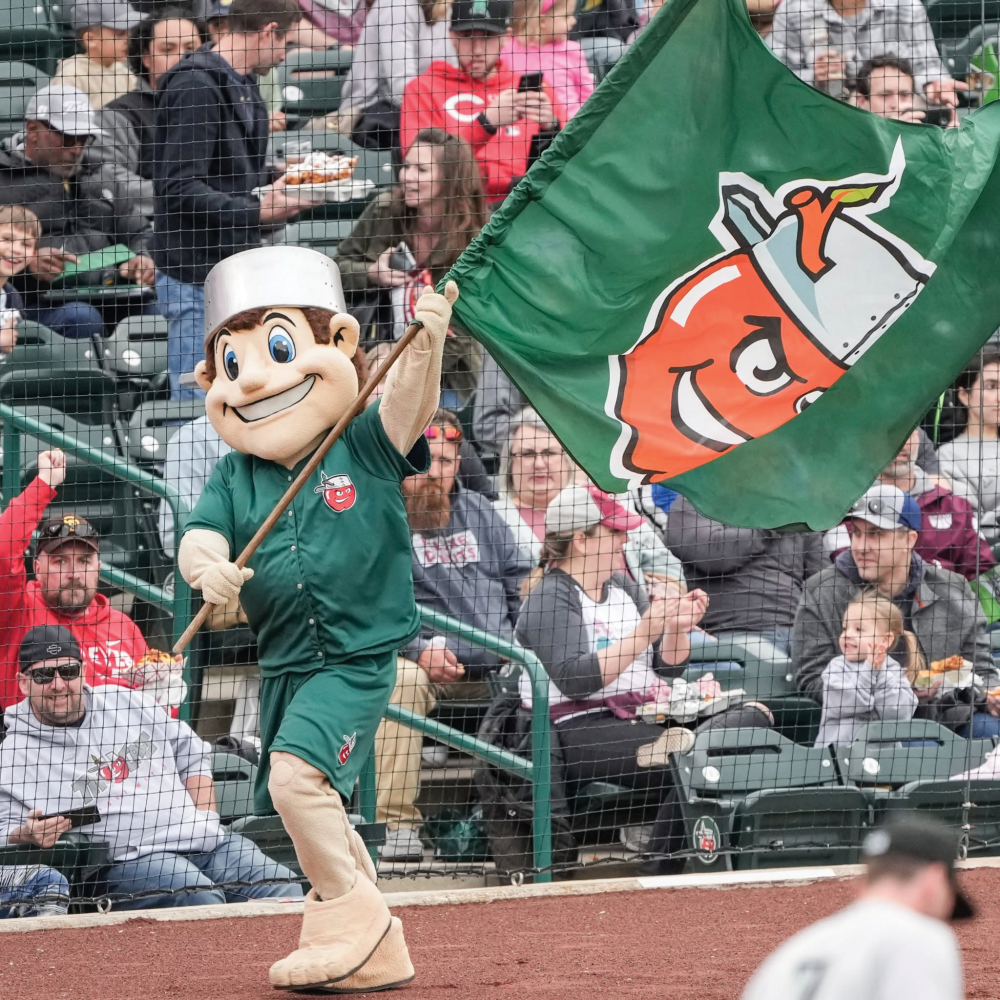
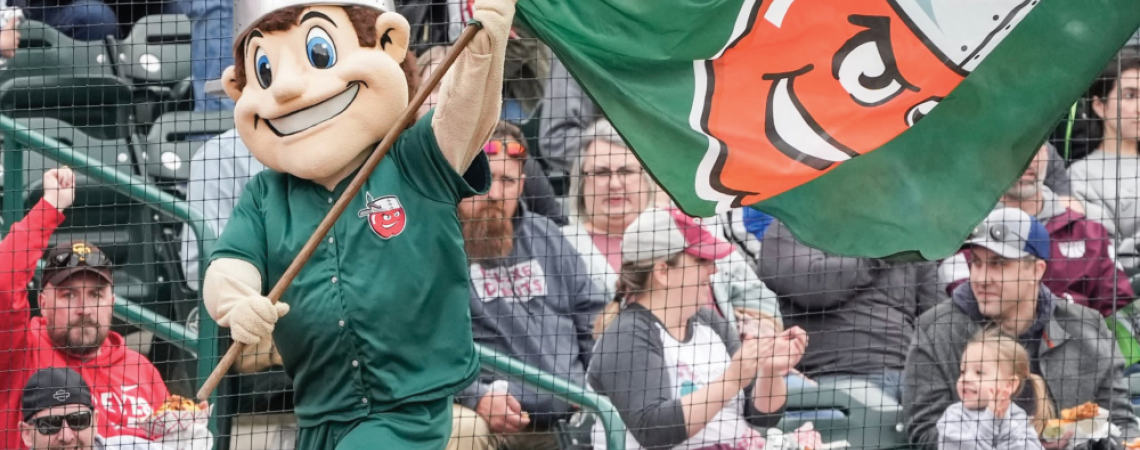
Chapman died of pneumonia in Fort Wayne, Indiana, in March of 1845 at the age of 70. Today, he is remembered in that area in an unusual way (which seems appropriate for Johnny). The Class A minor-league baseball team in Fort Wayne is called the TinCaps. Their mascot, Johnny TinCap, bears an uncanny resemblance to Johnny Appleseed, right down to the cooking-pot hat.
In 1966, John Chapman was inducted as a charter member into the Ohio Natural Resources Hall of Fame.