Whether you're somewhere on a beach or sitting at home, you can enjoy some bites that remind you of the sea: Dressed Shrimp Po'Boy, Oceanside Saltwater Taffy, Mini Boardwalk Churros, and Coastal Crab Cakes.
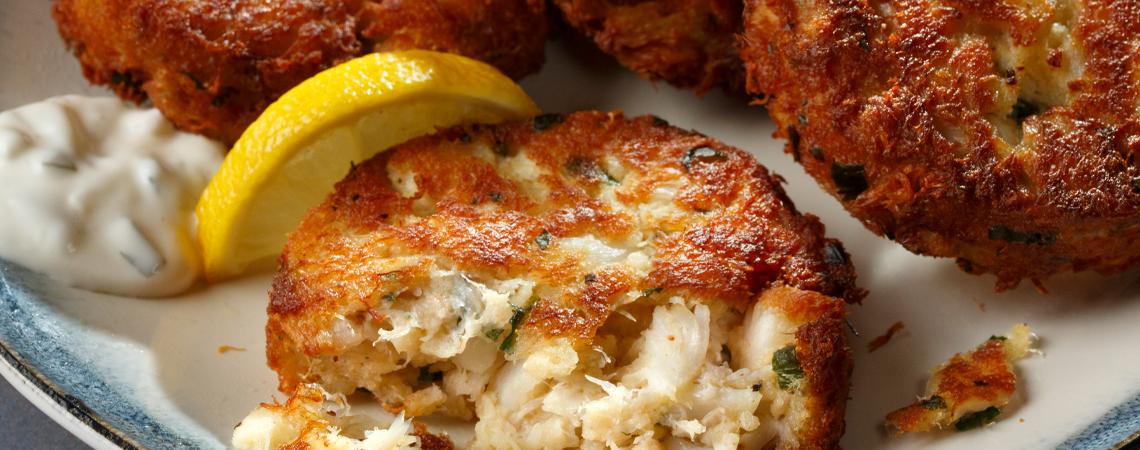
Coastal Crab Cakes
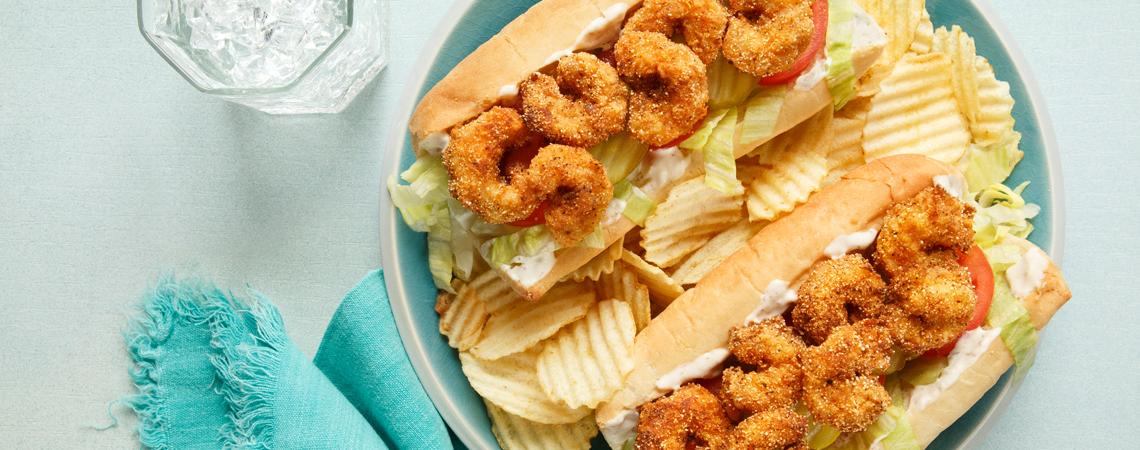

A “dressed” po’boy is one topped with shredded lettuce, sliced tomatoes, pickles, and a slathering of remoulade.
In a small bowl, mix together mayonnaise through hot sauce; cover and chill.
In a large skillet over medium-high, heat ¼ inch of peanut oil. While it’s heating, mix flour through pepper in a shallow bowl. In a second shallow bowl, thoroughly scramble eggs. Cover a large plate with paper towels. The oil is ready when bubbles form around an inserted wooden spoon or chopstick. Dredge shrimp through the egg, then coat in flour mixture. In small batches, fry coated shrimp until golden on both sides (2 to 3 minutes). Transfer to paper towels to drain and cool. Once the shrimp is done, slather remoulade on the insides of the rolls, then stack lettuce, tomatoes, pickles (if desired), and fried shrimp on top.
*Small/medium (40/50) shrimp shown. Increase amount of oil and fry time for larger shrimp.
Per serving: 668 calories, 19 grams fat (3 grams saturated fat), 85 grams total carbohydrates, 183 milligrams cholesterol, 1,382 milligrams sodium, 5 grams fiber, 36 grams protein.

Use ½ teaspoon of super strength/concentrated candy flavors (such as LorAnn brand) or 1 teaspoon of flavor extracts (such as vanilla) or bakery emulsions.
From a 12-inch-wide roll of wax paper, cut three 30-inch long pieces. Align the sheets so all edges match. Fold stacked sheets in half widthwise, then in thirds lengthwise and in thirds widthwise. Cut along the folds to make 54 candy wrappers. Coat the bottom of a 9x13-inch glass baking dish with 1 teaspoon softened butter. Place in fridge to chill.
In a medium, heavy-bottomed saucepan (triple-ply metal, enameled cast iron, or copper), mix sugar, cornstarch, and salt with a wooden spoon. Place over medium-high heat and stir in the water, corn syrup, and 2 tablespoons butter. Continue stirring with wooden spoon until the mixture begins to boil (about 10 minutes), at which point stop stirring — and don’t stir again!
Use an eye dropper or pastry brush to apply a small amount of water to any sugar that’s crystallized on the sides of the pan above the liquid line. Insert a candy thermometer below the liquid line but not touching the bottom of the pan. Continue to boil mixture undisturbed until it reaches hard-ball stage on the thermometer (260 F), approximately 10 to 20 minutes; immediately remove pan from the heat.
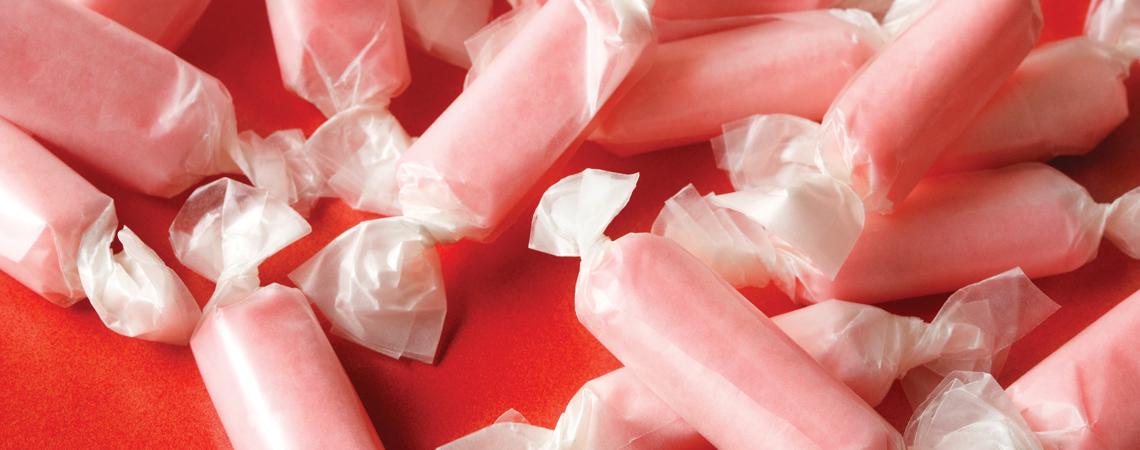
Once cooled to 240 F or below, stir in flavoring and food coloring. Place chilled baking dish on a heat-proof surface and pour hot taffy into it. Lightly touch surface of taffy every few minutes until it’s cool enough to comfortably hold. Grease hands with butter and peel taffy away from dish. With hands over the baking dish, begin pulling taffy, stretching it with both hands, then folding it back into itself for 10 to 15 minutes. As air is worked into the taffy, it will expand, turn opaque, and become lighter in color. When taffy is no longer stringy, the color is uniform and shiny, and it becomes difficult to pull, press it into one seamless oblong piece. (If folds are still visible, place taffy in a lightly greased airtight container for 20 minutes or until the seams disappear.)
Lightly coat a large work surface and cutting utensil (bench scraper, knife, or kitchen scissors) with nonstick spray. Cut taffy into 4 pieces widthwise. Wrap 3 of them in wax paper and set aside. Roll and stretch remaining piece to approximately ½ inch in diameter, then cut into 1½-inch-long pieces. Place each piece in the center of a cut of wax paper, bring the bottom edge up and over taffy, then pinch and roll up into a cylinder. Pick up with one finger on the seam and twist each end closed. Repeat with remaining pieces. Store in an airtight container at room temperature for up to 2 weeks.
Makes about 50 pieces of taffy. Per piece: 32 calories, 0.5 gram fat (0 grams saturated fat), 7 grams total carbohydrates, 1 milligram cholesterol, 17 milligrams sodium, 0 grams fiber, 0 grams protein.
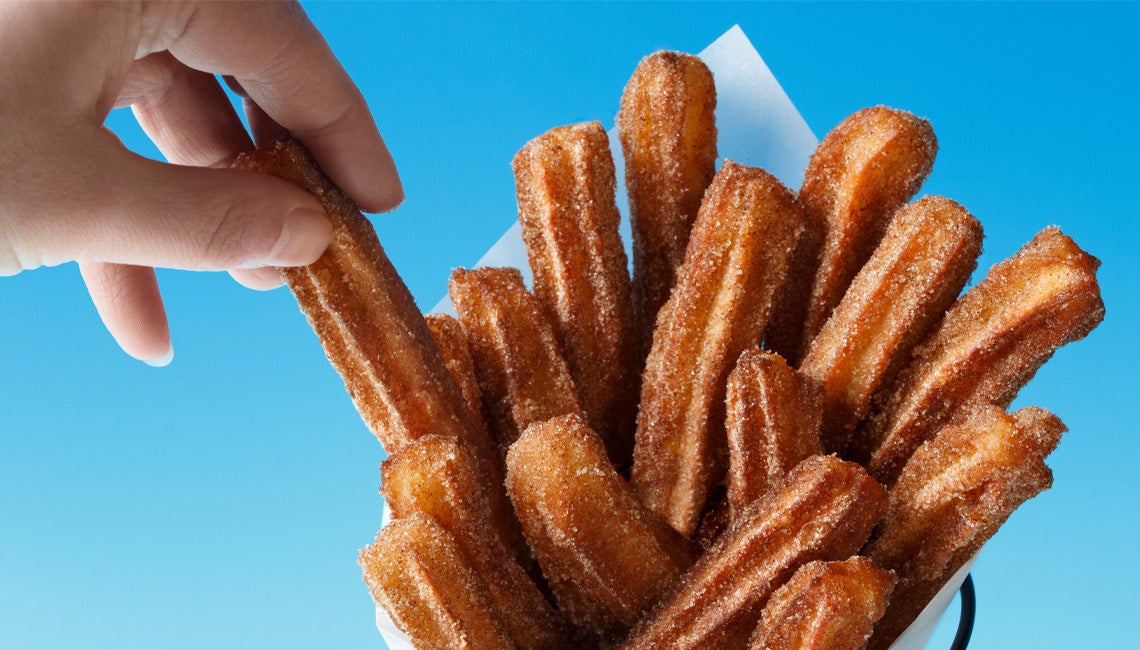
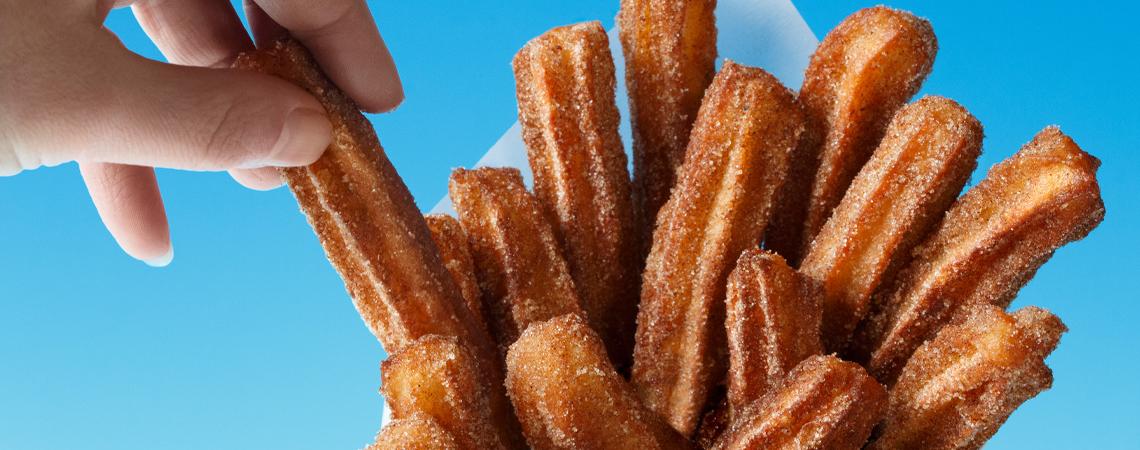
In a small baking dish, mix cinnamon with the ½ cup of sugar. In a medium saucepan over medium heat, bring the 2 tablespoons sugar, butter, water, and salt to a boil, then stir in vanilla. Remove from heat and add flour; stir with a wooden spoon until dough pulls away from the sides of the pan. Transfer to a mixer bowl and allow to cool to below 125 F.
Meanwhile, in a wide, deep, heavy-bottomed skillet over medium heat, bring an inch or so of vegetable oil to 350 F. (When it’s time for frying, consider recruiting an assistant.) Line a baking tray with paper towels and another baking tray with a cooling rack. Using a mixer with paddle attachment, incorporate one egg, then the second; scrape sides of bowl and mix once more. Transfer dough into a sturdy piping bag (reusable silicone, heavyweight bag with liner, or cookie press) and a 3/8-inch open star tip. (Adjust frying time if using a larger or smaller piping tip.)
Pipe churros directly into the hot oil, using scissors to cut the batter in 4- to 5-inch pieces. Fry 3 to 4 churros at a time until golden brown (about 1 minute per side), using heatproof tongs to keep them from touching; flip and remove from the oil. Let drip for a second over the skillet, then immediately roll across paper towels and transfer to the cinnamon-sugar mixture. Use a spoon and/or separate set of tongs to coat in sugar and transfer to the cooling rack. Repeat with remaining dough. Churros can be stored in an airtight container at room temperature for a day or refrigerated for 3 days and reheated in the oven at 375 F for 4 to 6 minutes to revive crispy texture.
Makes about 35 churros. Per piece: 48 calories, 2 grams fat (1 gram saturated fat), 7 grams total carbohydrates, 15 milligrams cholesterol, 71 milligrams sodium, 0 grams fiber, 1 gram protein.

In a large bowl, mix mayonnaise, parsley, egg, mustard, Old Bay, and pepper. Gently fold in crab meat and breadcrumbs. Line a baking tray with a silicone mat or parchment paper. Press mixture into 6 equal-sized patties and transfer them to the lined tray. Cover and refrigerate for an hour.
Set a large plate covered with a double layer of paper towels next to the stove. Pour about half an inch of oil into a large, deep, and heavy- bottom skillet over medium-high. Heat until the oil sizzles when a bread crumb is dropped into it. Using a heat-safe spatula, lower 3 crab cakes into the oil, one at a time. Cook until medium golden brown, about 3 minutes per side. (Tip: Use one spatula to scoop the crab cakes out of the oil and place a second spatula on top, then flip both spatulas over so the top spatula catches the crab cake. Use the now-empty spatula to nudge the crab cake into the oil.)
Repeat with remaining crab cakes. Serve with lemon slices and tartar sauce. To freeze, let cool to room temperature, then stack in an airtight container with wax sheets separating them. Store 4 to 6 months. Thaw in fridge overnight, then reheat crab cakes at 350 F for 8 to 10 minutes until warmed through.
*The amount of salt in canned crab meat varies between brands. Bumble Bee Lump Crabmeat (which contains 30% of the recommended daily value of sodium per serving) was used to test this recipe. You may need to add more salt.
Per serving: 225 calories, 17 grams fat (2 grams saturated fat), 4 grams total carbohydrates, 91 milligrams cholesterol, 534 milligrams sodium, 0 grams fiber, 13 grams protein.