Vicki Reinhart Johnson

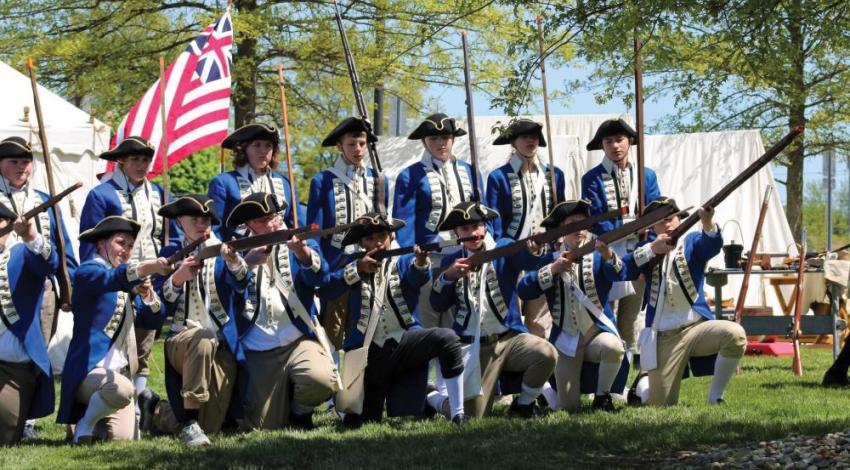
A group of students doing a Revolutionary War reenactment

As the United States celebrates its 250th anniversary this year, Americans are paying particular attention to the history of the nation: the “shot heard ’round the world,” the Declaration of Independence, the Revolutionary War, and all of the history from just before and af

“Reading about history in a book is good, but it doesn't give you the same feel as attending a living history event,” says Cindy Jackson, a reenactor who is coordinator of the Fair at New Boston, an annual Labor Day event in Springfield that includes several reenactments during its run. “It helps us get in touch with history instead of it being a dry subject in a textbook — and when you see it happening right in front you, it isn't as pretty as in the movies.”
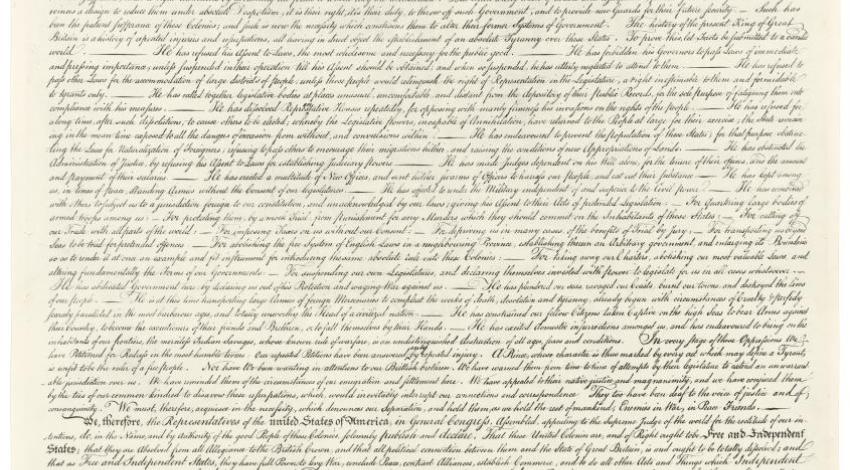
 

Declaration of Independence

Americans obviously celebrate July 4, Independence Day, honoring the date on which the Continental Congress officially adopted Thomas Jefferson’s statement declaring the American colonies’ independence from Britain. This year, as part of the official U.S.

“They transformed a resolution into a binding act of commitment,” says David Zavagno, executive director of Lake Erie Heritage Foundation. “That moment — where individuals stepped forward and put everything on the line — is at the heart of our event.”

Zavagno says that the July 4 action was important, but it was the delegates’ actual signing of the declaration that was an act of mutiny against Britain and its king. “Signers picked up a pen and risked their life, knowing they would be forced to pick up a sword to defend it,” he says.

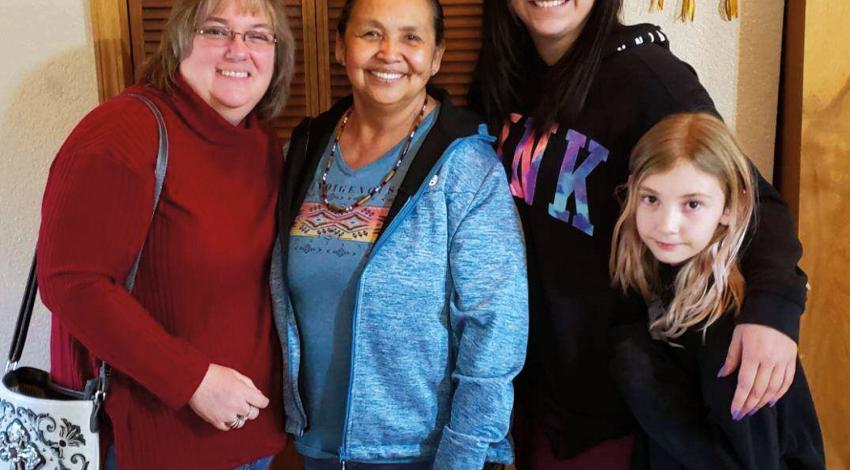
Tracy Elder (left) poses with chaplains Debra Homegun (center) and Jenn Buckley and Buckley’s daughter, Hayley, of the Native Nations Chaplaincy Alliance during a recent visit.

When people are dealing with natural disasters, loss of loved ones, addiction, or any of a number of traumatic life events, they often find themselves in need of spiritual guidance.

Elder lives in Knox County, where she’s a member of The Energy Cooperative of Newark. She leads a worldwide team of nearly 1,000 board-certified volunteer chaplains trained to provide mental, emotional, and spiritual support, counseling, addiction and recovery services, and critical incident support wherever they’re needed. They might once have been victims themselves, or they could be first responders — law enforcement, fire, and emergency services personnel.

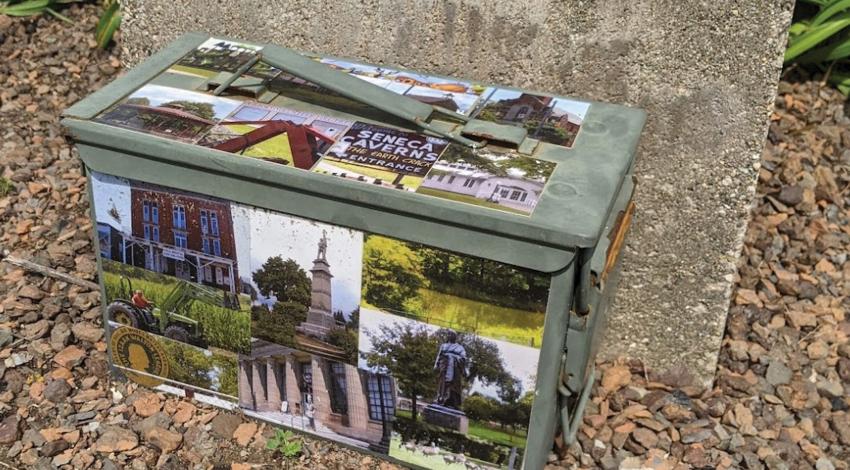
Caches are hidden above ground. They can range from shoebox-sized containers to micro-caches a few inches long, but you’ll know what you’re looking for before you begin.

Geocaching — a smartphone version of hide-and-seek — turns GPS technology into a family-friendly game for getting outside.

When it was created 22 years ago, it was described as a “high-tech treasure hunt,” and though geocaching has evolved over the years, the basic premise remains the same. GPS coordinates are used to track down caches, or “treasure” hidden in containers. From the first cache hidden near Portland, Oregon, the number of caches has grown in two decades to well over 2 million worldwide, according to www.geocaching.com, the hobby’s worldwide coordinator. There’s sure to be a few near you right now.

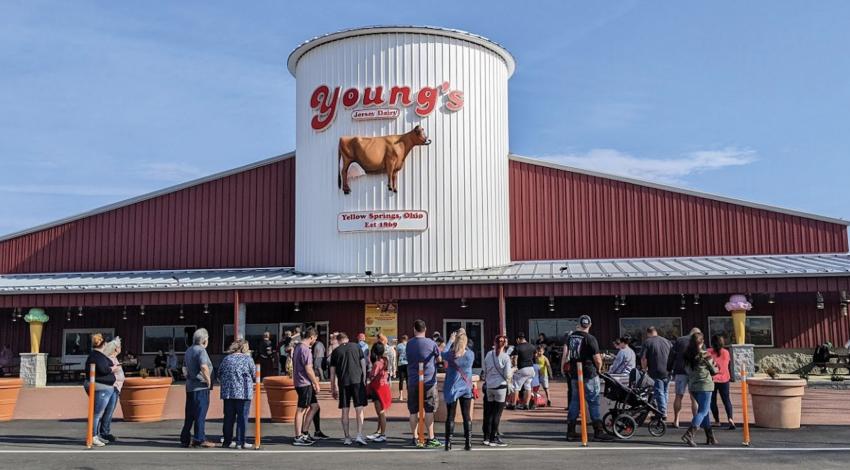
Young's Jersey Dairy

It's no surprise that Ohio ranks in the top 10 of ice cream-producing states. Its rural heritage provides a steady supply of the main ingredient — and several families through history began traditions that remain in place today.

Velvet Ice Cream

Utica, 1914

Immigrant Joseph Dager arrived in Ohio in 1903 and began making ice cream in Utica in 1914. Within two years, he was producing 200 gallons of ice cream every month, and the creamy, velvety texture inspired the name Velvet Ice Cream.

In 1960, an old grist mill became the company’s permanent home. Ye Olde Mill houses a turn-of-the-century ice cream parlor that opened in 1970 and welcomes 150,000 guests each year.