Pat Mangen Cochran still remembers the time a former classmate recounted undergoing chemotherapy for recurrent bladder cancer. The classmate, Dennis “Red” Seger, told her how he had to remove his shirt at each of his infusion appointments so nurses could access his port and administer the medicine.
Cochran, a Versailles native who now makes her home in Beavercreek, looked online to find a shirt with a suitable port access — but everything she found was drab and lifeless. Wanting to give him a shirt that didn’t make his tough situation even more depressing, she decided to make it herself.
She sat down at her sewing machine and made three shirts, each with both a flap to access his port and a whimsical design sure to boost his spirits.
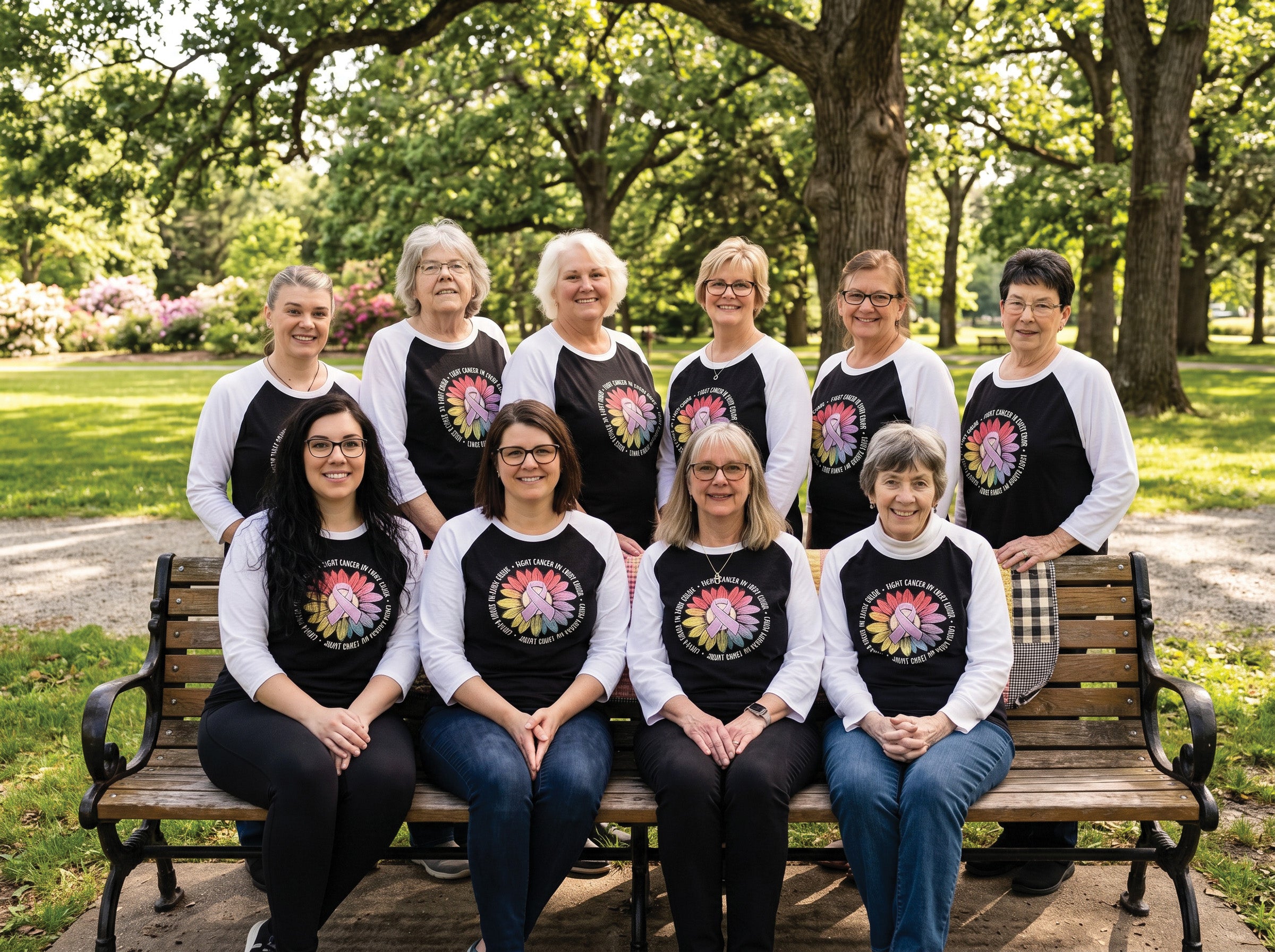
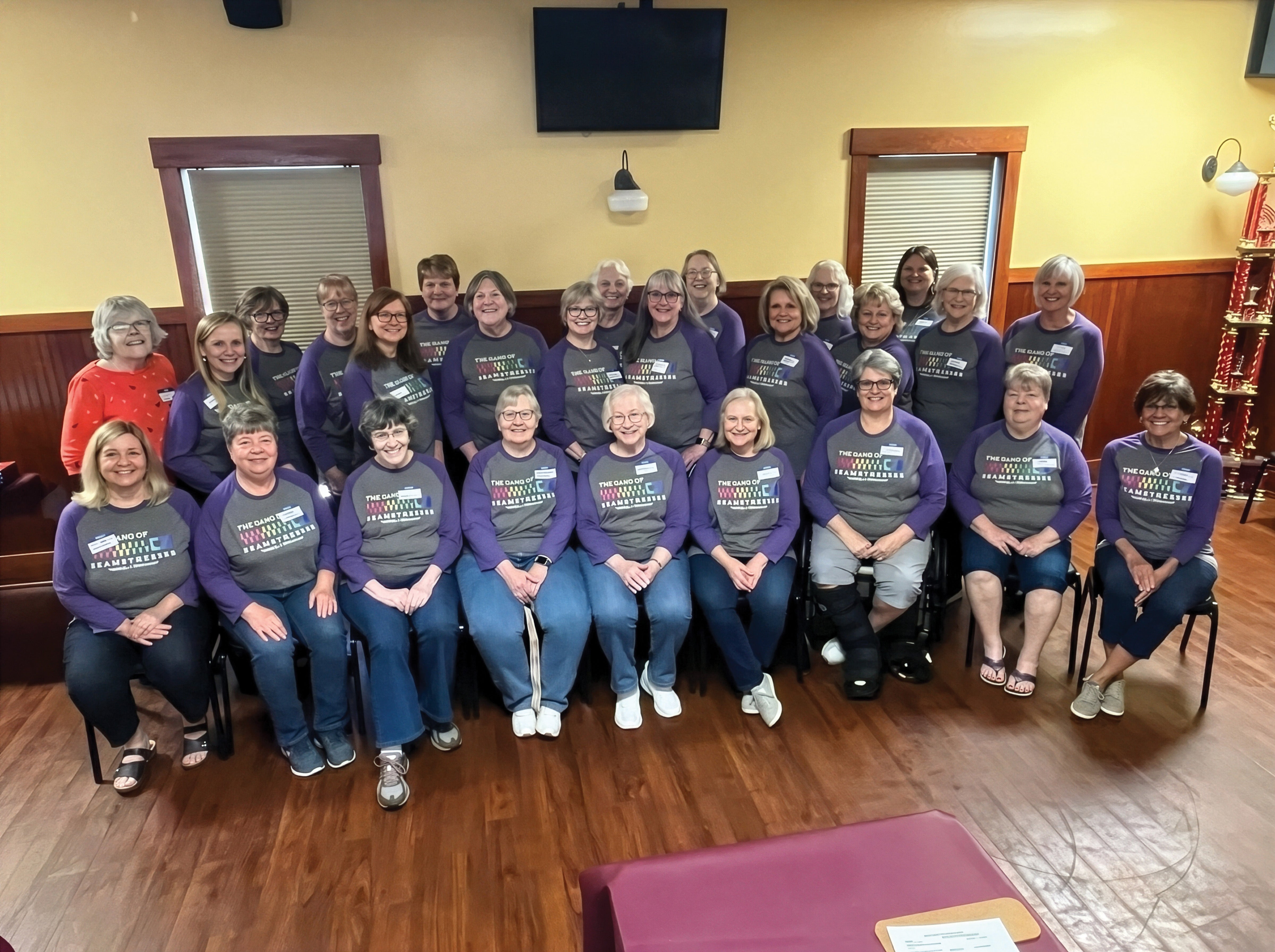
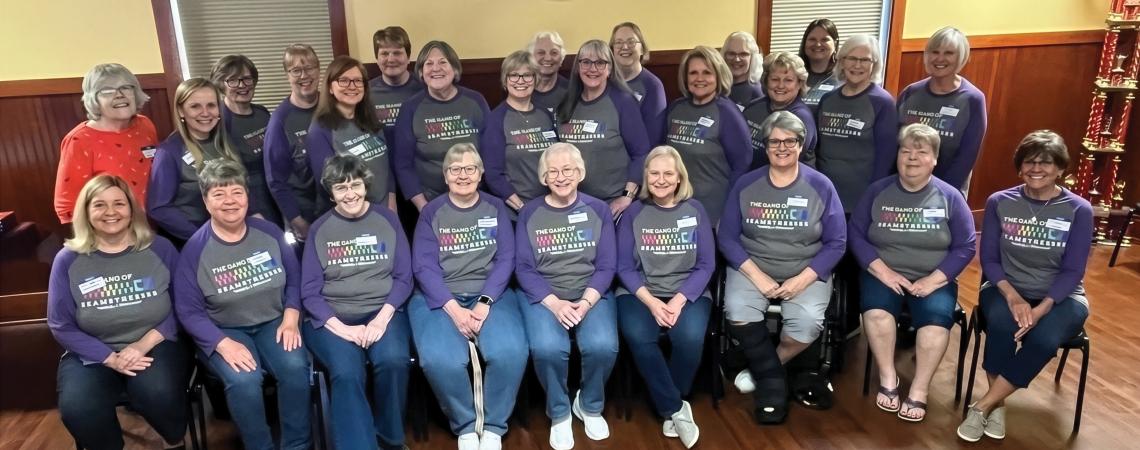
The Gang of Seamstresses was organized in 2018 to make clothing specially designed for cancer patients.
She had no idea her good deed for a childhood friend would spark an ambitious project that now continues to benefit cancer patients of all ages throughout the state and beyond.
“Red wore the modified shirts to The James Cancer Center in Columbus and the nurses went crazy,” she says. “I made more in different sizes for Red to take in — not just once, but quite a few times. They wanted more that they might distribute at all seven treatment centers in their system.”
Realizing the profound need, Cochran rounded up willing volunteers in the area and organized the Gang of Seamstresses in 2018. As the group grew in number, so did its output of shirts. Soon, the gang of 20 seamstresses was donating to hospitals and treatment facilities in Columbus and throughout the Greater Dayton area.
Unfortunately, the need only continued to grow — but so did the Gang. One of Cochran’s friends, Bonnie Bey of Versailles, started the Up North Gang of Seamstresses in Darke County a year ago and 25 volunteers stepped right up to help, and they began supplying shirts to hospitals in Coldwater, Greenville, and Lima, as well as the Veterans Administration Center in Dayton.
“I figured we would modify a thousand or so shirts and that would be it,” Cochran says. “Boy oh boy, was I wrong! We have finished more than 30,000 since 2018.”
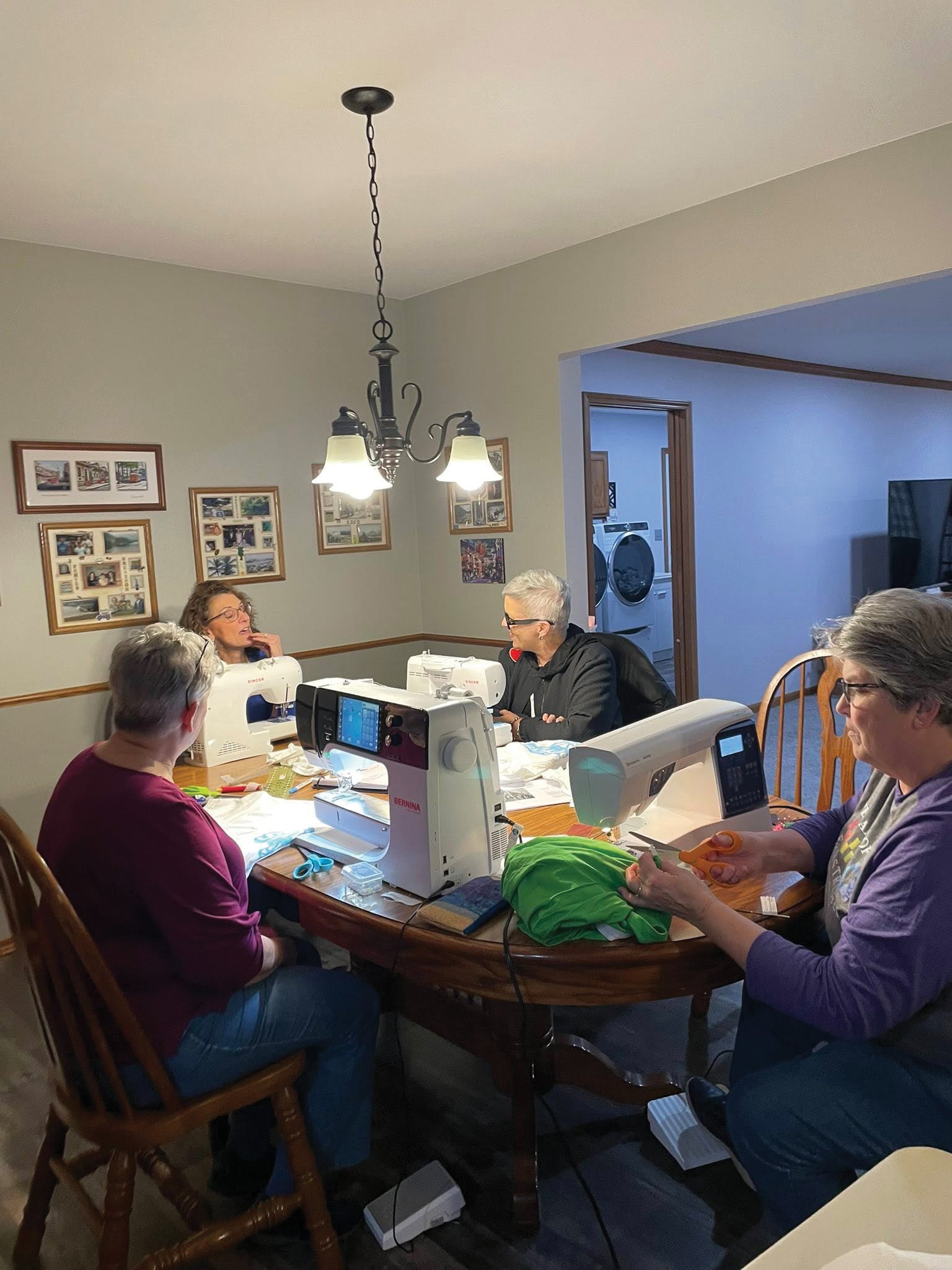
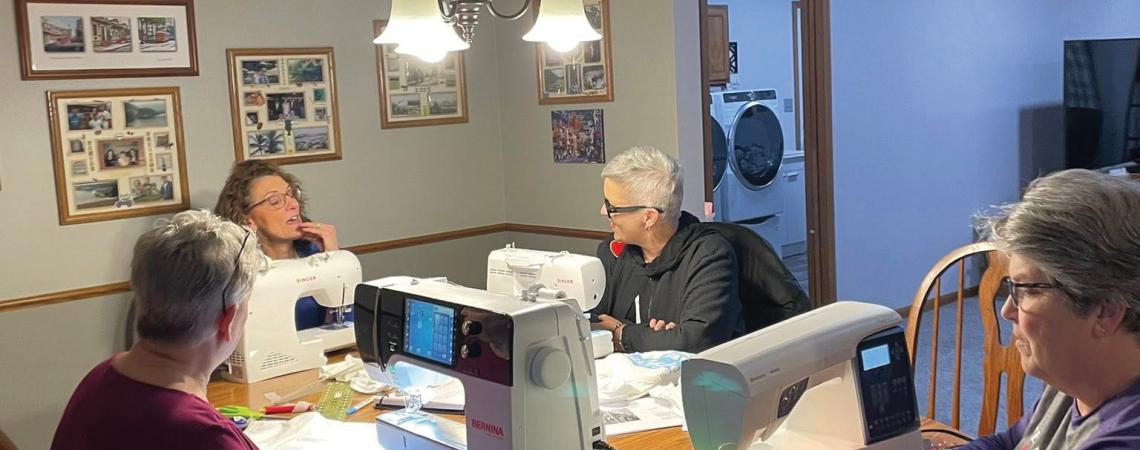
Many of the members of the Gangs are members of Piqua-based Pioneer Electric Cooperative or Greenville-based Darke Rural Electric Cooperative. Normally, the seamstresses work from home, using their own sewing machines. “Volunteers generally work at their own pace when they work at home,” Bey says. “They pick up bags containing 20 shirts and all the necessary supplies, with no timetable for when the finished ones need to be returned.”
Occasionally, the groups organize “sewing bees” in Beavercreek or Versailles — bringing portable-machine-toting volunteers together for enjoyable days of enthusiastic sewing, packaging, eating, and chatting.
Cochran also occasionally conducts “Zipper School” sessions to teach new volunteers how to install zippers, which extend from a shirt’s neckline diagonally to the arm hole, giving patients the opportunity to proceed to treatment without having to disrobe. Each “newbie” completes two shirts during the training sessions.
Word of the Ohio “gangs” has even spread outside the state. Cochran has instructed women from Florida, California, and Arizona on the process — and some have subsequently organized groups to provide shirts for treatment centers in their respective areas. She hopes to establish a new gang in northern Ohio to satisfy the growing need there.
Since each patient is provided with three free shirts, donations are an essential part of the project. They come in the form of new T-shirts, long-sleeved shirts, sweatshirts, and hoodies, as well as zippers, thread, and interfacing. Needed sizes range from toddler to 4X or larger. “Shirts have to be new to reduce the likelihood of infection and allergic reactions from laundry products or pets,” Cochran says. “We can take shirts with designs and wording, but nothing of a religious or political nature.”
Monetary contributions defray the cost of postage for shirts that have to be mailed or need to be purchased in an unavailable size. Volunteers handle deliveries to hospitals and treatment centers around the state, leaving bundles of 250 shirts at a time.
Recent donations include stacks of 2025 shirts from Eldora Speedway in Darke County and 23 cases of shirts from the Pelotonia bike race to benefit cancer research.
Seger’s widow makes an annual donation in his memory, and longtime project ambassador Carl Stuck requested the Gang of Seamstresses set up a display at his celebration of life to encourage more participation. Additionally, some church groups now collect needed items like zippers and thread.
“Sometimes I find bags of shirts on my porch and have no idea where they came from,” Bey says. “We are grateful for each and every one we receive, because it means we can help more people in their time of need.”
For more information about the Gang of Seamstresses, on donating shirts, or obtaining a port access shirt, email gangofseamstresses@gmail.com or check out www.facebook.com/gangofseamstresses.