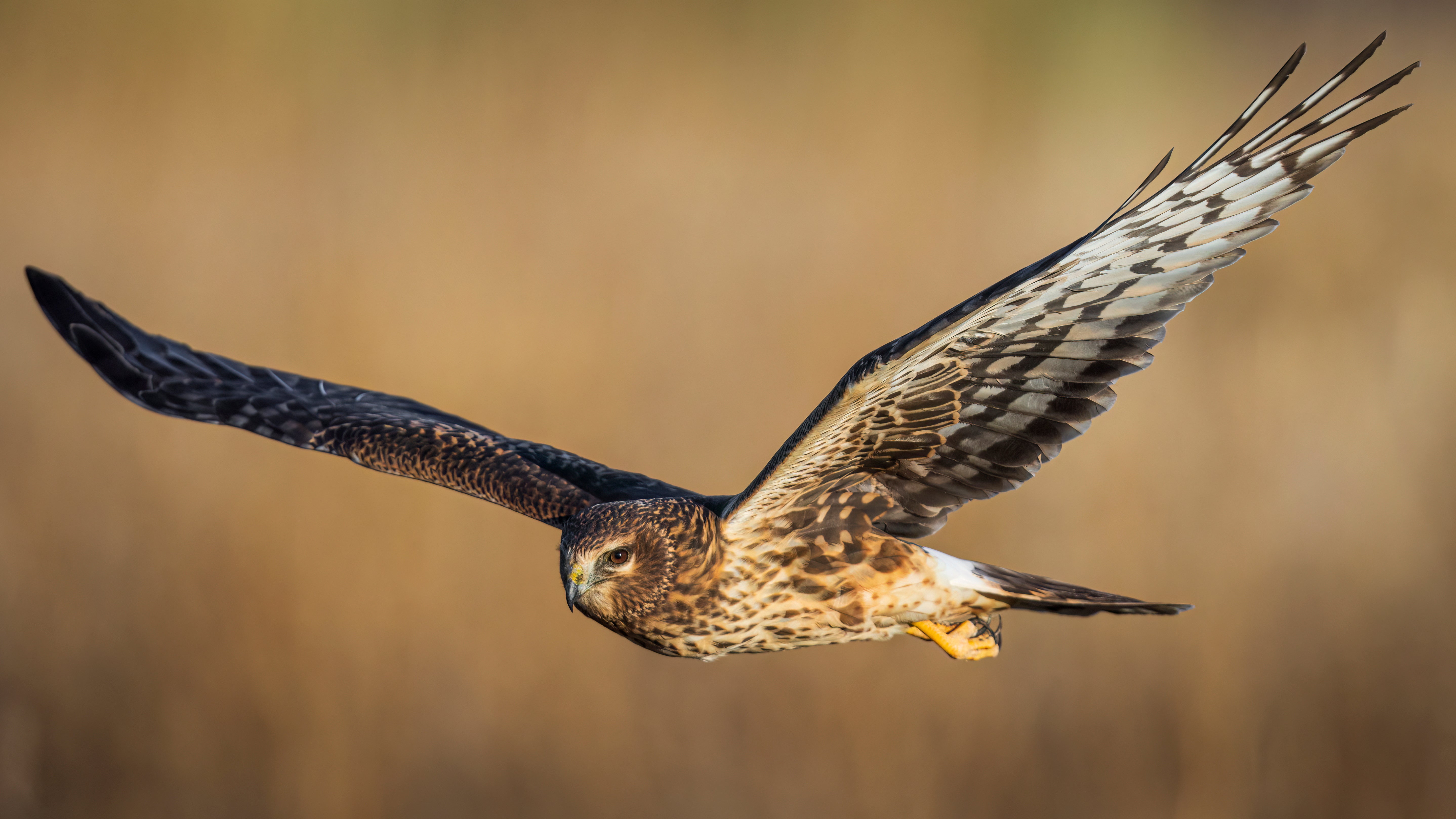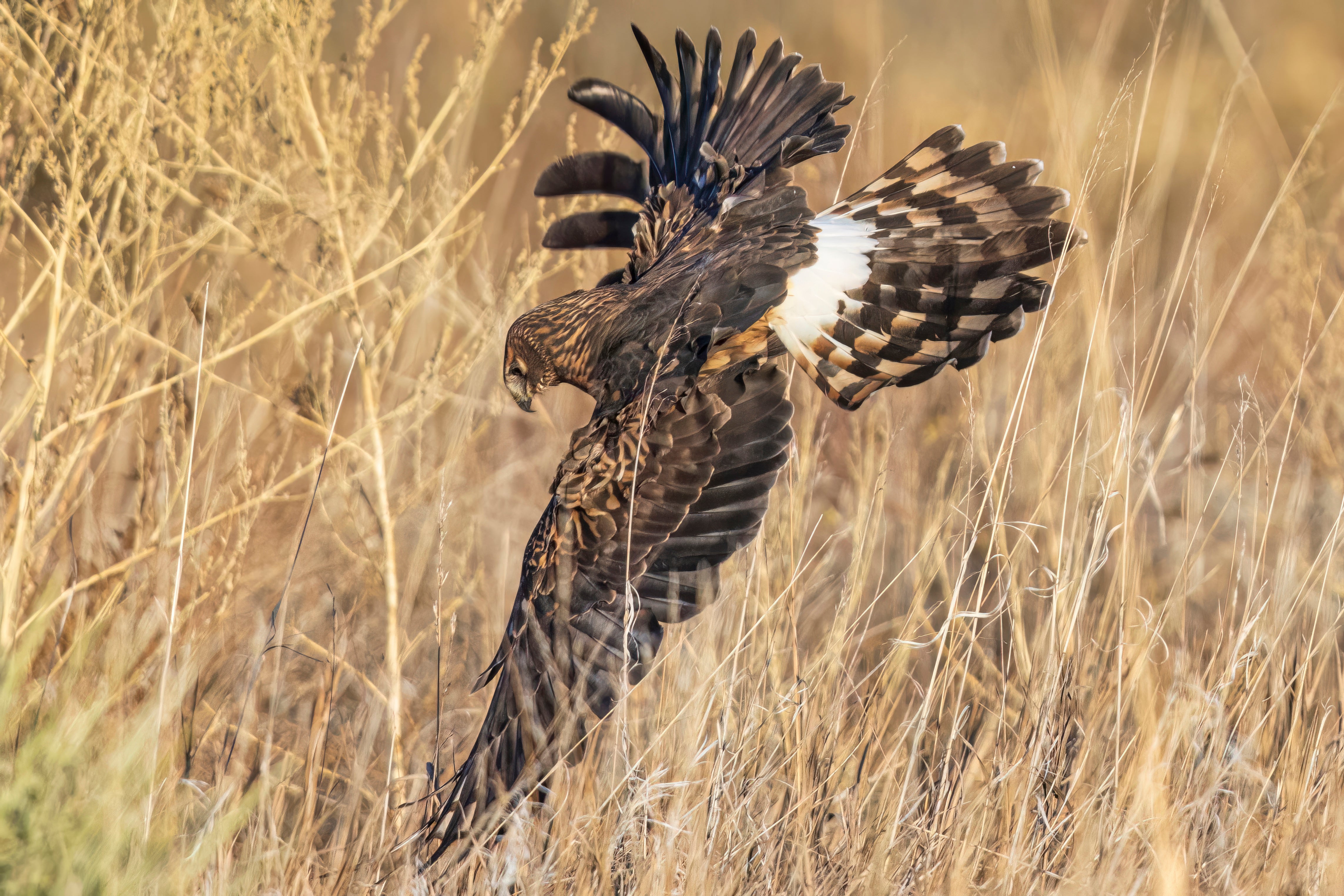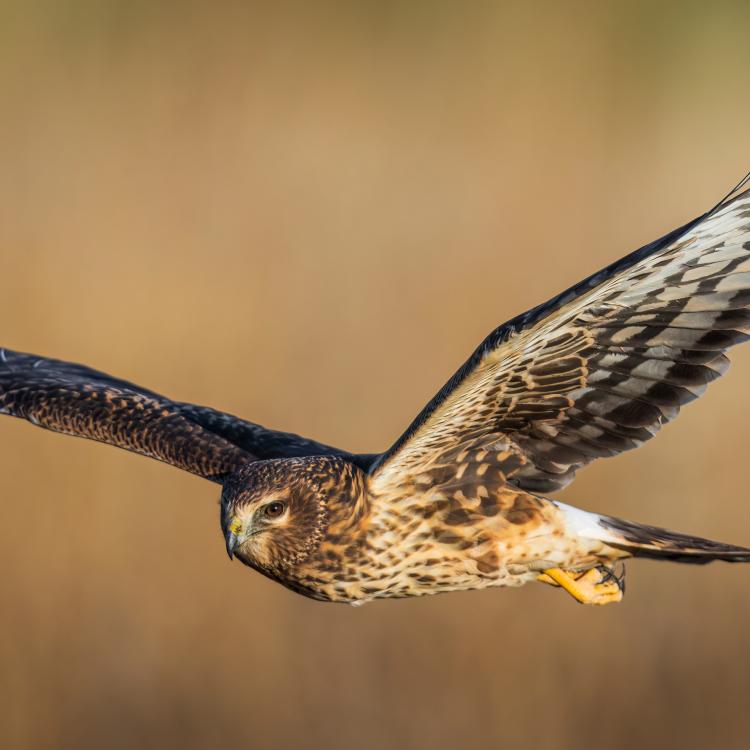
A northern harrier in flight
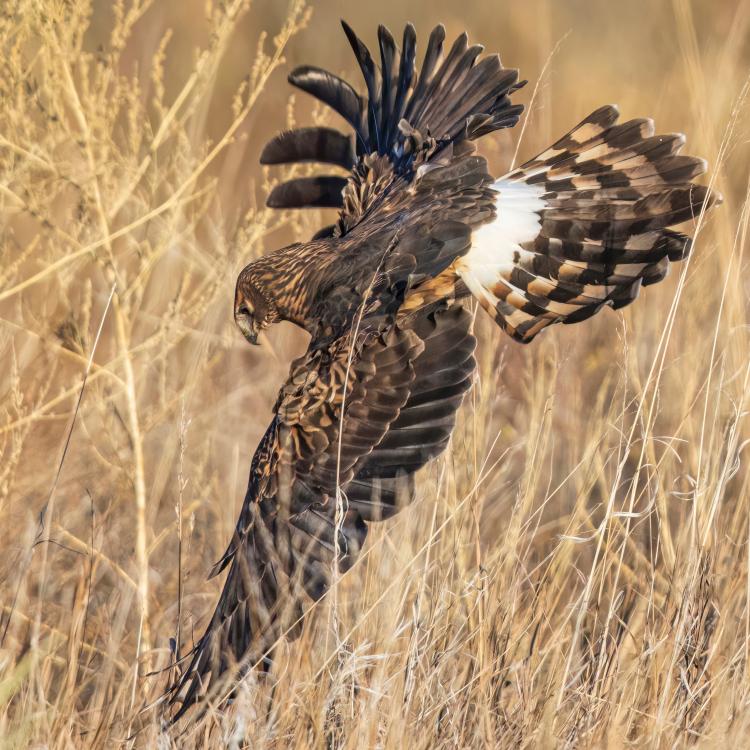
David Fullenkamp, Midwest Electric
Q. In the November 2025 issue of Ohio Cooperative Living, you wrote an article about migratory raptors. The story helped me identify the pair of birds hunting around my house, a pair of gyrfalcons. I have seen them most days since the first of December. I live two miles west of St. Henry, Ohio, in Mercer County. I have lived in the country all my life, and this is the first year that I have seen them. Is it unusual for gyrfalcons to migrate this far south? Just thought you might be interested and would like a comment.
A. Hi, David: Thanks for your question and reporting your recent bird sightings, but I don’t believe you are seeing gyrfalcons, rather northern harriers. Gyrfalcons live on the far northern tundra of Canada, so it would be extremely rare for one or more of those predatory birds to migrate this far south to Ohio. However, the two species are similar in size and color, so I can see how you might confuse them from the story photo. The next time you see your bird(s), here are a few characteristics to look for that will confirm they are likely northern harriers:
Mature males are gray above and mostly white below, with black wingtips. Adult females are dark brown above with a streaked brown breast. But their main field mark, prominent on both males and females in flight, is a large white rump patch; look closely with a pair of binoculars and you can’t miss it. In addition, both males and females fly low with their wings held in a slight V-shape as they hunt over open fields and marshlands. In fact, older bird field guides list these raptors as “marsh hawks.”
What the birds are searching for as they hunt is mice, voles, reptiles, and frogs. Northern harriers are unique among Ohio hawks in that they use their excellent sense of hearing to help locate prey as they hunt. Like owls, they have facial disks that help them triangulate, then pinpoint the sounds made by small mammals. Northern harriers are in Ohio mainly during the winter months, so enjoy them now because as spring approaches most will head back north to nest.
A final, interesting sidenote about northern harriers is that they are so maneuverable and aerobatic in flight that Britain’s Royal Air Force named its Harrier aircraft after them. So, take a second look at the gyrfalcon photo on page 9 of the November 2025 issue of Ohio Cooperative Living, then let me know what you think. Chip