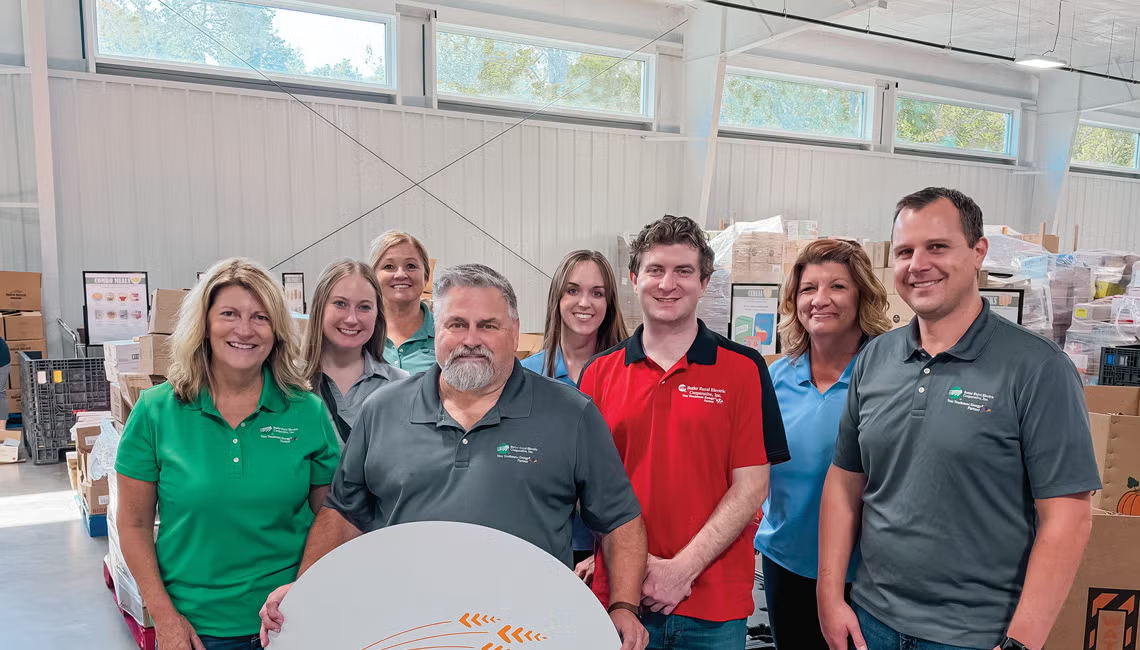
Shared Harvest, a food bank in Butler County, serves a network of more than 100 agencies, providing food the organization receives from retailers, government sources, and food drives to about 50,000 people in need each month.
“We rescue and distribute about 13 million pounds of food annually to pantries, shelters, and meal sites, to our neighbors in need of food,” says Allie Godfrey, Shared Harvest’s director of development. “We’re seeing a trend where the cost of living and wages are not moving at the same rate. People face the difficult decision of choosing medication, housing costs, and childcare — or food. So many people do not have food security; we help to fill that gap.”
Shared Harvest relies on volunteers to help sort and package all of that food, and this past October, as they have for the past few years, employees of Butler Rural Electric Cooperative in Oxford volunteered there as part of the co-op’s Community Service Days.
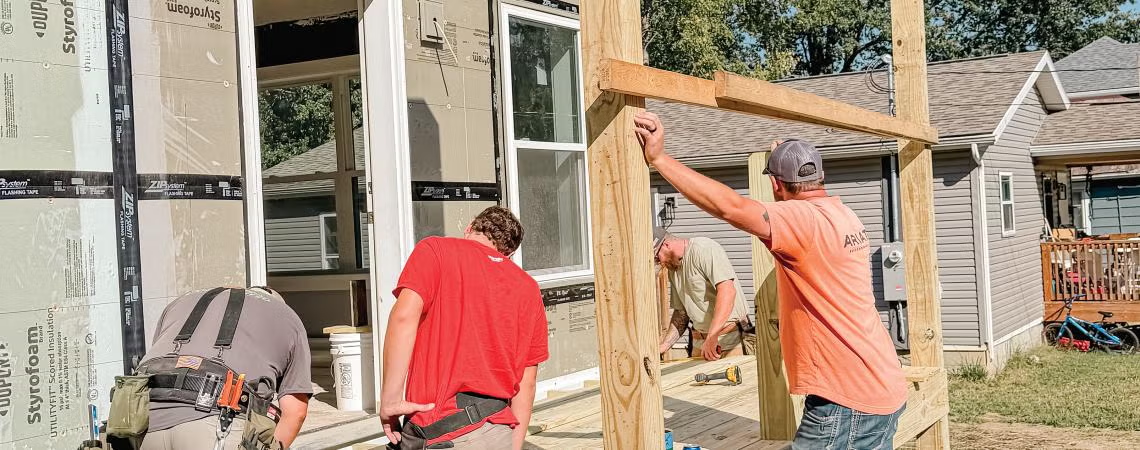
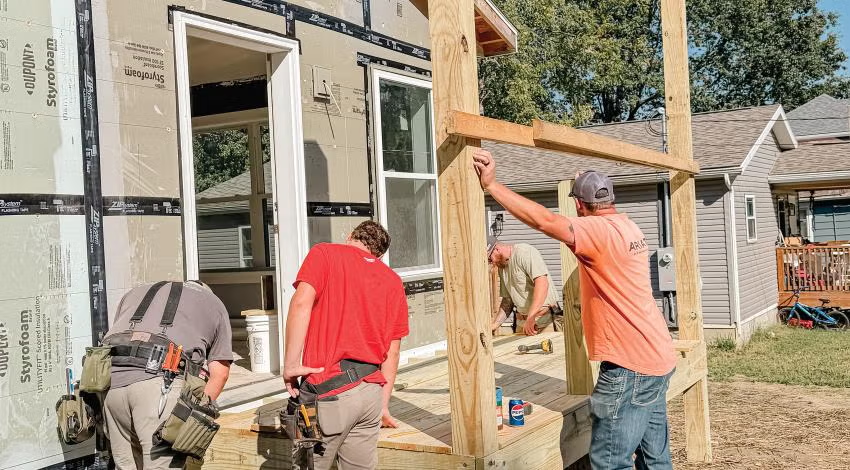
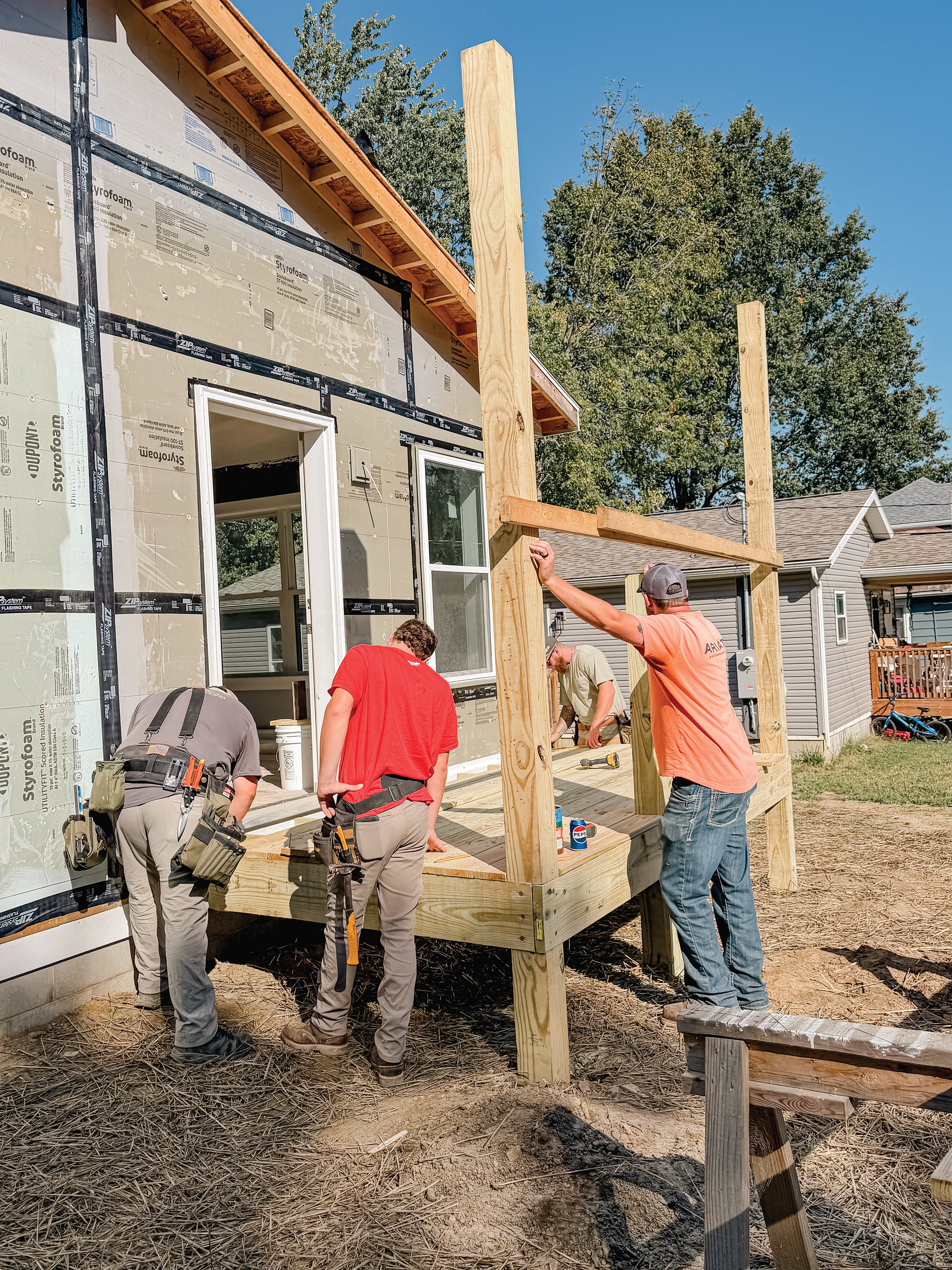
Lineworkers from Guernsey-Muskingum Electric Cooperative build a deck on a Habitat for Humanity home.
Over the course of the two days, Butler employees packed nearly 400 food boxes for senior citizens, then helped with an influx of fresh food from a grocery retailer that needed to be handled quickly.
“We’re grateful for the groups, like Butler Rural Electric, who think of us when they want to be better stewards of their communities and step up to fill that need,” Godfrey says.
Meeting basic needs
Butler Rural’s Community Days is but one example of how co-ops serve their communities in ways well beyond the electricity they provide. Co-ops, in fact, actively seek opportunities to help out through a variety of initiatives.
Ken Tollinger, general manager and CEO of Guernsey-Muskingum Electric Cooperative in New Concord, says that’s an important part of what makes co-ops different. “I think that, at the end of the day, success of the cooperative is tied to the success of the community,” he says.
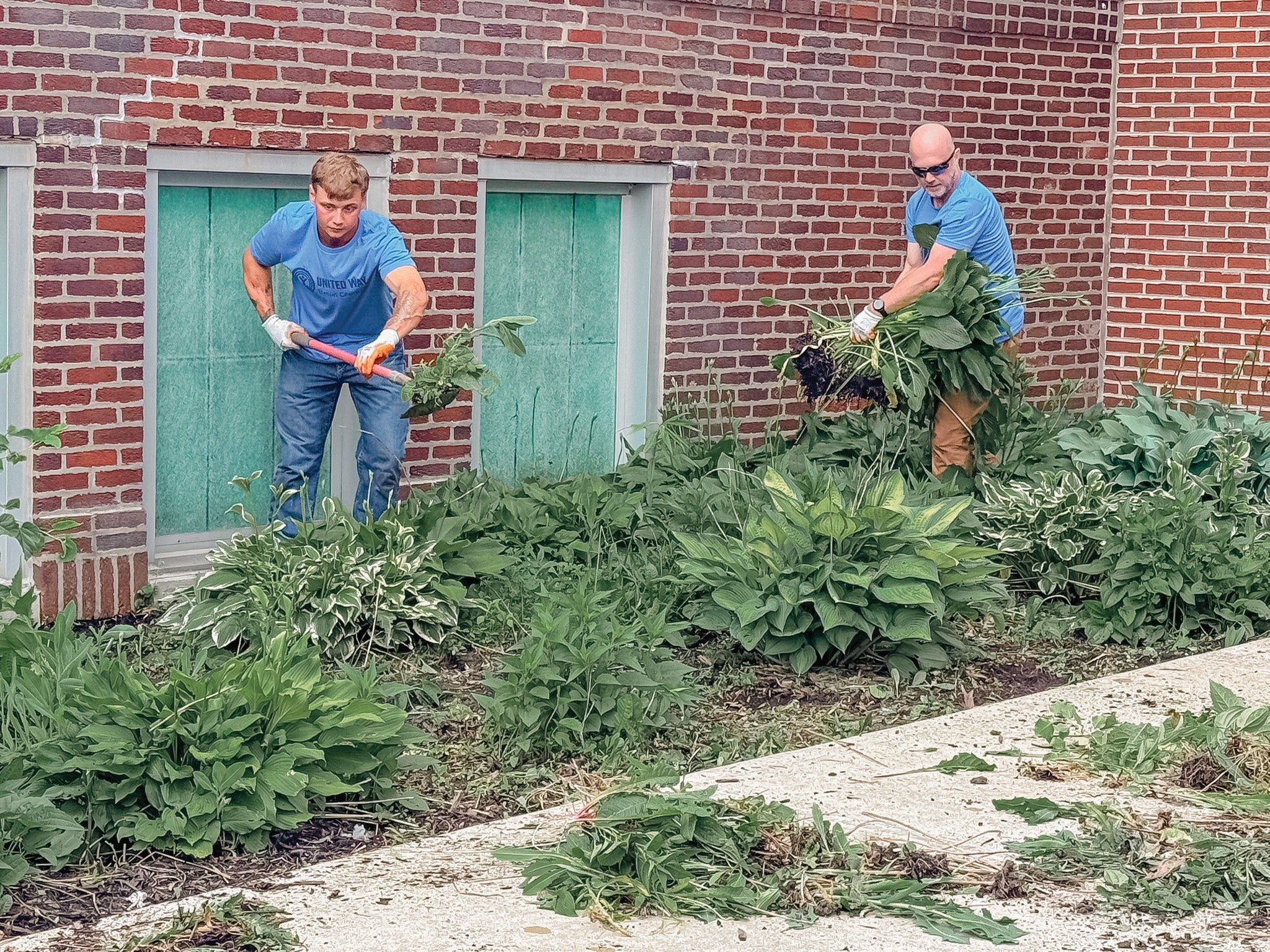
Guernsey-Muskingum, for example, has been working to expand its community involvement, as employees regularly volunteer with organizations that directly help those in need in the areas the co-op serves.
We have a responsibility to our members,” Tolliver says. “A big part of that is being a good community partner for as many of these organizations as we can help.
Union Rural Electric in Marysville participates in the local United Way’s “Business Food Fight,” which challenges local businesses to compete in gathering food to donate, and URE has won the challenge for the past two years. In March, the co-op collected more than 1,300 pounds of food, contributing to the more than 2 tons of goods the United Way effort brought in for local food pantries.
Guernsey-Muskingum also sent a group of volunteers for a couple of days to help Habitat for Humanity of Southeast Ohio in its mission to help people secure safe, permanent homes. The volunteers included four lineworkers, who built a deck on the Habitat house, and others — including Tolliver and Marketing and Member Services Manager Casey McVickers — who painted trim.
Different cooperatives choose other ways to help, but they all make a meaningful impact on their communities. Many provide support for county fairs and the youth exhibitors who participate in them. Others organize and promote drives for food, clothing, coats, and items or services for veterans. Whatever form it takes, they all exemplify the cooperative principle of Concern for Community.
Stepping up
Electric cooperatives are accustomed to acting swiftly in dealing with the unexpected. After all, when storms hit and power goes out, co-op teams jump into action and work together to restore power as quickly and safely as possible.
That organizational nimbleness, along with the work ethic that powers it, allows co-ops to help effectively when unexpected needs arise in the communities they serve.
For example, when severe flooding hit Perry County in August, the United Way of Muskingum, Perry, and Morgan Counties received donations of food and essential items from multiple drives and a large donation from Walmart, but needed help sorting, packing, and delivering the items to the community.
“It happened with a moment’s notice,” says Katie Grubbs, the organization’s community impact manager. “Many people’s homes were destroyed, along with their belongings, and we set to work in getting people housed immediately and starting relief and recovery.”
Volunteers from Guernsey-Muskingum stepped up immediately. “The United Way understands how to help a community in crisis, and they were looking for help to sort and move food,” Tolliver says. “We have people, we have big trucks, and we have trailers. Flooding turns people’s lives upside down, and we were happy to be able to help families who were severely affected.”
Working together makes all the difference, Grubbs says.
When we can lean on our supporters, like Guernsey-Muskingum Electric Cooperative, it allows us to make a larger impact than we otherwise could.
In late March, a tornado ripped through the Hardin County Fairgrounds, severely damaging buildings, barns, and shops. Additionally, the fairgrounds’ electric infrastructure took a hit, with many utility poles and power lines downed or damaged. The extent of the damage made it critical that repairs begin quickly to be able to have the facilities ready for the fair in early September.
A key first step to rebuilding was reestablishing electric service to the fairgrounds, but the facility’s electric provider was busy making other local repairs. Fair officials reached out to Kenton-based Mid-Ohio Energy Cooperative for assistance. Co-op crews immediately went to work at the fairgrounds, replacing broken poles, damaged transformers, and downed lines so the grounds could be safely reenergized and cleanup and repairs could move forward. With the help of Mid-Ohio Energy and other businesses and community groups that jumped in to help, the fair was able to take place on schedule.
Two lineworkers from Darke Rural Electric Cooperative in Greenville stepped up in a different kind of urgent situation in June. They came upon a medical emergency along a roadside. They stopped to provide help, including employing the automated external defibrillator carried in their co-op truck, until emergency responders arrived on the scene.
Symbiotic relationship
While co-ops prefer to be on the giving side of community support, sometimes it’s the other way around.
“It’s unbelievable the support our linemen get out there when we’re dealing with storms and outages,” Tolliver says. “Someone will say, ‘I’ll get my side-by-side, and take you out to the right-of-way. Members also have brought heavy equipment out to help us get access to lines.
“The farming community is huge in helping us,” he says. “We get a lot of support from the community in those situations.”
Mutual support and willingness to help between co-ops and their communities is a prime example of the cooperative difference, Tolliver says. “When our communities are stronger, our cooperatives are stronger, too.”