Allogrooming — licking each other to remove parasites and promote social bonds — is fairly common in deer. (Photo by Chip Gross)
Glenn Kimball, South Central Power Company
Q. Hi, Chip: Recently, I watched two deer in my yard taking turns licking each other's ears. This went on for at least five minutes. They were both full grown does. I have never seen this before. Is this usual behavior?
A. Glenn: Like you, I have never observed this particular behavior in deer, so contacted Clint McCoy with your question. He is the ODNR, Division of Wildlife, deer biologist, and here is what he had to say:
“Allogrooming (when deer lick each other) is pretty common behavior. These grooming sessions often focus on the head/neck areas, since those areas are very difficult or impossible for a deer to groom itself. The behavior is believed to have implications for ectoparasite removal (such as ticks), as well as maintaining social bonds.”
In my follow-up questions to Clint, I asked him: Do bucks lick other bucks? Do bucks lick does? Do does lick bucks? In other words, is it a general free-for-all, or is there a hierarchy, a kind of pecking order in a wild deer herd?
Clint replied, “All of those behaviors certainly happen, but occur most frequently in social groups which are segregated throughout much of the year. So, bucks and does grooming each other would occur less frequently.”
There you have it, Glenn. You and I both learned something. Many thanks for your insightful question. If you’re interested in learning more about Ohio’s white-tailed deer herd, keep an eye out for my upcoming Woods, Waters & Wildlife monthly outdoors column in the September 2026 issue of Ohio Cooperative Living print magazine. I’ll be writing in detail about the two deadly diseases currently affecting whitetails in the Buckeye State: Chronic Wasting Disease (CWD) and Epizootic Hemorrhagic Disease (EHD).
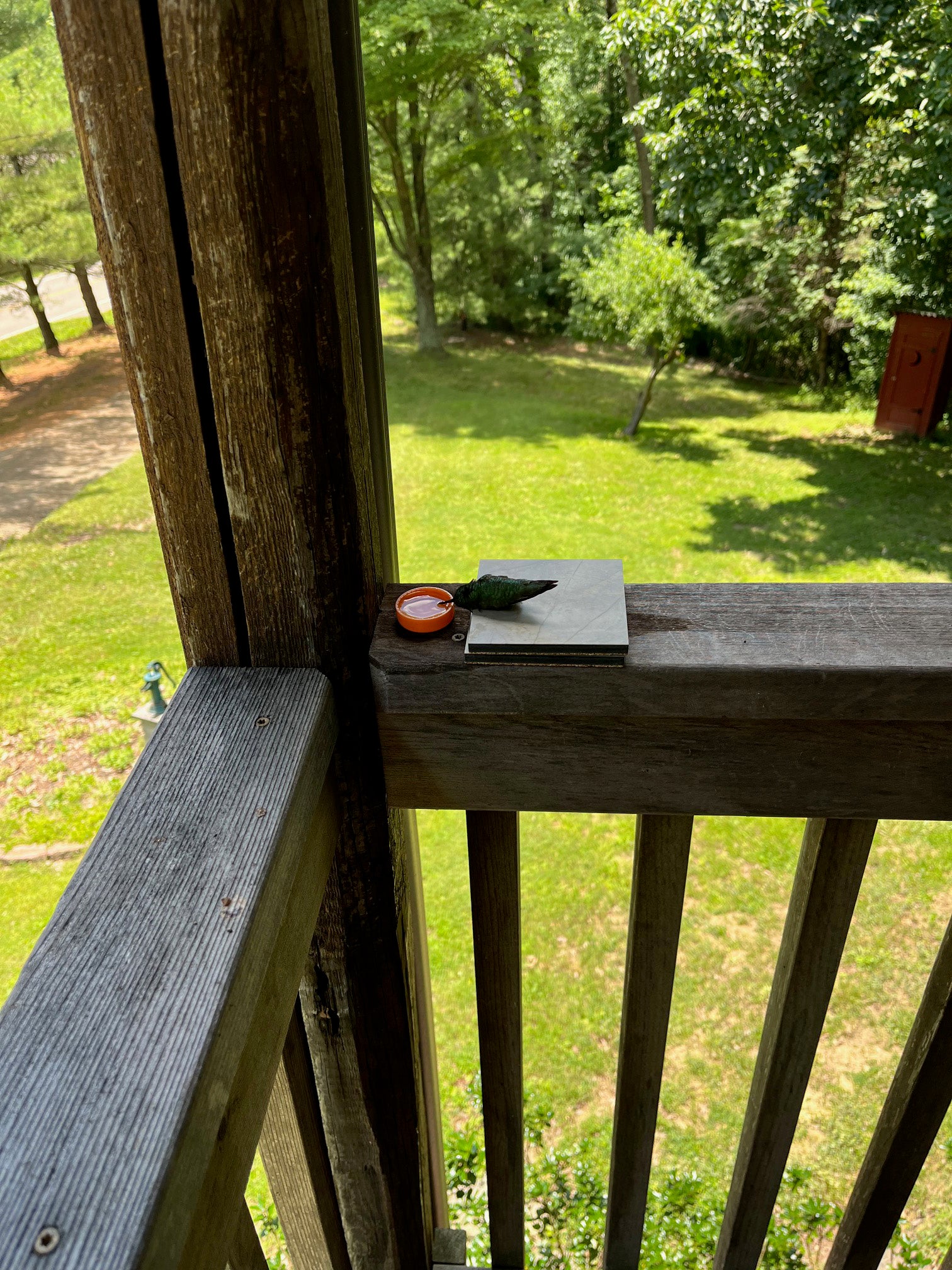
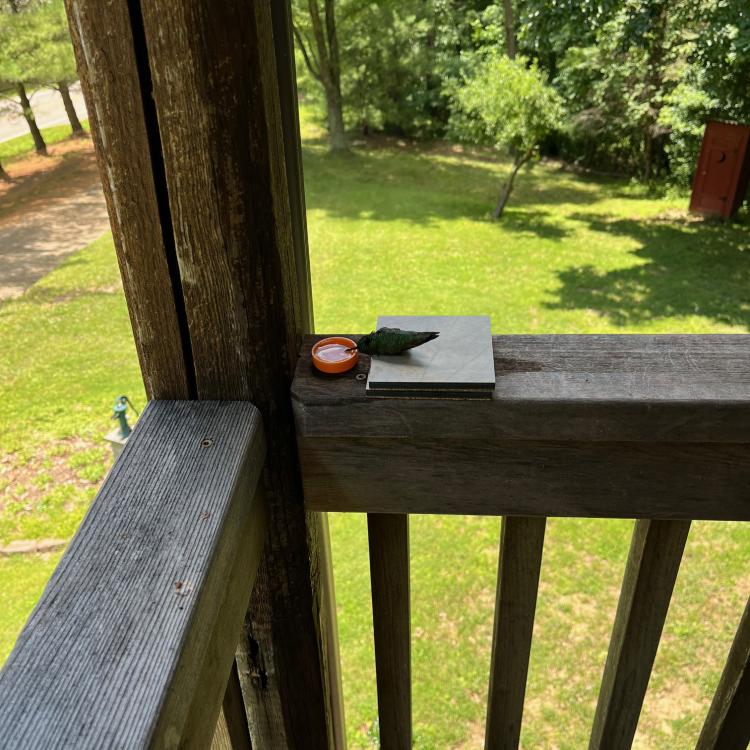
Note: A couple weeks after Glenn submitted his deer question to me, I received this photo from him and the following story about a very fortunate hummingbird.
“Chip: I thought you might find this interesting: I recently found a male hummingbird caught in a spider web. When I took him out, I realized he was still alive. I carefully tried to pull the web off his body and saw that the hummer couldn't open his beak. Using a Q-tip, I removed enough of the web that he opened his beak a little. I then propped him up on our porch railing, put a bottle cap filled with nectar where he could reach it, and he actually drank some.
“After resting about 15 minutes, he started to move and tried opening his wings, but they were also held tight to his body by some of the web. Using a small pair of scissors, I clipped away strands of the web until the bird spread his wings. He then tried to fly, but was too weak and fell off the porch rail. I picked him up and cradled him in my hand until he perched on my finger for a time. Eventually, he spread his wings and flew across the yard to a tree. I’m not sure, but whenever a male hummingbird comes to my feeder now, I think it’s him. For such small, delicate creatures, they are amazingly tough.”