Ohio Department of Natural Resources

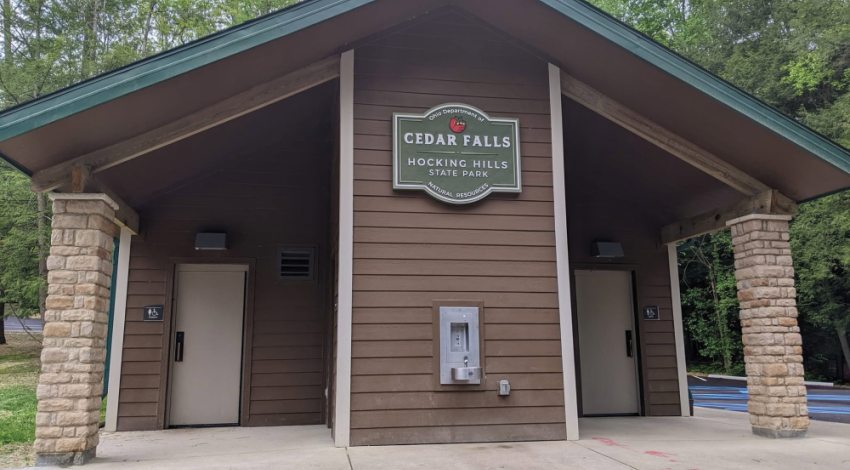
Public restroom at Cedar Falls in Hocking Hills State Park

On any given day, Mary Mertz, director of the Ohio Department of Natural Resources, may be called upon to consider issues involving wildlife, campground capacity, hiking trails, or the health of Ohio’s forests.

Ohio State Parks earned the National Gold Medal Award for Excellence in Park and Recreation Management in 2025 — essentially the top honor a park system can earn — but Mertz knows there’s always room for improvement, and she says restroom facilities are low-hanging fruit.

“We want people to want to be in the outdoors,” Mertz says. “Fifty years ago [when many of the facilities were built], people’s expectations were different. Today, people have come to expect a higher level of accommodation.”
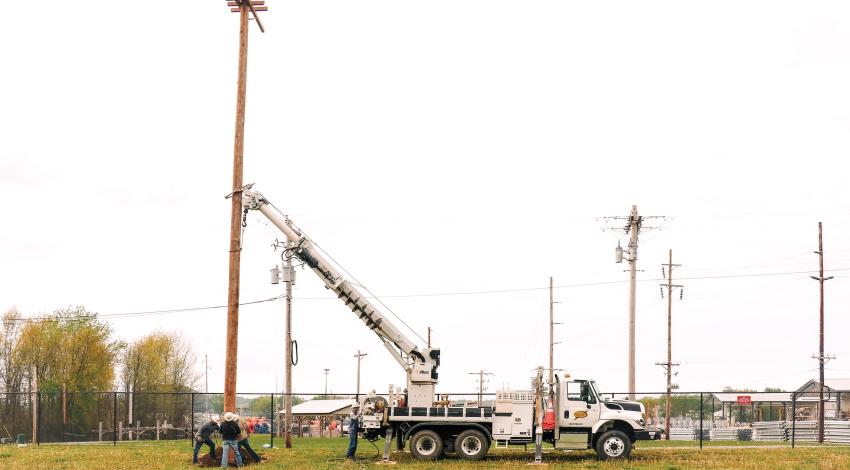
A group of lineworkers raising a nesting pole for a family of ospreys

Brad Bussard and his team are accustomed to working almost invisibly.

It was the end of May, the time of year when ospreys return to Ohio from their winter home in Mexico, and a breeding pair had decided that one of the utility poles in the training yard next to the co-op’s office was a good spot to build a nest. The population of ospreys, once nearly wiped out in the Buckeye State, has been steadily growing here since the Ohio Department of Natural Resources reintroduced them in 1996, to the point where the Division of Wildlife no longer even bothers to count them.

People paddle boarding and kayaking on a river

When we were young boys, my brother and I sometimes paddled a battered aluminum canoe on the Mohican River in north-central Ohio.

One of those streams is the Mohican, and today’s paddlers can view the Mohican River Water Trail at the ODNR website or download a brochure to find information about access points (including Greer Landing), picnic areas, and points of interest, as well as  low-head dams and other hazards along the way.

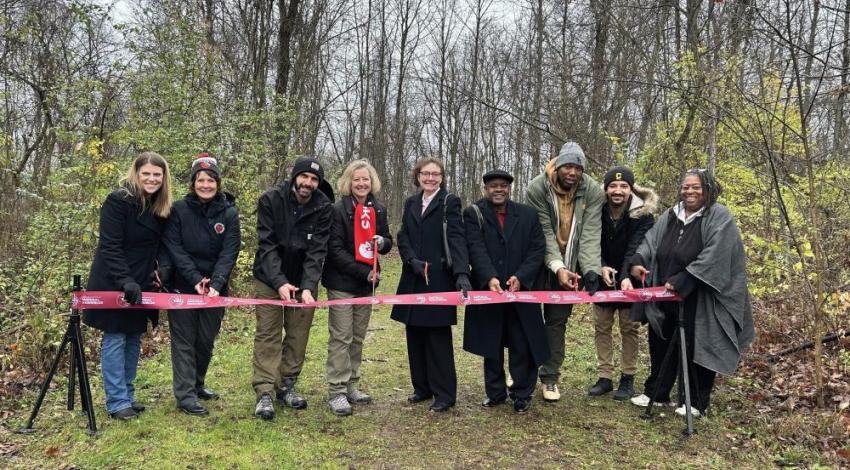
A ribbon cutting for the first of four planned “Heritage of Freedom” trails in the state commemorating Ohio’s contribution to the Underground Railroad.

Along the eastern edge of Alum Creek State Park in central Ohio runs a thoroughfare called Africa Road. I’ve lived in the general vicinity for years, and the road’s name always seemed a bit odd to me. 

Late last fall, just off Africa Road in Alum Creek State Park, the ODNR unveiled the first of four planned “Heritage of Freedom” trails in the state commemorating Ohio’s contribution to the Underground Railroad. “The Underground Railroad is a key part of Ohio’s history,” says Mary Mertz, director of ODNR. “This Heritage of Freedom Trail serves as a visual history lesson and provides an immersive way to see what freedom-seekers faced in Ohio’s natural environment during this time in history.”   

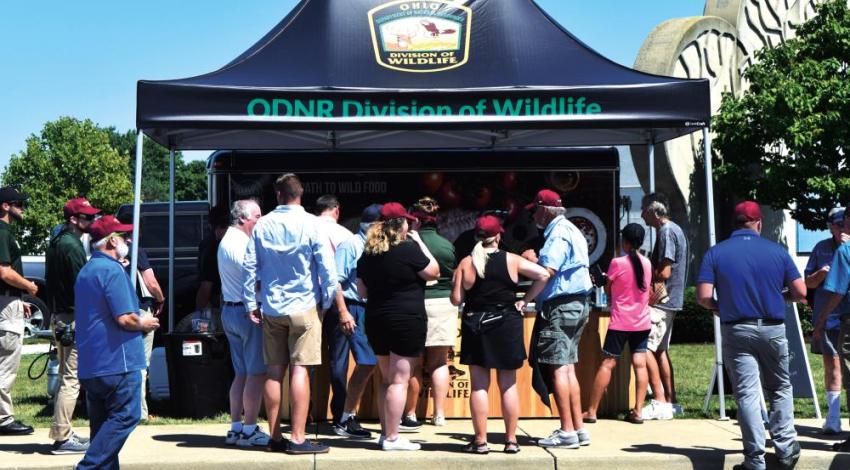
It’s often standing room only when the ODNR’s Wild Ohio Harvest mobile kitchen makes a stop.

Kendra Wecker, chief of the Ohio Department of Natural Resources’ wildlife division, swears she’s not trying to put any food trucks out of business.

The kitchen and its chefs cook and serve up free food created with wild-harvested Ohio game, including fish, fowl, and other critters. And Ken Fry, ODNR outdoor skills specialist, says it all began when he was cooking up such treats from the bed of a pickup truck with a pop-up tent at a Jefferson County farmers market a while back.

“It was so well-received that I presented the trailer idea to my supervisor and he liked it and said, ‘Let’s go with it,’” Fry says.

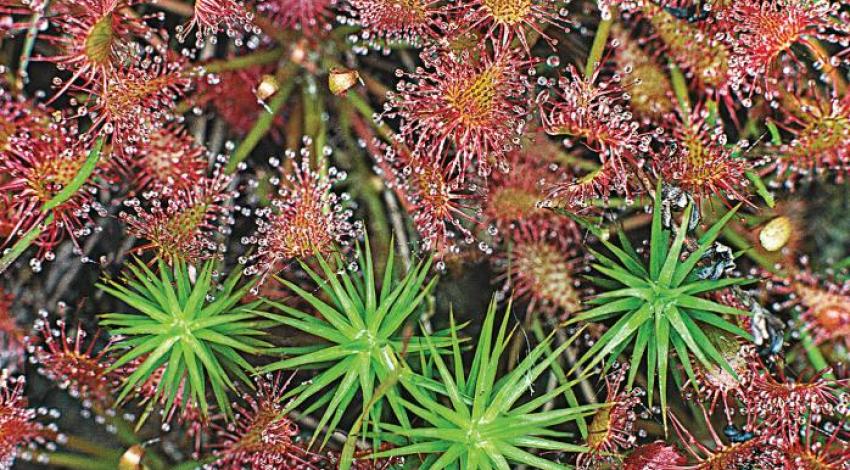
Spatulate-leaved sundew

It took more than 6,000 years for the last ice sheet, the Wisconsin Glacier, to spread across what is now Lake Erie and Ohio, at an average rate of about 160 feet per year.

“Even into medieval times, bogs and fens remained mystical and frightening places,” says Denny, a member of Mount Gilead-based Consolidated Cooperative. “Fueling some of those fears was a natural phenomenon known as ‘will-o’-the-wisp’ or ‘jack-o’-lantern’ — a mysterious, flickering light often observed hovering and moving around at night within bogs, swamps, and marshes. 

Aldo Leopold, the “Father of Wildlife Management,” described his classic book, A Sand County Almanac, like this: “There are some who can live without wild things, and some who cannot. These essays are the delights and dilemmas of one who cannot.”  

To conserve and improve fish and wildlife resources and their habitats for sustainable use and appreciation by all. - Mission statement of the Ohio Division of Wildlife

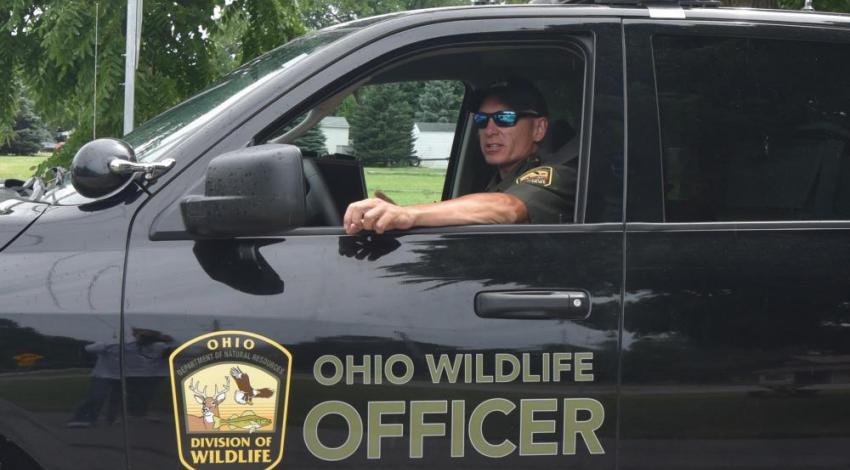
Wildlife Officer Reid Van Cleve is a veteran of the survey.

Mostly in life, possums, skunks, groundhogs, and racoons don’t get much respect. That’s especially so for the ones who spend their last earthly moments on Ohio roadways, just before they get hit. 

Katie Dennison is a research biologist for the Ohio Department of Natural Resources’ Division of Wildlife. At the Olentangy Research Station in Columbus, she oversees the annual Furbearer Roadkill Survey. And yes, that’s the official name.

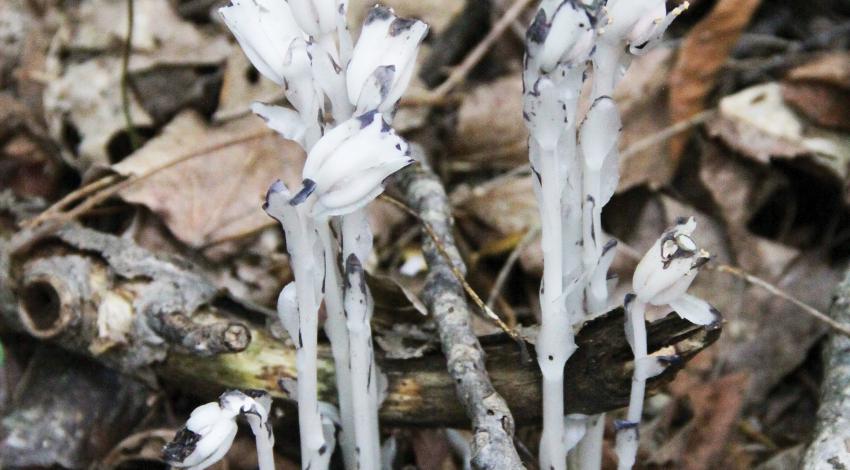
A ghost plant found in Ohio

I enjoy reading — always have. One of my favorite books is Wilson Rawls’ 1961 classic, Where the Red Fern Grows. The author reveals the origin of the title of his fiction novel through his young protagonist, Billy Colman, who lived in the Oklahoma Ozarks: 

The plant grows in such deep, dark forests and is so short-lived that I’ve only seen a handful during a lifetime of wandering the woods. One was growing along the Appalachian Trail in Virginia, spotted during a day hike with my wife. Several other plants I’ve stumbled across here in Ohio (not literally, thankfully), but not often. Each serendipitous find is truly a special event to be celebrated and, of course, photographed.

A black bear lounging in a tree

I’ve lived in Ohio all my life, spent tons of time in the outdoors, and have never encountered a black bear in the wild in the Buckeye State. That’s not to say they’re not here, of course.

Predictably unpredictable, black bears are not the bumbling oafs or cuddly teddy bears they are portrayed to be on some television nature programs. No matter where they live, by nature a bear is still a bear, and they are much stronger, smarter, and more adaptive than most people realize.  They are also fast, able to run 30 miles per hour for a short distance (the best an Olympic sprinter can do is in the low 20s). It is the wise wildlife photographer who gives bears a wide berth.