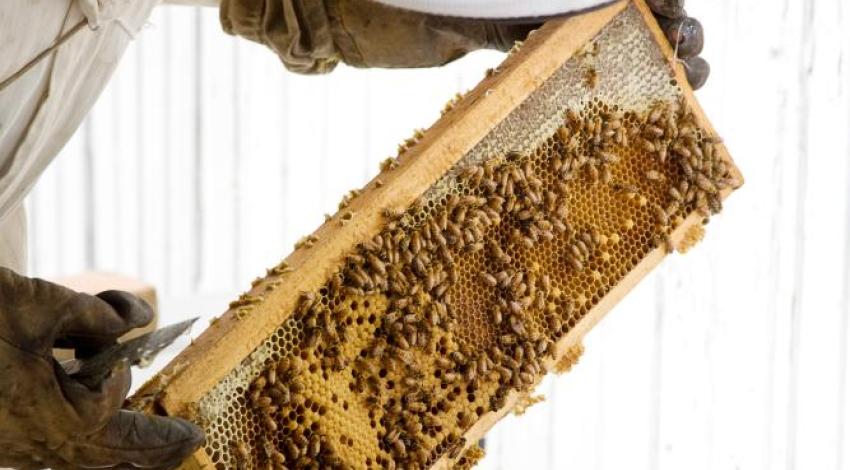
Bees

A person inspecting an active honeybee hive

They might be easy to take for granted, but honeybees make a significant contribution to your daily diet. Honeybees pollinate at least 70 crops produced in Ohio each year, including apples, pumpkins, cucumbers, strawberries, and sunflowers. 

Heilman manages nearly 800 hives, which he hires out to farmers. Half of his hives travel out of state, but he estimates his bees alone help Ohio growers produce
$10 million to $15 million worth of crops each year.

Oh, and by the way, those busy workers also make one of the more luscious food products on the planet. Heilman’s bees produce more than 35,000 pounds of honey annually.
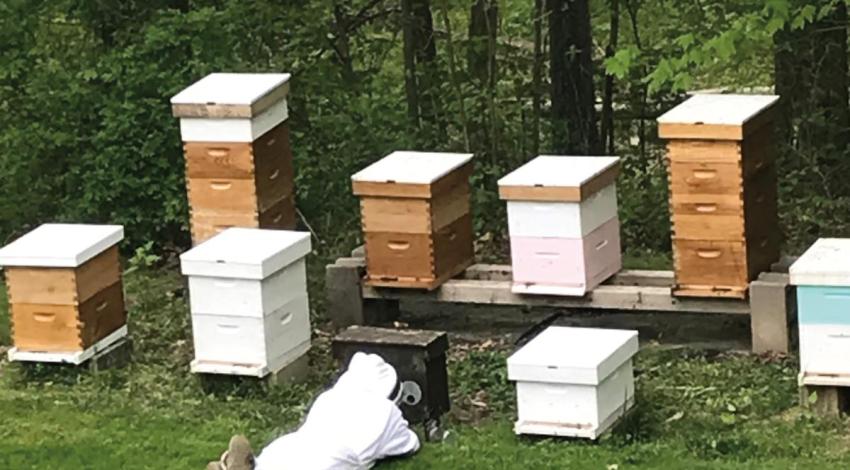

Stacey Shaw, safety director at Holmes-Wayne Electric, says he often just lies on the ground and watches his 10 hives, each of which, he says, has its own distinct personality.

Encountering thousands of bees could be a little disconcerting — maybe downright terrifying — for most of us.

Likewise, Stacey Shaw, safety director and line supervisor at HWEC, has at least 10 beehives on his property near Millersburg, with up to 100,000 bees in each one. “Sometimes, I lie down on the ground and just watch them,” he says. “Each hive has its own personality. Some are really docile, and then you have some that can be more aggressive. But the term ‘worker bee’? They earn that. As soon as daylight comes, they head out strictly for work; they work nonstop until dark and then do it all over again the next morning.”

A picture of families featured in the article

Some members of today’s younger generations — millennials and Gen Zers, if you will — favor a trendier, urban lifestyle, with conveniences like Uber rides and food trucks, bike-sharing, live entertainment, and ethnic eateries. But we found some young adults who prefer working the land, carrying on centuries-old legacies, rearing kids with an appreciation for nature, and growing acres (and acres!) of crops, raising livestock — even tending bees.